Categories
Podcast episode

The Limits of Fiscal Policy: Insights from Tony Makin, Alex Robson & others – EP222

This episode on the limits of fiscal policy features highlights from host Gene Tunny’s past conversations with the late Australian economist Professor Tony Makin and former OECD Ambassador Alex Robson. In the discussions, Tony Makin provides a balanced and insightful analysis of Australia’s fiscal response to the COVID-19 pandemic, critiquing programs like JobKeeper while recognizing some justification. He and Alex Robson discuss the importance of considering the open economy impacts of fiscal stimulus and the long-term burdens of debt. The episode looks to validate Makin’s warnings about the limits of discretionary fiscal policy through subsequent evidence and events. Gene summarizes the JobKeeper evaluation results and what happened in the Australian housing market following the pandemic fiscal stimulus. 

Please contact us with any questions, comments and suggestions by emailing us at contact@economicsexplored.com or sending a voice message via https://www.speakpipe.com/economicsexplored.

You can listen to the episode via the embedded player below or via podcasting apps including Google PodcastsApple Podcast and Spotify.

What’s covered in EP222

  • Fiscal policy limits and its impacts: introduction (0:03)
  • Economic stimulus measures during the COVID-19 pandemic. (9:36)
  • JobKeeper program design and targeting. (15:44)
  • JobKeeper program’s effectiveness and infrastructure spending challenges. (21:31)
  • Keynesian economics and infrastructure spending. (27:50)
  • Fiscal policy and its impact on the economy. (33:13)
  • Fiscal policy and its unintended consequences. (40:12)
  • The economic impact of public debt with Tony Makin and Alex Robson. (48:31)
  • Fiscal policy and its impact on the economy: wrap up. (53:39)

Takeaways

  1. Fiscal stimulus packages must be carefully designed and limited in size to avoid unintended consequences.
  2. The nature of the workforce is important to consider when implementing fiscal policy, as not all workers can easily transfer to different industries.
  3. The burden of public debt, including interest payments, can have long-term impacts on national income and economic growth.
  4. The effectiveness of fiscal policy in an open economy is influenced by factors such as capital mobility and exchange rates.
  5. Tony Makin was a leading advocate for sensible fiscal policy in Australia, and his contributions to the field are greatly missed.

Episodes the highlights are clipped from

EP119: What Tony Makin taught us about macroeconomics – Economics Explored 
A Fiscal Vaccine for COVID-19 with Tony Makin – new podcast episode | Queensland Economy Watch

Links relevant to the conversation

Fiscal policy papers by Tony Makin:

The Effectiveness of Federal Fiscal Policy: A Review

(PDF) Australia’s Competitiveness: Reversing the Slide 

 A Fiscal Vaccine for COVID-19

Treasury analysis of JobKeeper:

Independent Evaluation of the JobKeeper Payment Final Report | Treasury.gov.au

The employment effects of JobKeeper receipt | Treasury.gov.au  

News regarding unintended consequences of fiscal stimulus:

Building company collapses into liquidation days before Christmas, impacting four Guzman Y Gomez sites

Transcript: The Limits of Fiscal Policy: Insights from Tony Makin, Alex Robson & others – EP222

N.B. This is a lightly edited version of a transcript originally created using the AI application otter.ai. It may not be 100 percent accurate, but should be pretty close. If you’d like to quote from it, please check the quoted segment in the recording.

Tony Makin  00:03

For instance, baristas who’ve lost their jobs are not necessarily going to be one want to be out there on the road as a construction worker, financial sector employees and not wanting to be perhaps putting paint bets and ceilings. So the the nature of the workforce is important. We can’t just treat the labour force as this homogenous entity where people can transfer across to any sort of industry at whim.

Gene Tunny  00:39

Welcome to the economics explored podcast, a frank and fearless exploration of important economic issues. I’m your host, Gene Tunny. I’m a professional economist and former Australian Treasury official. The aim of this show is to help you better understand the big economic issues affecting all our lives. We do this by considering the theory evidence and by hearing a wide range of views. I’m delighted that you can join me for this episode, please check out the show notes for relevant information. Now on to the show. Hello, in this episode, I’m going to talk about the limits of fiscal policy. So that’s the use of government spending and taxation to influence the economy. So to try to smooth out the business cycle or to respond to some big shock, like the pandemic or the financial crisis. During the pandemic, in particular, we saw heavy use of fiscal policy by governments around the world. While some stimulus may have been warranted, we’re starting to really see some of the adverse consequences of fiscal stimulus packages in different countries. So you could argue that are a good part of the inflation that we’ve seen in the last couple of years that was due to the, you know, these massive fiscal policy responses that occurred that, that injected all of this additional money into household and business bank accounts, and we ended up with too much money chasing too few goods, which is that that classic explanation of inflation. We’ve also seen high public debts. So big increase in debt worldwide. And then we’ve got the growing burden of interest payments on government budgets. We’ve also seen impacts like what you’d call crowding out, we’ve seen supply side impacts, or constraints really starting to, to bite, particularly in the building industry. So some of these, these unintended consequences, you could say, maybe they should have been foreseen, they’re really starting to have an impact, particularly here in Australia, we’ve seen an impact on the building industry on its costs, and that’s affecting firm viability. So there’s all this extra demand, and there’s only so much supply out there. And, you know, supply can only respond in, it can’t respond automatically or instantly, to to this additional demand. So we’ve seen a big increase in in costs in that sector, and then that’s having all sorts of adverse impacts and you know, builders are closing down and then the people who are getting their houses built, they’re badly impacted, too. So that’s, that’s one of the things we’re seeing here in Australia that I’m going to talk about. Early in the pandemic, Professor Tony Macon of Griffith University in Australia. So Tony was based on the Gold Coast, which is south of Brisbane, where I am so early in the pandemic tiny warned about the adverse consequences of fiscal stimulus in Episode 41 of the podcast. So in one of the earlier episodes of this show, in June 2020, I spoke with Tony about his analysis of Australia’s fiscal response to the pandemic. He prepared that for the Centre for independent studies, which is a think tank in Sydney. So the CIS it’s one that I’m an adjunct Fellow at and I’ve had a lot to do with over the years. I’m gonna play some clips from that conversation I had with Tony, in, you know what turned out to be one of the early Months of the pandemic. So, I mean, things started going, going crazy. And when was it March 2020. So that’s a, it’s just a few months after, after that. We had a big a major fiscal policy response by the end of March in Australia, if I remember. And so we’re starting to see some of the, you know, the less desirable features of that already in in June when I spoke with Tony. Okay, so I’m going to play some clips from that conversation to illustrate some really important points about the limits of fiscal policy. So I’m not saying that activist fiscal policy is everywhere and always bad. I think what I want to say is that you’ve really got to be careful with it, you’ve got to think about, well, what’s going to be the ongoing impact on your interest payments? Could could there be any crowding out? Could there be unintended consequences? Could you actually be destabilising the economy in the future? You may be trying to stabilise it now, but could you actually make things worse than they otherwise would be in in the future? So they’re the types of considerations I think are important with with fiscal policy? Okay, one thing I have to say is that tiny Macon is sadly, no longer with us. He died unexpectedly in November 2021. So, in addition to playing some highlights from my fiscal policy conversation with Tony, I’m also going to play some highlights from my conversation about Tony’s legacy that I had with Alex Robson in Episode 119, from December 2021. So I think they’re worth that’s worth sticking around. For. Alex is a you know, he’s a former collaborator with Tony, he wrote some papers with him. And he’s also Australia’s former ambassador to the OECD in Paris, which is really top job in economics. Yeah, so Alex, Alex is a great person to hear from and he has a lot of excellent observations about about Tony. Okay, let’s play the first clip, which it features Tony’s critique of the massive job keeper, payroll subsidy programme that we have in Australia. I think that much of Tony’s critique has been supported by the facts. So new evidence, or what we’ve learned about how Job keeper rolled out and, you know, the impacts that it had. And also, I think that the review of the programme that my old deputy secretary in the treasury, Nigel Ray, so Nigel did a review of it. Last year, I think that that review that brings out some of these, well, that’s supportive of some of the criticisms that that that Tony made, although, of course, it’s it’s going to be measured. And you know, Nigel, is not someone who’s going to come out and say, Look, this is, you know, this is terrible, you really stuff this up, he’s going to be very measured about it all. There’s also a treasury research paper that’s relevant here. And I’ll have more to say about them after I play the clip. Tony, I’d like to ask about the Australian response, I thought you made some really great observations about the different elements of the response. So there was the job keeper programme, the payroll subsidy programme. And then there were there were cash handouts. And there’s also some bringing forward of infrastructure spending. You made some really insightful remarks regarding the efficacy regarding the merits of the different elements of the Australian Government response. And I think there are lessons that can apply to responses across the world, would you be able to take us through what those those insights and lessons that you made workplace turning?

Tony Makin  09:36

Yeah, well, I made a distinction between fiscal responses that were targeting the aggregate supply side of the economy, and, in the paper, endorse those in principle and in particular, we’re talking about job Keeper which I think is a great innovation. We’ve not seen a scheme like like that, before, it’s not original to Australia, Australia copied what was happening in the UK and New Zealand and one or two other European economies. And the innovation was to see firms as a source of employment. Correct. And to alleviate the pressure on firms and their employees in particular, by providing a direct subsidy to the firm. So it was a supply side initiative, more than a demand side initiative, it was helping aggregate supply, it wasn’t an element that he was sought to increase CRI or it was increasing G, of course, but it was it was it was aimed at the firm’s production. So that was an innovation. And I think there’s a prototype there for future fiscal responses in heaven. Let’s hope we don’t have similar sorts of crises. But it’s it’s a preferred means as opposed to the aggregate demand side response. And a, we’re in the form of two cash transfers or cash handouts, as we saw in response to the GFC trying to in the Keynesian ways stimulate spending, and the purpose of stimulating the spending is to enhance employment. So it’s a roundabout way of trying to enhance employment. I think it has the features of a of a subsidy to retailers in effect, because they’re the ones that they’ve been at most. And in any case, if there is spending and evidence shows that such handouts tend to be largely saved, but if they are spent, they are spent on imports. And they’re funded by borrowing from overseas, which has to be paid in the future. So there were two responses there that were trying to sustain employment one was the direct one to Job keeper. Good marks for that one. And then there was another one on top of that, which was the cash handouts, which was a roundabout way of of sustaining employment when there was another policy in place for that purpose.

Gene Tunny  12:24

Yep. So this job keeper, it was originally costed at one 30 billion, it turns out all it it may only cost 70 billion, there was a forecasting error. But that’s that’s, that’s tangential to our discussion. You did know that while job keeper is more justifiable than other stimulus or emergency measures, there are still concerns with the design of job keeper. Could you take us through some of those please, Tony,

Tony Makin  12:57

our look, the key one is the industry is involved. The questions about casuals being paid more on job teper than they were otherwise earning. So they’re being paid more not to work than to work. I think that’s the key floor with the with the programme. And hopefully that will be fixed when the Treasury completes its review very soon. I guess it’s also questions about eligibility and the the the rule that was there for downturn in, in sales, some of those aspects of it could be possibly fine tuned, but I think it is a useful prototype that can be improved.

Gene Tunny  13:49

Yep. If they if they did it again, I’m sure they would better targeted, and they might target it to the industries that are most affected, such as hospitality, tourism, retail, possibly not professional services, which, you know, appear to be, well not as badly affected as some other sectors. So the the key lesson is that this needs to be better targeted. The problem was from what I can tell this was developed within a week, possibly under a week when at toward the end of March, when they realised that they needed something like this because all of the employer groups were coming to the the government ministers and telling them we need this or we’re going to have to sack millions of people. So I think that’s what drove it. It was done very quickly.

Tony Makin  14:43

Yes. And also the alternative was to put enormous pressure on the on the Employment Benefits Scheme. people queuing up for benefits that would have been a major headache as well. Absolutely.

Gene Tunny  14:56

I think one of the great points you made in the paper was Sir. Regarding the cash handouts, we want to get people out spending, but the public health advice is saying actually stay home, we don’t want you to go out. So I thought that was a really interesting point. And actually, yes, that’s right. So the goal of these emergency measures should be to sustain businesses to keep people in employment during this challenging time. It’s not necessarily, though, and the way to do that is not necessarily to give people money to go out and, and spend on new flat screen TVs, which are imported. So that’s, I think that’s a good point that you’ve made. Okay, so that was Tony on job keeper, which was the payroll subsidy programme we had in Australia. And yep, Tony was, Tony was right about the some of the problems with that programme. Um, overall, I mean, I think that was a very balanced assessment of Tony’s he did recognise that to an extent, it could have been justifiable if it was better targeted. So he wasn’t ruling it out completely. He just had the had some concerns about the design. So I think that was a very, you know, measured, balanced assessment of job keeper from tiny, and another measured and balanced assessment of job caper came from Nigel Ray, who, as I mentioned, was my boss in the treasury. So really, really great public servant, Nigel. And, yep, I think he’s written a great report on job keeper. In the independent evaluation of the job keeper payment final report, he prepared that for the Treasury, I’ll put a link in the show notes. It was broadly supportive of the programme. But Nigel, you know, he had to acknowledge there are some serious issues with it with the design of it. And so what did he conclude? Let’s, let’s go through it. So one of the major conclusions was that a more flexible policy designed during the first phase of job keeper. So I think that was the first six months. A lot of the detail is, it’s hard for me to remember at this stage, but I think that he’s talking about the first six months of the programme. They rolled it out for six months, and then they had another six months of it. A more flexible policy designed during the first phase of job keeper would have enabled an earlier move from prospective to retrospective eligibility thresholds. For example, After three months, this would have allowed better targeting of payments beyond the initial three months and lower the costs of the programme. Okay, so what he’s, what he’s talking about there is that when it was rolled out, basically, you know, accountants would apply for their clients that apply to the ATO, and the accountants would be asking their clients, okay, well, what do you think’s gonna happen to your turnover over the next six months, so when whatever the whatever it was, maybe was quarterly basis, and, you know, you’d think, Oh, well, we’re gonna have this major pandemic. So yeah, we think we’re gonna get smashed. And so there are a lot of, you know, firms that applied for job keeper and got this job keep it like this very generous, turned out wage subsidy, that, you know, they really didn’t end up needing and they didn’t have that turnover reduction that they were forecasting and that they, you know, they’re they advise the ATO that they would, they would have, but there was no way for the ATO to claw that, to claw that back. So, yeah, what Nigel’s getting out there is that you could have designed it in a way that limited the fiscal cost by actually seeing, you know, what happened to the businesses like after a few months and then adjusting the payments after that. So I think that’s what he’s getting out there. It relied a lot on what businesses and their accountants were forecasting would be the impact of the pandemic on their, their turnover. And for many businesses that didn’t actually they didn’t experience the big revenue reductions or the turnover reductions that that they were forecasting, you needed to forecast a particular percentage reduction in in your turnover. I can’t remember off the top my head if I can find it. I’ll put it in the show notes. Righto. So and the second major finding from Nigel regarding job keeper he noted that a tiered payment structure One that is proportionate to previous earnings is better targeted than a flat payment. And this is getting at that concern that Tony had that there were quite a few part time. People, part time employees who may have maybe they were working a couple of days a week in, in a business and they, you know, they were earning an award wage that wasn’t much more than the national minimum wage. Suddenly, because of this payment for a job keeper was that it was more gee, it must have been at sort of trying to approximate a might have been a full time wage for a person roughly on minimum wage or something like that. I can’t remember exactly. But it was much higher, then, you know, some it’ll be more money than someone be would be earning if they’re only working a couple of days a week, part time. And so the idea was, let’s make this simple. Let’s get this out to the people who need it. Let’s not worry too much about trying to make it more targeted, because we don’t have time to do that. And what it meant is that you had and this is the point time he’s making you had many part time people actually earning more with job keeper, then they would have learned otherwise. So yeah, that was a really poorly designed part of job keeper. Also relevant regarding job keeper is a recent Treasury research paper and this came out. So this came out late on Friday, the 22nd of December, okay, so the Friday before Christmas 2023. And Peter Tula, who’s my colleague at the CIS, so Peter is the chief economist at CIS. He tweeted on the Friday that the fact that Treasury releases it late on Friday 22nd December suggests that it embarrasses somebody. So Peter was suggesting that this paper from the Treasury by Natasha Bradshaw, Nathan Deutsche and Lachlan vos, or vas, it’s titled The employment effects of job paper receipt, Peter suggesting it must be embarrassing someone. So what does it what’s embarrassing about it? So the main findings from it. So I’ll put a link in the show notes, you can check out what they’ve done. They’ve done some clever things with a, you know, a data set on businesses that where they can try to infer what’s actually going on, it’s rather clever paper. So check that out. Our findings suggest that at its height in early 2020, job keep it directly preserved between 300,000 to 700,000. Jobs. Right. Okay. So that’s, that’s reasonable. I mean, that’s, you know, if that if it was 700,000. And, you know, that could have pushed the unemployment rate up to near 10% or something, they’ve got an estimate of what then what that would have been, and put that in the show notes. So, you know, that’s a, that’s a big deal. But then if it’s only 300,000, well, okay, is that, you know, how effective was that? So I guess, maybe that’s something you could, you could say, justifies the cost of the programme, which was in the order of $100 billion or so that’s, you know, that’s something you could argue about. So, you know, I’d say somewhere between 300,000 to 700,000 jobs, that compares with around three and a half million employees covered by the scheme at its peak. So I think when the government was rolling it out, initially, it it was suggesting it could save something around, you know, 700,000 jobs or so. If it actually is about 300,000, then well, that makes you wonder, you know, was that good value for money? So maybe that’s something that they’re embarrassed about? I’m not sure. I mean, you could say Oh, well, hundreds of 1000s of jobs, maybe it was worth it. That would be their their argument. What could be the potentially embarrassing bit about the paper is a finding that is in the footnote. It’s a one of the footnotes. And this finding is it’s on page two suggestive evidence. That job keeper receipt made casual workers less likely to be employed over a year later. So they found suggestive evidence that job keeper receipt made casual workers less likely to be employed over a year later. So the effects are far smaller and less statistically significant than the positive effects found during early 2020. But are not implausible they could reflect income effects on labour force participation given job keep a lead to some workers having substantially higher incomes than they otherwise would have. Okay. So this is that point about these, you know, these part time workers getting all of this additional, additional cash so many, many casual workers would only be working part time, they would be, you know, they could be working in a bar or at a cafe, and they’re getting much more money than they would have expected. So they’ve got all this extra money in their bank accounts. And so what they do a year later, is, you know, for many of them, they go, okay, but there’s extra cash, maybe I don’t need to work as many hours at the bar or the cafe, I’m going to spend more time on my studies or, or on a hobby, or I’m going to go overseas. So that’s what they’re, they’re driving out there. So this is really illustrative of how you can have these unintended consequences with fiscal policy. So maybe that’s what’s what’s embarrassing about the paper. So check it out. I think it’s a good paper, it illustrates a neat little econometric technique that I might talk about in a future episode. Okay, so that’s, that’s plenty on job keeper, the payroll subsidy programme and the the challenges or the problems you have when you don’t design a programme properly, of course, they had to do it very quickly. Next time, let’s hope they have a much better design, if there is a next time hope there isn’t a next time. If there is it needs to be better designed. The second clip that I want to play from my chat with Tony is about infrastructure spending. So with job keeping, we were talking about this payroll subsidy and you know, often, often the fiscal stimulus comes in the form of cash payments to households or businesses with the payroll subsidy programme, which then had to be paid to the employees. Some fiscal stimulus comes in the form of infrastructure spending, public works, that sort of thing. And I think Tony’s right there, that can also be problematic, you’ve really got to think about that. And that is the topic of this second clip from tiny, so I will play that now.

Tony Makin  27:50

infrastructure spending can be beneficial. And it has lasting benefits. And what it does not do is deteriorate the government balance sheet, as does the spending on cash handouts and other forms of consumption related government stimulus. What infrastructure does is it creates an asset there on the government’s balance sheet that matches the borrowing, it still has to be funded by borrowing, we started with a budget deficit. So all of his extra spending has to be funded by borrowing. And so there’s an asset there, so the balance sheet won’t deteriorate, to the extent otherwise. But again, it needs to be quality spending, it needs to pass certain tests, the crude Keynesian idea would be again, just to spend on anything. And being holes in the ground, as you mentioned earlier, is a form of crude Keynesianism, which, which could well be sort of portrayed as a form of infrastructure spending if it’s working on the road somewhere. But the point about infrastructure spending is it does have to pass the test where the benefits the present value of the benefits of the project, exceed the costs. And one other point to make about infrastructure spending. And this is one feature of government spending, the Keynes instanced in his work originally right back in the 1930s, but he talked about Public Works, which is effectively what we call infrastructure today. But the difference between then and now when they talk about boosting infrastructure spending is that the nature of the workforce has changed dramatically. I mean, people these days, have certain skills. It’s a highly variegated work workforce, people doing different things. And the assumption in Keynes’s theory was you increase spending on public works, then you have workers easily transferred from jobs that they’ve lost places of employment where they used to be in factories and other areas of unskilled work and they can easily be transferred to, you know, working on the road, so to speak. But these days, that seems far fetched, because for instance, baristas who’ve lost their jobs are not necessarily going to be one want to be out there on the road as a construction worker, financial sector employees, and not wanting to be perhaps putting pink bats in ceilings. So the the nature of the workforce is important. We can’t just treat the labour force as this homogenous entity where people can transfer across to any sort of industry at work. And there’s also I mean, there’s, there’s information costs there. There’s transactions costs, which which make the whole process a little bit trickier than than it sounds in terms of increasing employment.

Gene Tunny  31:08

Yeah, it’s not like it was in the 30s when you could get a whole bunch of unskilled or semi skilled workers, unemployed workers and have them carve out a walking track in the national park or something like that. Exactly. Right. Yeah, yeah. Okay, we’ll take a short break here for a word from our sponsor.

Female speaker  31:37

If you need to crunch the numbers, then get in touch with adept economics. We offer you Frank and fearless economic analysis and advice. We can help you with funding submissions, cost benefit analysis, studies, and economic modelling of all sorts. Our head office is in Brisbane, Australia, but we work all over the world. You can get in touch via our website, www dot adapt economics.com.au. We’d love to hear from you.

Gene Tunny  32:06

Now back to the show. Okay, so another really balanced and insightful clip from tiny. And one of the things Tony was talking about in this clip is Keynesianism, so the ideas associated with John Maynard Keynes, the great British economist, and there’s a particular I guess, a school of thought or there’s a crude Keynesianism often in the way that you know, some, some economists or well, not not many economists, I think most economists recognise the the limits of fiscal policies, the problem with too much discretionary policy with Hey, you got to be careful with it. But there are there still are some we could say crude Keynesians and in in politics, too, there are some people with these these crude Keynesian ideas and they become quite popular during times of crises. And you know, Tony was someone in Australia who was always, always pushing back against that crude Keynesian view and trying to explain what are the what are the potential offsetting impacts, you know, how can interest rates respond, exchange rate, what’s the response to fiscal stimulus and particularly in an open economy like Australia’s Okay, so I’ll play the next highlight in which Tony covers that. So,

Tony Makin  33:42

in the open economy, where you introduce capital flows, exports imports, exchange rates, and emphasising in particular the exchange rate, then you can have a counter model to crude Keynesianism and the best known approach is the so called Mundell Fleming model, which is which features in intermediate macro economics textbooks. And it really just builds upon the IS LM model that Hicks invented by introducing capital flows and exchange rates and net exports. So, listeners may well be familiar with with that model, but simply says that if you increase government spending, you’re going to increase the budget deficit there’s going to be more spending in the economy, but that for a given money supply is going to tend to push up domestic interest rates relative to foreign interest rates and that will induce capital inflow foreigners will be flooding into buy these bonds that are paying a slightly higher interest rate than in their own countries, and that capital inflow will appreciate the currencies. And we’re talking about a floating exchange rate here. And that appreciation will worsen competitiveness because in the short run, price levels are fixed. So a nominal appreciation will translate to a real appreciation. And that loss of competitiveness will crowd out net exports. And this is exactly what we saw. Post GFC. And I’ve written written on this. It’s part of the Treasury external paper. But the exchange rate appreciated massively. As the fiscal stimulus was being rolled out and just look at the national accounts, and you’ll see that the swing variable, there was net exports that went down due due to the loss of competitiveness. That’s, that’s one open economy perspective. And I think that model has been borne out empirically, with reference to Australia’s previous experience, post GFC.

Gene Tunny  36:10

Yeah, so I’ll put a link to that paper of yours, which I think was in agenda. And you also wrote a paper for the minerals Council. One thing which was what one thing that’s really interesting, tiny is that your original minerals Council paper was criticised by the Treasury Secretary, Dr. Martin Parkinson, my old boss at the time. But then a couple of years later, you wrote a paper for the Treasury under the new secretary, John Fraser, essentially, almost refuting what Dr. Pockets and wrote in that rather extraordinary refutation of your minerals Council paper.

Tony Makin  36:58

Yes, yes. It’s quite curious and evidence that economists disagree, even heads of treasury disagree and their economic thinking. So yes, Martin Parkinson issued a press release criticising my minerals Council paper, which was mostly about Australia’s competitiveness. It was not focused, essentially on fiscal policy. That was a part of it. But that’s what caught the criticism from Treasury. And then subsequent to that, when John Fraser Parkinson, successor became Treasury head, he commissioned me to write a paper for Treasury, and that is available from their website, Treasury, external paper where I elaborated on the aspects in the minerals Council paper about fiscal policy and and raise some of these issues about accounting models to to crude Keynesianism. Yeah.

Gene Tunny  37:58

It’s interesting, because I mean, we both worked for Treasury it at different times, though. And I remember the traditional Treasury view is that we have to be careful about fiscal policy because it could end up being destabilising is the open economy impacts that you’ve mentioned, there’s also the problem that you don’t know whether you’re intervening at the right time. The problem that, you know, the stimulus might come on when the economy is recovering anyway. And then it’s, you know, it’s not really necessary. So there are these lags involved. What happened, I think, during the GFC, or the global financial crisis, was that the Treasury people thought, and you know, the, the politicians Kevin Rudd, the Prime Minister, Wayne Swan, the Treasurer, they thought, well, we’ve got this huge shock coming from overseas, we’ve got to do something. So we’re just going to throw as much money at the problem as we can to save the economy. That seems to be the logic and know all of those old concerns about discretionary fiscal policy, what we call discretionary fiscal policy, as distinct from automatic stabilisers such as unemployment benefits, which increase during recessions or the fact that your tax revenues fall during recessions. That all view that discretionary fiscal policy is insensible. That was just thrown out the window. And we’re seeing it again now. So what do you do you have any views on why treasury? The Treasury line on fiscal policy has changed, Tony?

Tony Makin  39:35

Well, I think it’s become crude, Keynesian. And there’s another example that you hadn’t mentioned, and it was the response to the Asian financial crisis, which was also a major, a cataclysmic event at the time in terms of what happened to asset prices and, and we by then had been heavily dependent on the Asia Pacific For our for our trade, not so with the GFC. Because our trade with North North America, the North Atlantic region was minimal compared to Asia. And yet the responses were completely different. In the first instance, there was virtually no fiscal response, there was a strong monetary response, which allowed the exchange rate to stay at a highly depreciated level, which, which soars through that crisis, we didn’t experience a recession that time. And that was what was happening with the global financial crisis, the exchange rate collapse, not as much as it did during the Asian financial crisis. But the government of the day then panicked, reflecting the panic in the US, and by that time, interestingly, the International Monetary Fund had a change course. And it’s thinking it has traditionally been influenced by Chicago economists and had always highlighted in my time working there highlighted problems with activist fiscal policy, including the lags problem that you’ve you’ve mentioned, but there had been this major reversal of thinking at those levels. And the Australian government here, panicked as a consequence of the crisis where we did not where it should not have given that the banking system here didn’t collapse in the same way as it did. In the United States. I fully endorse the the underwriting of the system or the banking system at the time, but the fiscal stimulus was, was completely over the top in my view.

Gene Tunny  41:46

Okay, I really loved that clip of my chat with Tony about fiscal stimulus, I think the comparison he makes or the contrast he makes between how Australia responded to the Asian financial crisis, which as he knows, was a huge deal. Particularly in in Southeast Asia. I mean, it had huge impacts on a major Well, an important economy to the north of us, Indonesia, which, you know, country I’ve had a little bit to do with, particularly with their finance ministry. And it led to effectively to the overthrow of the Suharto regime that they had there. So huge, huge impacts in that region. And yet, Australia responded differently, as Tony was explaining, but by the time of the financial crisis, the thinking in in Treasury, and and also it was a government of a different political persuasion, too. So that may have had something to do with the response. Right. Okay. So we’ve talked about crude Keynesianism. The other thing? Oh, yes, one. One thing I want to mention here is that I’ve been talking about how there are these unintended consequences of fiscal policy that that we can see. And I think that was particularly the case with, with one of the packages that was part of the pandemic response here, which was home builder, which was this home builder grant to two people who were, you know, building or renovating a home. So they had a home builder grant there was about, I think it was two and a half billion dollars. I’ve got that in my notes. And it’s ended up having these, you know, a really adverse impact on the building sector now. So there was a really crisp report from this was on news.com.au. This was on Christmas Eve, Kassar building group collapses into liquidation receivership owing $3.7 million, Guzman and Gomez. So jiwaji sites impacted. And so it’s a nice little as well, you know, it’s not nice, but it’s a good illustration of these unintended consequences. So I’ll just read some, I’ll put it in the show notes. And I’ll just read. I’ll just read some of the main points because I think it does illustrate, you know, what can go wrong if you’re not thinking through what the consequences of your policies can be. So ASIC is the Australian Securities and Investments Commission. So that regulates companies here in Australia. So ASIC insolvencies, statistics show 2213 building companies collapsed during the 20 to 23. financial year, there was a 72% increase on the previous 12 months. The alarming trend has been blamed on a perfect storm of factors including fixed price contracts, escalating costs, supply chain disruptions and tradie shortages. So tradie that’s the what we call tradespersons here in Australia. I’m not sure if you use that term in other countries, if you’re in the state So the UK, for example, the previous Morison government’s home builder grant, which was introduced in June 2020, handed out $2.52 billion to owner occupiers who wanted to build a substantially renovated home it turbocharged the sector, more than 130,000 Customers signed on to the programme with many trainees agreeing to the work under fixed price contracts, it soon became unsustainable as prices began to soar. Okay, so there was this crowding out. And you know, the, the builders or the tradies, they were relying on supply, you know, whether, you know, they may, they may have had to subcontract to other trainees, or they may have been, you know, they may need to purchase the supplies, so plumbing supplies or timber, and they may have been thinking, Oh, well, we’ll just quote based on the prices at the moment. And then suddenly, there’s this additional demand a huge amount of additional demand, and their prices increase for all those input costs. And they’ve signed these contracts to do the work at a particular rate. And these jobs are no longer viable for them. And so now what we’re seeing is we’re seeing these these building companies and collapsing, they’re just going into, into receivership liquidation administration. Yep. So bad results from that. So I’ll put a link in the show notes to that really important piece of information there. This is my final clip from Tony, from my conversation with Tony that had in June 2020. It relates to the ongoing burden of the debt. So those interest payments that, you know, that takes money out of your budget, that’s money that you can’t spend on health and education, for example, and this is something that I think it’s not sufficiently appreciated by decision makers during times of crisis. Okay, so I think, you know, there’s, there’s this need to respond, there’s this, there’s this panic, we think this is, this is the big issue we’re going to deal with. Okay. Sure. Except I accept that. But I think decision makers really have to think more about the long term implications. Okay, because, you know, this, this crisis will pass, presumably, I mean, you don’t want to be, too, you know, obviously, we need to be realistic. But generally, these things will pass, we’ll get to the the other side of it. And I suppose we, we probably should have expected that we would get over this pandemic. I mean, it has been, it has been dreadful, and you know, lots of people have died from it. So I’m not willing to downplay it. But we should have thought that yep, there will be life after the pandemic, and there will be this ongoing burden. Okay. So let’s play the next clip, the final clip from Tony on debt. What do you see as the the problem with this is this buildup of debt isn’t there, and there’s the problem, we have to pay for it, or we have to service that debt and a lot of that money is going to go overseas. You’ve also mentioned the impact on economic growth. What evidence is there regarding the impact on economic performance and growth of a buildup of public debt, which is in Australia is easily going to exceed $1 trillion within a few years?

Tony Makin  48:31

Yes, well, there’s certainly going to be the impact on national income because there’ll be a pure drain from national income of the public interest paid abroad, and we’re talking about 10s of billions there that will just be subtracted from national income to service to service the debt that we will have and that that drain will likely exceed. If it’s a trillion dollar debt, it’s likely to be about eight times the foreign aid budget and a multiple of, of what’s spent on the Pharmaceutical Benefits Scheme and, and a host of other other government programmes. So there’s going to be a direct impact there. But there’s been a number of elaborate econometric studies done. And you’ll find them in the literature. I won’t instance all the authors, but the IMF has done work on this. I’ve actually done had a paper published with a PhD student of mine, looking at Asian economies, and there seems to be a consensus empirically, that a 10% increase in public debt. Other things are saying well, contract, GDP growth, that’s conventionally defined GDP by point two of a percent. So that might not sound much but new compound that through it can be quite significant. After a few years.

Gene Tunny  49:55

What would be the mechanism there tiny would it be the fact that too due to service this debt, you might have to have taxes higher than otherwise. And these taxes, haven’t they lead to an efficiency loss. There’s an efficiency loss with taxation, because you’re discouraging people from working or investing. Could that be one of the mechanisms?

Tony Makin  50:15

Yeah, absolutely. The interest rate is going to play a play a role as well. But the there’s going to be a deadweight losses of the future taxes are going to harm future income. There’s no question about that. But also, there’s other studies have shown that the the the interest rate will will increase by seven basis points, or 1% increase in the public debt to GDP ratio tends to in these studies show that the interest rate tends to go up by about five basis points or up to five basis points. But the mechanism through tax is important, but also, through expectations, if you’ve got this big debt overhang, public debt overhang that’s going to affect expectations. And we can invoke Ricardo there in terms of what what he said for for households having to attend to to save more, but also firms and it’s not something that Ricardo instance, I think it’s important that investment investment is likely to be weak due to the uncertainty that business has about future tax liabilities in the face of an enormous public debt. And then lastly, there’s the impact on future generations that Thomas Jefferson, a founding father of the United States instance, and that the the future generations are going to have to pay for the repayment of the massive debt that’s that’s arisen due to the fiscal response. Yep.

Gene Tunny  52:02

Okay, so that was really interesting from tiny there. Now, some of that was the point he was making about expectations and what you call Ricardian equivalence, I think we’ll have to cover that in a future episode, because there’s a big controversy about that, and to what extent that actually, that actually happens. So, yeah, we’ll we’ll cover that in a future episode. The other stuff, you know, the, I think it’s the other points are really undeniable, really about the the interest burden of the debt and what that does the budget. So I think that’s, that’s well said, from tiny Okay, so that’s, that’s it from my conversation with Tony. What I’d like to do now is I like to play some clips from Alex Robson, who I mentioned before, Alex is out of the amazing Korea. He was an economic adviser to former Australian Prime Minister Malcolm Turnbull has been Australia’s ambassador to the OECD in Paris. And like me, he hails from Townsville in North Queensland. So yeah, I was really glad to catch up with Alex. Well, I wasn’t glad because it was a terrible event. But it was good that I could catch up with Alex after Tony’s passing to discuss Tony’s legacy. So here’s Alex on tinies legacy.

Alex Robson  53:38

I mean, in a closed economy, the assumption is you’ve got no capital inflows or outflows. And so the exchange rate then doesn’t really matter. So what Mondale and Fleming showed in the 60s Was that actually, if you just change that assumption, and then allow for the exchange rate to change, and capital inflows and outflows to occur, and that has been impacted by by imports and exports. And so with policy, say, for fiscal policy, you get this leakage into and out of exports and imports. And so if your sales are up, for example, boosting government spending or reducing taxes that will then have effects on interest rates, exchange rates and exports, so and then an open economy like Australia, that obviously matters quite a bit. And so the critical thing lever there that that changes, or you know, a lot of those predictions of the standard sort of pump priming model, we think about your government goes out and spends more money and has these multiplier effects and so on is this assumption of capital mobility and how it affects the exchange rate. And once you have that, you get a completely different predictions about the effectiveness of these different policy instruments. So and and Tony was always really good at just constantly reminding people of this and and I think it’s the tend to be something which was taught. It’s been taught, obviously, in universities for a long time, but it didn’t seem to quite make it into the, into the policymakers sort of calculus in in in Canberra. And so that was just one of Tony’s big things was just to remind people and of that. And I think, you know, I mean, we saw that during the GFC. With respect to exports, we saw it with respect to the exchange rate, there were big changes going on. And the point is that, you know, Australia is affected by everything else that’s going on in the world. And that’s why places like the OECD and IMF are always talking about coordinating fiscal policy, because, you know, otherwise, you get these leakages across across countries, and you may not get the impacts that you’re trying to achieve.

Gene Tunny  55:50

Okay, and here’s the second clip from Alex. So my conversation with Alex, I

Alex Robson  55:56

mean, thinking about, he had a good mix of very good technical economic skills. I mean, he wasn’t a heavily mathematical person, but he did use those tools when he needed them. And, but also very much an applied focus to policy questions of the day that that mattered. And it wasn’t something where he, you know, there’d be a policy issue. And so I’m now going to think about that. It was, you know, he’d been thinking about these things for a long time. And then when they tended to come up again, and again, he was ready with the arguments that he divided, quite a lot of thought to. So it was wasn’t like he was sort of chasing these different policies. She was, I think he just spent a career thinking about the big macro topics. And they just come back again and again, in Australia. And and it was we were fortunate, I think, to have him as a voice during these tumultuous times in the big macro debates of the 90s. And then during the GFC. And then more recently, as well, yeah, I think, yeah, thinking about his career, it was a good mix of contributions to the academic literature, technical skills, but then also translating that into policy commentary and advice that really stood him apart from a lot of economists today.

Gene Tunny  57:10

Okay, so we’ve come to the end of the episode. I think that the experience of many economies over the last couple of years has provided validation for the criticisms of fiscal policy of activist fiscal policy that came from economists such as the late Tony makin. The takeaway from this episode is that fiscal stimulus packages need to be very carefully designed and limited in their size, if you are going to implement them. There’s a legitimate argument that they’re best avoided altogether, but I would reserve the right to use them in some cases. And even Tony did suggest that there may have been justification was something like Job keeper, but a more targeted in better designed version of it. Okay, so, to wrap up, it’s really pleased me to be able to go back into the archives and to to find these great highlights from my conversation with tiny, tiny making. He was the leading advocate for sensible fiscal policy and Australia for for many years, and he is sorely missed. Thanks for listening. rato thanks for listening to this episode of economics explored. If you have any questions, comments or suggestions, please get in touch. I’d love to hear from you. You can send me an email via contact at economics explore.com Or a voicemail via SpeakPipe. You can find the link in the show notes. If you’ve enjoyed the show, I’d be grateful if you could tell anyone you think would be interested about it. Word of mouth is one of the main ways that people learn about the show. Finally, if your podcasting app lets you then please write a review and leave a rating. Thanks for listening. I hope you can join me again next week.

59:20

Thank you for listening. We hope you enjoyed the episode. For more content like this where to begin your own podcasting journey head on over to obsidian-productions.com

Credits

Thanks to Obsidian Productions for mixing the episode and to the show’s sponsor, Gene’s consultancy business www.adepteconomics.com.au. Full transcripts are available a few days after the episode is first published at www.economicsexplored.com. Economics Explored is available via Apple PodcastsGoogle Podcast, and other podcasting platforms.

Categories
Podcast episode

How performance-based pay can motivate employees, but there are risks – EP177

Can we get people to work harder and perform better if we make their pay performance-related – e.g. with performance bonuses or commissions? Does this work? What does the evidence say? We know that people respond to incentives, but, as Gene Tunny and Tim Hughes discuss this episode, getting those incentives right can be tricky. 

Please get in touch with any questions, comments and suggestions by emailing us at contact@economicsexplored.com or sending a voice message via https://www.speakpipe.com/economicsexplored

You can listen to the episode via the embedded player below or via podcasting apps including Google PodcastsApple PodcastsSpotify, and Stitcher.

What’s covered in EP177

  • What is performance-related pay? [0:41]
  • The types of jobs in which performance-based pay works and doesn’t – e.g. fast food vs real estate [8:09]
  • The importance of getting incentives right and having transparency [23:16]
  • Performance-related pay is a difficult thing to put into practice [28:24]
  • Group-based incentive schemes – evidence from a recent European study of the Hydrema manufacturing business [52:54]

Links relevant to the conversation

IZA World of Labor – Performance-related pay and productivity 

How group-based incentives increase worker performance | CEPR

Does Group-Based Incentive Pay Lead To Higher Productivity? Evidence from a Complex and Interdependent Industrial Production Process 

The Use of Reward and Incentive Systems: A Case Study of McDonald’s – ToughNickel 

McDonald’s Restaurants puts motivation and reward at heart of business strategy – Employee Benefits 

Give and Take – Adam Grant

Performance-related pay | The Economist   

Real Estate Agent Commissions: How Does it Work and How Much Should You Be Paying 

Learn the Truth About Real Estate Commissions | PropertyNow

Transcript: How performance-based pay can motivate employees, but there are risks – EP177

N.B. This is a lightly edited version of a transcript originally created using the AI application otter.ai. It may not be 100 percent accurate, but should be pretty close. If you’d like to quote from it, please check the quoted segment in the recording.

Gene Tunny  00:06

Welcome to the Economics Explored podcast, a frank and fearless exploration of important economic issues. I’m your host Gene Tunny. I’m a professional economist and former Australian Treasury official. The aim of this show is to help you better understand the big economic issues affecting all our lives. We do this by considering the theory evidence and by hearing a wide range of views. I’m delighted that you can join me for this episode, please check out the show notes for relevant information. Now on to the show. Hello, thanks for tuning into the show. In this episode, Tim Hughes and I chat about performance related pay, can we get people to work harder and perform better if we make part of their pay performance related? Of course, if you don’t perform at work, you can get sacked. So your pay does end up being related to performance in one sense. But what we’re talking about here are such things as performance bonuses and commissions. That is where you don’t just get a regular predictable salary, but part of your compensation is at risk. Does this work? What does the evidence say? We know that people respond to incentives. But as Tim and I discuss this episode, getting those incentives right can be tricky. Okay, let’s get into the episode. Please stick around to the end for some additional thoughts for me. Tim Huges, good to be chatting with you again

Tim Hughes  01:30

Gene, good to be here.

Gene Tunny  01:31

Excellent Tim, I thought it’d be good for us to have a quick conversation on performance related pay. I’ve been thinking about this following on from this whole debate between Steven Crowder and the daily wire, which I talked about with John Humphries on his Australian taxpayers Alliance Econ Chat, earlier in the week, and I thought it’d be good for us to have a chat about a related issue, which is performance related pay I got starting to think about this. Well, when John and I were talking, we were talking about well, does the actual form of the contract matter? Or is it just all about the dollars that are being paid? Or that they expect to earn out of the contract? I mean, obviously, the money is important, but how do the contractual terms affect the amount of effort that you put in, in your work? And so I was thinking about that in the context of the debate between Crowder and daily wire, and then it reminded me that I should cover this issue of performance related pay on the programme, because I think it’s an important, an important issue.

Tim Hughes  02:36

Yeah, sure. It’s an interesting area for sure. 

Gene Tunny  02:38

Yeah. I mean, did you have any thoughts on that whole crowder and daily wire?

Tim Hughes  02:41

I’d never heard of it until you mentioned it. So I didn’t even know if, so he’s a comedian, that guy?

Gene Tunny  02:47

Yeah. Yeah. So he’s on the right wing in the US. He’s more of the Magga type, Crowder, whereas the daily wire and more of the traditional Republican, and I think Ben Shapiro was originally anti Trump. So yeah, the different parts of the conservative movement in the States. 

Tim Hughes  03:09

I think I know now, I haven’t heard of him. But as we often talk about like, it’s it’s good to be exposed to different areas and different views. So yeah, looking forward to hearing about it.

Gene Tunny  03:23

It’s just all over YouTube and social media, people are commenting on it and say, John went through it. And John’s view is that well, all they’re arguing over is the amount of money involved. And it’s not necessarily about, you know, the concern Crowder had was that daily wires just doing the bidding of big tech.

Tim Hughes  03:42

But so what was what’s the what’s the juice? Like? What was the story? Between those two guys? It was a it was a contract. Yeah.

Gene Tunny  03:49

It was a contractual dispute. Well, they were trying to recruit, Crowder to their platform, and they offered him $50 million over four years, but the payment that they have for you, yeah, but what they would pay would step down if he was demonetized on different platforms like YouTube and Okay, Twitter, or Facebook, or whatever. And he was saying, well, you’re doing the bidding of big tech. But look, it costs the money. So it makes sense to, to scale the contract down. And so in John’s saying, look, it’s just all about money. These contractual negotiations are just all about money, ultimately.

Tim Hughes  04:26

Just out of interest. So when he says you’re doing the bidding of big tech, what does it mean by bidding? Like, I can understand that, like big tech may affect that income? So if it’s monetized that’s basically the issue. Yeah. But how can they be doing the bidding of big tech? I don’t understand that.

Gene Tunny  04:43

Well, maybe I haven’t expressed that very well. But the idea is that, well, a lot of these conservatives think that big tech is trying to censor conservative voices. Yeah. And so he’s saying, well, you’re just going along with what they want. Alright, okay. I’m accepting that in the pocket. Yeah, no. Yeah, maybe that’s I don’t know. That was his concern. But look, as John said, it just all comes down to money and at what price you’re willing to, to work for Daily Wire and also to give up the IP because he would have to give up IP and the shows that are produced while he was at. At Daily Wire, they would get the copyright in that. Yeah. So yeah, ultimately, it all came down to money, but it did get me thinking well, okay, well, how would you structure a contract? To get the best performance out of a person was daily while we’re designing the contract, they were proposing a contract in a certain form to get the best outcome from their point of view. And then also, as possibly was from Crowder’s point of view, too, because there’s going to be more money available for both if he’s not demonetize, right, yeah. Yeah. I mean, he may think that, well, that’s bad for his brand. Or maybe he’s playing the longer term game. And he’s thinking well, yeah, I mean, I’m all about being edgy. I don’t care about whether I’m monetized on YouTube or not. But then again, he should have appreciated that if he wasn’t monetized on YouTube, then that’s less money overall. So the Daily Wire is trying to design a contract, where it’s essentially trying to encourage him to be monetized or as monetized as much as possible so that there’s more money for them. Now Share, They Share part of that with Crowder, and depending on what the share of the total revenue that YouTube was of the total revenue that comes in from Crowder, he may well have been better off with the deal they were offering, because he was I think they’re only going to dock 25%. Well, they’re going to dock 25% If he gets demonetized on YouTube, okay, I thought this was an interesting case. And it just got me thinking about incentives and how do you structure contracts.

Tim Hughes  06:56

yeah, yeah, it’s an interesting area, because I know we talked a little bit about this. And certainly, from my experience, like, you know, if you’ve got an incentive, as an employee, or if you can give incentives as an employer to get the mix, right is the tricky thing, because you know, you want something that’s attainable, and sustainable. So if it’s too easy to get the reward, you know, the employer can lose out. If it’s too hard, then the employee loses out. So it’s a bit of a fine balance. And obviously, this is used pretty successfully with commission based work, you know, where there’s a base salary plus commission, and they’re usually done over a period of time, so they can get that amount, you know, pretty much right? And some people can do really well with that. Particularly in real estate. Yeah, well, and with salesmen, it’s a big one for sales, of course, of all sorts of industries where no sales are used. And it makes a lot of sense, you know, if you’re a really good salesperson, then you can be rewarded for that. And if you’re not so good, then, you know, you, you don’t get so much. And so sort of a fair way of doing it. So I think now, wherever possible, it makes a lot of sense to have that involvement in the company. You know, that’s, that’s properly rewarded.

Gene Tunny  08:09

Yeah, exactly. So I thought this would be a good topic to, to talk about. So in the great majority of employment agreements, I would think would not involve any performance related pay that there’s really isn’t any incentive there. But they rely upon, well, the incentive is if you do the job, then you’ll keep your job. But if you don’t, we’ll get rid of you. So I guess that’s the that’s how it works, right? And but if you can monitor how people are working, and you’ve got a good, a good eye on that you can, you’re able to properly understand the contribution output and the profitability of the firm. And in many cases, I suppose you can, you can do that. If someone’s working at McDonald’s, they’ve got a sense of whether that person is able to prepare the number of Big Macs an hour that’s required or whatever they need to do. So you can monitor that sort of activity. And in those cases, there’s no real need to provide any incentive, if they do a better job, or if they suppose they will have to meet a particular level of service or or do so much an hour. And if they do more than that, well, it doesn’t really lead to more money or more profitability for McDonald’s because basically, McDonald’s ends up serving everyone who comes in and tries to buy something off them anyway, doesn’t it?

Tim Hughes  09:39

I mean, that I know people who’ve worked in McDonald’s and they seem to have obviously it’s all about systems have completely been the leader in that kind of business for a long time. Many people, many businesses have incorporated, that whole framework of heavily systemized but of course, it means that the expectations of what needs to be done? Pretty accurate, but I think they do have, you know, opportunities to sort of move within McDonald’s. So the scale or the pay scales quite clearly set out.

Gene Tunny  10:12

You’re right. And just after I gave McDonald’s as an example, I thought I better check that McDonald’s doesn’t actually have performance related pay. Because that was just the first thing that occurred to me. But I think most of the people are working there, they’re just going to be getting paid the award rate or whatever it is, or whatever. Yeah, the agreement. But it turns out, it looks like there is some performance related pay. This is in the UK, McDonald’s restaurants put motivation and reward at heart of business strategy. So I’ll put a link to this. This is for the the top restaurants and it looks like they give a bit of a bonus a small bonus in some cases. So each month, all employees in the top 10% of restaurants based on mystery shopper scores receive a bonus of 50 P for each hour, they have worked in a two week period. Okay, so that seems that seems okay. But it’s not related to your individual performance. It’s related to how the whole store goes. And that’s probably not as strong an incentive as if it’s an individual performance pay performance related pay measure?

Tim Hughes  11:26

Yeah, and I guess put put a big part of that, because they work as teams, obviously. So to pick out an individual for having particular performance would be hard, but collectively, for that branch, you know, there might be incentives, if not, with McDonald’s with other similar kind of fast food chains. But I know, for instance, in the states, if you work in hospitality, a lot of the jobs are paid, not very much on the understanding that they’re going to receive, you know, pretty good amount of tips throughout the week. Yeah, because it’s customary and traditional to do it in most places. As I understand over there, I worked in Austria, myself in ski resorts years ago. And that was a big thing. There was you lived on your tips, it was fantastic. You know, it made a big difference. And you could save your wages, which weren’t high, because of it. Whereas in the UK, it was less likely you’re gonna get tipped, you know, you’re gonna be hungry. If you’re, if you’re working in hospitality in most places in the UK, and probably in Australia, too, to be fair. It’s not as customary here, either. So.

Gene Tunny  12:30

That is because we have high award wages, or well, maybe not high. If you’re, if you’re working in these jobs, you probably don’t think they’re that high. But yeah, relative to what you get paid elsewhere in the world, we’re doing the same job. It’s quite, it’s a bit higher than that. Yeah.

Tim Hughes  12:44

I mean, yeah, you get to the high end of that kind of scale, you get the concierge is at top hotels around the world. And who knows how much those guys make and women, of course, like in those roles of being in really flush hotels, where a lot of people have a lot of money and just dropping $100 bills everywhere.

Gene Tunny  13:04

Yeah, exactly. And I’ll put a link in the show notes to some of these articles I found on McDonald’s. So just put some clarity around exactly what they’re doing. That was just the first company that occurred to me, but my contention would be, and I think the evidence shows this as the majority of jobs out there. There’s no real performance related pay. Say, if you’re in the public service, generally not. Some public service agencies will offer bonuses, there’ll be some there’ll be some assessment of how you’ve gone through the year, and maybe they’ll pay you a little bit of a bonus. So a lot of that’s, I think that’s rare in the public. Yeah.

Tim Hughes  13:48

I would imagine it’s industry specific. So they’re probably like situations like that with? Well, certainly with government employees, where it will probably be difficult to put any of those kinds of things in place. Maybe not with all departments, but certainly with most we were talking earlier about it clearly is more suited to certain industries and others. And one of the interesting areas at the moment, because there’s a lot of people doing side hustles side gigs, doing their own kind of little business, while they’re still working for, you know, an employer. So their main employment is earning X amount of money every week, but putting time and energy into their own little gig, which is a tricky one, because like, you know, again, depending on what the work is, but if it’s not easily quantifiable, people can be putting less energy and time into their main job. So it’s a problem for the employer, where it’s like, clearly people aren’t getting satisfied from their roles or the work that they’re doing in that main job. And something that we both heard Phil Dibella talking about fairly recently was being an intrapreneur like so. Basically an entrepreneurial spirit within a company so you can be an intrapreneur and what you might be able to offer to that company. So, if a company is open to different sorts of ideas and innovations from within the company, then there might be a space and place for someone to grow within that company. Yeah. And and share their ideas and use that energy within within the business.

Gene Tunny  15:19

Yes, certainly. So if you can demonstrate that you’re, you are making a material impact on the profitability of the firm beyond your normal job, or what you’re doing at the moment and your job or what your role is, and you’ll make your contributions much greater than what you’re getting paid for, then that’s an opportunity to redefine your role to get a better better pay from your boss. And you can be this is what Seth Godin calls the linchpin be indispensable in the business you are and you can be a linchpin in your own business, but you can also be a linchpin in someone else’s. Yeah.

Tim Hughes  15:55

And of course, that that comes down to a symbiosis where obviously, the manager or your superior needs to be receptive to that. I mean, they need to be good ideas, of course, but if it’s a receptive environment that encourages that, they would need that to work. So there’s a few things obviously that have to come together. And again, that would be industry specific. And, you know, within guidelines or, you know, whatever, I think forward thinking companies can certainly take advantage of that, you know, with the event of encouraging intrapreneurship within their own company.

Gene Tunny  16:30

Yeah, exactly. So with, let’s think about the economics of, of all of this. So we’ve identified that there’s performance related pay in more sales and, and in real estate and in in other sales jobs. And that’s because it’s a way of compensating the top salespeople, and it motivates them, it motivates them to hustle or to work harder to make more phone calls or to aggressively go after properties to sell. I mean, what’s going on there? I mean, why is real estate different from, say, working behind the counter at office works or something?

Tim Hughes  17:10

I guess, with real estate, you make a significant sale less often. Whereas like with most retail, it’s going to be a less significant sale? pretty often. Real estate is a bit of an outlier, I think, isn’t it? Because depends where it is. And like, you know, it might be a handful of sales for some people who can do extremely well. Yeah. But you know, that it comes down to, yeah, just very few sales that are really significant. And, of course, are a big, dry periods. There’s not much happening in real estate. So it’s a very, up and down kind of market.

Gene Tunny  17:44

Yeah. So it’s obviously because or, or this, this is what I’m thinking is because this is so competitive, and there are big gains to the people who win, but the people who make the actual sale happen. There are big gains to to that company because of the commission that’s involved. And that’s shared with the agent, isn’t it? And that’s because it can’t just always observe what the agents doing because they’re often out and about, and it’s a job where they may have to work more than the usual hours, they often have to work after hours. There’s a lot of hustling involved, though, to get the sale. They might have to really go above and beyond and sharing the commission or having commission based pay. That’s a way of incentivizing them.

Tim Hughes  18:38

Glengarry Glen Ross Yeah. Like coffee’s for closers is the same. Is that same thing? Like, I can only imagine. I mean, I haven’t worked in that area at all. But I can only imagine it’s, well, pretty stressful. I mean, because if you’re not selling you’re not earning. And there’s a lot of jobs like that where its base salaries is either non existent, or it’s just minimal. So you really, the incentive is you have to you have to sell. Yeah, with real estate, it’s feast or famine, it would appear.

Gene Tunny  19:06

Yeah, I have to look more into that just exactly how they compensated. So if you’re a real if you’re an agent working at the Ray White, you’d be getting as a base salary, wouldn’t you? And then they’d be paid, you’d be getting a bonus or you’d be getting a share the commission that’s charged on the transaction, would you I would imagine, but I can’t say I’m not sure. I don’t know either. But I know I’ve got the sense that it’s related to that because Yeah, real estate is one of those industries where the high fliers the top real estate agents are just yeah, they’re they’re making a lot of money. Yeah, they appear to be making a lot of money. I know that having the BMW that’s part of the act out of the bottle. Yeah.

Tim Hughes  19:52

It’s definitely a regional thing as well. Like, depending on where you were, you’re an agent. You know, obviously the the margins are bigger in the The more expensive suburbs more competitive I imagined to. Yeah. But is that is that thing like sales is definitely the most common way of having incentives. And it makes sense from all sides and employers and employees, there’s a margin that can be shared. And it makes sense. If you haven’t made that sale, then the margin is not there. So it’s probably the most common one, and the fairest one too.

Gene Tunny  20:29

Okay, we’ll take a short break here for a word from our sponsor.

Female speaker  20:34

If you need to crunch the numbers, then get in touch with Adept Economics. We offer you Frank and fearless economic analysis and advice, we can help you with funding submissions, cost benefit analysis, studies, and economic modelling of all sorts. Our head office is in Brisbane, Australia, but we work all over the world, you can get in touch via our website, http://www.adepteconomics.com.au. We’d love to hear from you.

Gene Tunny  21:04

Now back to the show. The places where I’ve seen performance related pay is in consulting. So consulting firms often have a bonus scheme run bankers in banks, for their investment bankers, they’ll have a bonus scheme, hedge funds, they have bonus schemes for their for their people. And they’ll have their salary, but they’ll also be a bonus on top of that. And the idea is that if you’re a better performer, then you can get a generous bonus. And some of these bonuses can be pretty generous, like some of the bonuses that they’ll have in the City of London or on Wall Street for some of these bankers. I mean, that can be millions, millions of pounds or millions of dollars. Yeah, because a really good year. And if, if that particular banker, or trader, if they’ve done well, or it looks like they’ve performed well, like they’ve done incredibly well in the deals that they’ve signed, or on the trades that they’ve been executed. So there’ll be some link there, and I suppose why the bonuses work there to to incentivize people as well. If you’re working in that sort of industry, you’re probably you may be highly motivated by money to begin with. And so the prospect of more money is going to motivate you to work harder. And there’s also that the inability or the, it’s something where you can’t really closely monitor what they’re doing. And you’ve got to rely upon the person putting in the effort going, they’re going the extra mile, so to speak, to get the best outcome for the business or for the for the bank or for the for the consulting firm. So billing more hours getting projects done more quickly. So you can then get another project in, send the invoices out.

Tim Hughes  22:56

So actually, I mean, to be fair, this is where a lot of problems come though, wasn’t that the foundation of the GFC with mortgages been given for properties that shouldn’t have been mortgaged? And so a lot of a lot of deals been done that shouldn’t have been done on paper were worthless, and then that started the whole GFC process. Isn’t that correct? Like? Yes, yeah, absolutely. Like it was basically. And it was that incentive to yeah, get the Commission’s that was driving those deals, you know, so if, if it’s a bad deal, then yeah.

Gene Tunny  23:30

Yeah. The mortgage originators, who were signing people up. And the story was there all these people who had who were getting loans who had no income, no job, no assets, the ninja loans they called? Yeah, yeah, yeah.

Tim Hughes  23:45

 Yeah. So it’s that thing of like, getting incentives right, is really important and having transparency as well. Yeah. So clearly, there wasn’t enough transparency with that.

Gene Tunny  23:56

Well, I guess the, the incentives weren’t there, they weren’t designed well, from the point of view of the of the company or from society. I mean, they it was all about the short term, it was all about, just sign as many people up as possible, right, as many loans or get as many loans approved. And regardless of who these people are, and so, yeah, it’s people who shouldn’t be getting loans. And then you’ve got the people in the bank. So the investment banks who, then they’re bundling up all of these mortgages, some of which, the people who, who have the loans, they’re going to be the first people to just walk away when things get tough, and they can’t service their mortgage, they just walk away and then this, this was part of the problem. What was happening is that all of these mortgages that weren’t worth as much as nominally they were worth they’ll be packaged up and then sold as a financial product, the mortgage backed securities and you know there were people making money out of that. The the investment bankers who were selling that to pension funds. And yeah, they were doing well in the short term. But it was there from a longer term perspective and for the companies themselves. And for the society, it really wasn’t. It really wasn’t great. Yeah, it’s terrible.

Tim Hughes  25:23

So it can see how it’s important to get all those elements, right. Clearly, there was a lot of people, I’m sure the writing on the wall was visible for a lot of people, but they’re just getting in there and doing it while they can.

Gene Tunny  25:34

Yeah, one point I should make, I think for the companies that fell over. So if you think about Lehman Brothers, and Bear Stearns, certainly what happened, those bad short term incentives did cost them in the long term. But one of the problems with the financial crisis was that some companies that probably acted, you know, that acted pretty sketchy, pretty badly in the lead up to the crisis. Ended up getting bailed out. Yeah, yeah. So and, you know, that’s, that’s a problem.

Tim Hughes  26:07

That’s a different, a different episode as well, I guess there’s a there’s a whole.

Gene Tunny  26:10

Yeah. Too big to fail episode. This is part of the problem. We’ve got that this is what happened during that episode. During that the financial crisis that’s caused a lot of the political problems we’ve had since then, I think, because people see Wall Street getting bailed out. So Bernie Madoff went to jail, but probably a lot of other people who should have gone to jail.

Tim Hughes  26:38

Well, yeah, and it’s, it’s difficult not to be cynical, when you see people getting away with, with things where, in other circumstances, people would be sent to jail. And so yeah, having being accountable and taking responsibility should be across the board for sure.

Gene Tunny  26:57

Yeah, exactly. I was just thinking team with the consulting firm example, because that’s what I know a lot better because I was working for a consulting firm before I went out on my own. Now, I mean, my pay is purely performance based. It’s just, it’s purely performance based. Rather, there’s no salary that doesn’t, there’ll be maybe I do effectively pay myself a salary, but I’ve got to generate, yeah, I’m gonna generate the revenue. Whereas if you’re working for a firm, you can the link between the work you do and the amount of money will the salary you get is indirect. There is a bonus scheme to try to encourage people to work harder. And that certainly does motivate a lot of people in consulting firms. And that can make sense, I think, because when you’re in a consulting firm, there’s a lot of extra effort or a lot of a lot of additional things you could do that it’s hard for the employer to hold you accountable for or monitor how you’re going with those things. I mean, we’re talking about well, how well are you really putting yourself out there to try and bring in new business? Yeah, how well, are you trying to get the deals done that sort of thing? How hard are you really working? How intensively are you working when you’re working on jobs to try and do them as quickly as possible, so you can bill as soon as possible, that sort of thing can be difficult to observe. And so therefore, it can make sense for some performance related pay. And so it can benefit the employer too, because they can pay you a bit less than you expect to earn if you’re a high performer, because you’re counting on the getting a bonus. So from the employers point of view, it’s they like it because okay, it’s some of the risk has been taken by the employee. And if they’re a dud, well, if or if they have a bad year, well, we don’t pay him as much. And then okay, if they make money for us, and you were happy to share some of that profit. It’s a difficult thing to put into practice, though, in consulting firms, I think, because the amount of money in the bonus pool and this is a problem with banking to what can happen is if you could have a really great year, and you could be a star, but if overall the whole firm doesn’t do well. Say the economy has a downturn, the economy, but say you might have had a great year, if you if you’re if your bonus scheme, and I think one of the problems in practice is that many bonus schemes are like this. They’re linked to the last financial year profitability or last quarter profitability. If the firm has a bad quarter or a bad financial year, you’ll suffer even though you’re a star, right? So you’ve really got to be careful how you design these bonus schemes because that sort of thing will cause resentment because the person who thought they did really well that year they’ll be mad because they had a great year, but because the firm didn’t have a great year, they didn’t get as much money. And then the other things that can happen is that if, if you don’t design your performance related pay scheme properly, then you’re gonna have all sorts of disputes between your staff, it doesn’t necessarily encourage a collegiate environment, because you may be trying to maximise your billable hours as a share of the total billable hours on a project. And therefore you might not want to bring someone else in the firm to take part in it because you’d have to share any upside with that person. And attribution. So say someone often, often there’ll be performance related pay linked to whether you’re bringing in projects or bringing in jobs. But then how do you attribute the contribution of bringing in the job? Does the fact that my cousin your consulting business, that he knows the person, he’s got a contact in the energy business and then the person there rings up Mike and says, Oh, Mike, do you know anyone who could help me out on on this job? And Mike goes, Oh, yeah, Janine over there. She could probably do it. She’s got the skill set. And then Janine talks to I didn’t give the guy in the energy business, and I did a berry berry. Berry. And then Barry goes, I’ve got this problem, I need this, this issue analysed. And Janine goes, Oh, yeah, I can do that. I can build this sort of model. And Janine does this really big pitch, she does this really great proposal, which convinces Barry that she’s going to solve his problems. And then Barry goes, Oh, that’s great. I’ll give you this big contract to deliver that. And then she goes, oh, that’s great. And then, and then Mike goes, hang on. I’m the one who introduced you to Barry. Yeah, yeah, I want 50% of that, if any profit on that job.

Tim Hughes  31:53

And Janine did 90% of the work? And yeah, it gets tricky, for sure. And I think this is where it’s industry specific. And also, you don’t want to create an environment where people are jealous, and and sabotaging other people that you don’t design it. Well, that’s exactly. So this is the thing. And I think this is where it gets industry specific. Because and this is also where intrapreneurs can help because you have to come up with your own solution, you have to come up with your best design for the situation that you’re in. There’s not one that sort of suits all.

Gene Tunny  32:25

Well, I think the best thing is, is actually to be generous. And you you win overall, you win the long game by being generous. Yeah, it’s that it’s a win, win and grand he’s got that give and take is that Adam grants thesis, I can’t remember. I’ll put a link in the show notes. But I think you do better in the long run by being generous and not being greedy.

Tim Hughes  32:49

Isn’t it one of Stephen Covey’s Seven Habits of win win? That’s, I think so. So because that’s, that’s basically what it is, isn’t it? Because, yeah, one you want it to be any incentive shall be a positive thing within a team with, you know, for an individual within a team within a department and company. Yeah. And you can have friendly competition and everything. But it’s so easily done, where it can be a negative force, you know, like, yeah, tricky, tricky thing.

Gene Tunny  33:17

And I must admit, I mean, I’d probably, maybe I wasn’t as collegiate as I should have been in jobs where I’ve had a bonus where there was a bonus scheme. And I look back on that and think, Ah, I probably wasn’t always being a team player. And I regret that. But that’s just the way it’s set up. So you got to set up the system so that it does encourage collegiality, and it doesn’t just rely on people doing the right thing out of the goodness of their heart, because when money’s involved, they won’t necessarily do that. It’s a good boy,

Tim Hughes  33:48

it’s a good point, actually, like you can design this around the behaviour that you want to encourage, you know, so if you can imagine that, it might encourage negative behaviour, like, you know, if it’s not a fair system, then you can end up with someone that happy employees.

Gene Tunny  34:04

Yeah, so I’m gonna have to try and dig up some examples of bonus schemes that work because I’ve seen various bonus games, not necessarily, I’m not necessarily making a comment on any organisation I’ve worked in. I’m talking generally about consulting businesses I’ve seen because I’ve known a lot of people who do consulting work, and I’ve heard of various different models. I haven’t heard of one that seems to get everything right. There seems to be issues with all of them. I don’t know how you design it, but you certainly have to have your bonus linked, not just to the short term results, but to the longer term outcomes, they maybe have to have it linked to profitability over several years. Yeah. which avoids the issue of well, what if someone has a great year but the whole company doesn’t do very well? And then they don’t have there’s no money to pay the bonus. And you also want to see whether, okay, maybe this person, you don’t want to pay someone a bonus if they’re actually making things worse in the long run, because they’re because they’re really toxic to work with, like, they might be a high performer, they might be generating a lot of sales or doing a lot of work. But they could be a nasty piece of work. And that’s no good for your company’s morale of other team members for your reputation.

Tim Hughes  35:19

It’s actually interesting, because it would be very hard to imagine a perfect system for any scenario. So I would imagine that any good incentive scheme would be constantly evolving, constantly being receiving feedback and, and changing because of all those reasons that we’ve mentioned, you know, like people who might just be a passenger and thinking I’ll just do as little as possible and, and try and, you know, right off the back of other people’s hard work, if it was a team incentive, you know, so it would have to be a very flexible, mobile kind of incentive system, you would imagine.

Gene Tunny  35:53

Yeah, I might look more into this. What are some examples of schemes that have done? Well, because there’s been, there must be a literature on this. So there must be people must have written about this. But what I’ve done is to prepare for this conversation, as I’ve looked up, or what is generally what does the economic literature tell us about the you know, the effectiveness of performance related pay? And? Well, as you probably expect, given that we do see examples of performance related pay out there, it must work, right? Companies wouldn’t be adopting it if it if it didn’t work in some way. And so there’s a great article on the IZA website. So that’s an institute that looks at labour market issues, I think it’s German. So the Z must mean something, mister, must be some German words, starting with Z. I could be wrong about that. I dont know why its IZA, I don’t know exactly why it’s IZA. But there are a great think tank that looks at labour market issues. There’s a great article by these two Italian academics performance related pay and productivity, I’ll link to it in the show notes. And what they find is, so the pros of performance related pay, linking paid or performance is expected to increase worker motivation, effort and loyalty to the firm, pay incentives, raise job satisfaction, lower absenteeism and turnover rates and have a sizeable effect on company performance. Right. So they’re actually finding that their review of the literature tells them that it’s a positive thing. They’re saying that this is a good point, I think the diffusion of remote work may involve a shift from input to output based compensation schemes such as performance related pay, I think it’s a really clever point. What that saying is that as more people are working from home, we really have to start thinking about performance related pay, because there’s less well, in the old days, I mean, where you had to go into the office, then that was how you were signalling your contribution of the firm, wasn’t it? That was your you were you were visibly in the office or you weren’t there. And then the boss could come and give you the tasks to do. And so I guess, just hourly base pay made more sense in that environment than if people are working at home where we’ll really when, when we’re during COVID. And afterwards, we’ve made this shift to working from home and now the boss isn’t really observing whether you’re turning up for work or not, are they they’re just they just expect you to get a certain amount of work done. Yeah. And to be contactable, generally, I mean, available. So it’s a different sort of thing. And so I guess it would force us to think more about how we could design a performance related pay scheme for jobs where in the past, maybe we didn’t have a performance related pay scheme, even though possibly they were amenable to one or they could have, there could have been a performance related pay scheme. But because of the power of debt, well, the status quo inertia, perhaps we didn’t think about that. It’s an

Tim Hughes  39:03

interesting point. Because in that situation, if it’s task based and say somebody’s working from home, it’s performance based, you’re not getting paid any more necessarily, or that might be part of the deal. But if you can do your work in six hours instead of eight, your bonus is you get two hours to yourself to do something else. So I think it’s really interesting point because I think looking at work to be quantifiable by tasks done and those kinds of things if possible, again, it’s an industry specific kind of thing, then absolutely. If you get the balance, right, where the right amount of work is fair within a certain period of time, then yeah, allows people to do that work well within that timeframe or not.

Gene Tunny  39:47

Yeah, another point they make is that digital technologies may improve performance measurement, thus improving the targeting and performance related pay. So how to think more about that in In professional services, jobs, that’s probably less relevant because you do see, I mean, you’d see the the effectiveness of their work in terms of how well, their their products or whatever they’re doing. They’re, you know, are they completing jobs on time? Is the customer satisfied? I’m not sure exactly what that points getting out there. Maybe I’ll have a closer look at the article. But I suppose if you guess you could really, you could monitor what they’re doing. If you mean, that sounds awful. But if you’re recording their screen, or their time spent on the computer, perhaps I mean, I’d hate to do a job like that if someone was doing that.

Tim Hughes  40:42

Yeah, I guess, if it’s tasks, down to what tests are being done, then you can quantify it that way. But for sure, I mean, to be fair to employers, like there’ll be employees milking, you know, the opportunity to work from home, you know, so it’ll be, it’ll be sort of a bit of give and take from both sides, I imagine as to the benefits of that. And again, industry specific, the creative industries. I know, for instance, I got a good friend who is in architecture, and that kind of industry is very collaborative. And so the value of having people in the same place and the interaction is and that energy is really valuable to that kind of industry, where you lose that when everyone’s working from home. So it does, it does have different impacts for different industries, for sure.

Gene Tunny  41:33

Yeah. So I’ll go over the cons are trying to get through these quickly. The effects of performance related pay schemes differ significantly, according to their design and the types of firms. Okay, so we were talking about before about how like performance related pay is going to make more sense in some circumstances and others in terms of the design, one of the points they make here, in the author’s main message. So they say that individual schemes linked to performance have been shown to be associated with higher firm productivity, while group performance related pay and financial participation generally exhibit smaller effects on performance. Right. Okay. It’s the individual incentive that matters. I mean, that that makes sense. Because if you’re say there’s a group incentive, there’ll be people in the group who are thinking, Well, I mean, I can end up working a lot harder. But if Jack doesn’t pull just doesn’t do work as hard as the others don’t, you know, they really don’t work any harder than I could do all this extra work, and we’re not going to get the prize anyway. So why should I bother? That’s what’s gonna happen, isn’t it?

Tim Hughes  42:42

Every scenario you can imagine will be happening somewhere. So yeah,

Gene Tunny  42:45

yeah. I mean, that’s a, I think that’s the issue, or it’s less likely that you’re the relationship between the performance of the firm, and you’re relying on the other group members to perform. Whereas if your incentive is linked to how you perform, then I think that’s more of an incentive to work harder, because it’s not, you know, it’s not contingent on the others working hard as well.

Tim Hughes  43:14

I hadn’t thought about it before. But the ultimate incentive scheme that works, the fairest is when you’re self employed. And you, you know, whatever work you you do and bring in is, that’s your income. Well, that’s the fairest of all incentive schemes, you know, and anything beyond working for yourself, like with more people just gets trickier and trickier, I guess, you know, like, there’s more things to consider as to how it might be fair. But yeah, if you’re working for yourself self employed, that is the ultimate payment incentive scheme.

Gene Tunny  43:45

Yeah, you kill what you ate. Now you eat what you kill.

Tim Hughes  43:49

Well, to be fair, if you’re gonna eat it, it’s probably gonna die in the process if you haven’t already killed it.

43:54

I think that’s what they say. You eat what you kill. Is that it? Yeah, that would make sense. Yeah,

Gene Tunny  44:00

I think so. Yeah, I’ll go with that. I’m pretty sure I’ve heard that it’s some of the consulting firms have worked in.

Tim Hughes  44:06

But it’s fair. And that would be the thing of like, you know, you you get out of it, what you put in and that’s pretty much every case of being self employed, you know, a very fair and reasonable way for for things to unfold.

Gene Tunny  44:19

Yeah, yeah, exactly. Okay. Now, some of the other cons. When pay incentives are real design, the effects can be perverse and counterproductive. And I think we’ve covered that. Yeah, about the problems that can happen. If you have badly designed schemes. People don’t work together. I mean, you could even have some people who are deliberately they could sabotage the work of others to make themselves look better. It’ll be happening, that hoard information. Yeah. 

Tim Hughes  44:49

But that’s where I think the flexibility and you know giving allowing people to contribute towards these schemes, I think would be a good thing. And you can only imagine that that would make for a better scheme if people had a little bit of autonomy or choice in in how they worked.

Gene Tunny  45:08

Yeah. Another couple of good points on the cons when performance is difficult to measure or when employees intrinsic motivation is relevant, performance related pay may generate distorted incentives and have unintended consequences on worker morale. So I think that maybe that’s the case where somebody thinks that, well, I’m actually making a huge contribution to the company, but because of the way that the incentive scheme is structured, and what what it measures, so particularly if you’re in a support role, so say the, it’s the, the bankers or the consultants who are getting the bonuses, but someone who’s in a support role, maybe they’re an executive assistant, and they’re not getting, they’re not getting a bonus, because their output is less the contribution they make to the profitability, the firm’s less recognisable, then maybe they get their morale starts to suffer. I don’t know if it’s exactly what they’re if that’s what they’re driving out there. But I think the point, that point makes sense to me that the other con that they identify is that linking pay to performance may generate excessive stress and be detrimental to long term performance. Now, I guess that’s correct. So this is where you got to get the balance, right? Because if you’ve got a lot of your workers compensation linked to performance related pay is also linked to performance. So a big part of their compensation is expected to be the bonus. And their normal salaries lower than that could put a lot of pressure on them. That could create a lot of stress for the worker.

Tim Hughes  46:46

Yeah, for sure. I mean, because there’ll be, again, industry specific, but depending on seasonal, or, you know, upturns downturns in markets, you know, can be things out of their control. So there’s certainly situations where you’re willing and able to work, and there’s no work there to be done. So, you know, real estate’s a good example of that, you know, when, when no one selling well, no one’s making commission, you know, so that would certainly be, you know, relative to the real estate market. But yeah, you know, yeah,

Gene Tunny  47:17

I’ve got to look more into exactly the compensation schemes there. I thought I understood it. But when I started talking about it with you, it was clear my level of understanding was not at the level it should be. So I’ll try and clarify that. But I think yeah, that’s a good example, where there is performance related pay, okay, well not try and wrap this up. I will end with the author’s main message, their final words here. So performance related pay is a relevant policy to improve firm performance, and competitiveness. Although the adverse effects on work intensification and employees physical strain and psychological stress should not be overlooked. Looking forward, new patterns of work from home and remote work will increase the relevance of performance related pay. Yep, yep. I think that’s probably true. Because it’s not about how many hours you turn up to the office for. I mean, one of the issues I had when I was in the workforce many years ago was because I, I like to walk around. And I mean, I like to think I did a lot of work when I was working for companies, or for public service, or whatever. But one complaint, and maybe this happens in every workforce, but there was one, at least one or two times when there was a complaint made that I wasn’t at my desk enough, or I wasn’t in the office, because I was that was walking around thinking about a problem, or I was out trying to hustle. And yet, I’d be someone would criticise me because I wasn’t actually at work. And that’s the wrong way to think about it, isn’t it? I mean, it’s, it’s what you’re achieving, ultimately.

Tim Hughes  48:59

Completely, I mean, I guess, you know, that would be a good case for, you know, what work has been done, you know, and who cares who’s walking around, it’s, you know, it’s very good for you. But if you’re getting the work done, because, I mean, that’s definitely a thing where people might be busy, they might be work for many hours, but they’re not necessarily being very productive. And when there’s presenteeism, where people can be at work, and just not very good. Yeah. And especially when they’re side gigs happening, you know, because their energy and thoughts are being put to another, another pursuit. So in containing that, now, if any managers out there looking to encourage intrapreneurship, you know, this is possibly worth looking into.

Gene Tunny  49:43

Yeah, we’ll have to get Phillip Di Bella on the show to chat about that, because Phil’s just around the corner.

Tim Hughes  49:49

Yeah, he’s got a lot of good stuff. And that was when I hadn’t heard that term before, intrapreneur. But it makes a lot of sense because it’s an outlet for people who have ambition, but don’t Uh, you know, you don’t necessarily have to leave your job to have ambition. So yeah, it’s, um, depends on the culture within that company whether they can allow that to happen or not.

Gene Tunny  50:10

Exactly. Okay. Do you have any other thoughts, Tim, before we wrap up?

Tim Hughes  50:14

No, I just got to make sure that whatever I’m eating is dead before I eat it and hopefully, hopefully I can bring something in to keep me sustained. 

Gene Tunny  50:20

Fanastic. Tim, thank you so much.

Tim Hughes  50:25

Thanks, Gene. You’re welcome.

Gene Tunny  50:33

Okay, I hope you found that informative and enjoyable. My main takeaway from looking at performance related pay is the importance of getting the design of the scheme right. So you actually motivate good behaviour. You end up with some bad behaviour if you don’t get the incentives right. As Tim and I discussed, on balance performance related pay schemes can be beneficial and boost overall business productivity and profitability. But that’s not guaranteed. We see that individual incentives work better when teamwork is limited, as in real estate, but they can be problematic when teamwork is required. One thing I should have noted in the main conversation is that rewards don’t have to be monetary. In a 2009 article on performance related pay, which I’ll link to in the show notes The Economist observed in their 1982 book In Search of Excellence, Tom Peters and Robert Waterman mentioned the great variety of non monetary incentives used by the excellent companies that they studied. They said that excellent companies actively look for excuses to hand out rewards. at Hewlett Packard, for instance, they found members of the marketing team who would anonymously send one pound bags of pistachio nuts to salesman who sold a new machine. That’s a bit of a quirky example, but it does illustrate that rewarding high performance and then be complicated. Celebrating wins with a team dinner or pizza night could be good for team morale. For example, I’ll put links in the show notes to articles mentioned in the episode, including to the eyes at a article on performance related pay and productivity. It’s really good and it’s easy to read. I’ll also add some links on how real estate agents get paid and on performance related pay at McDonald’s. This is how you can check out what McDonald’s has tried in Australia and in the UK. The Australian scheme does look better designed than the British scheme, because the Australian McDonald’s employees get extra benefits based on the individual performance rather than their team performance. My suspicion is that a group based incentive may be too weak to motivate performance. That said individual incentives can be difficult to apply when people have to work very closely together, and where it’s difficult to assess individual contributions. And in many businesses, teamwork is probably something you want to encourage. So it may be that you need to have a group incentive scheme of some kind, or an incentive scheme based on a mix of individual and group incentives. I’d say that you need to look at businesses and their workforces on a case by case basis to work out what’s right for that business. For now, I’d note that one of the major concerns with group based incentives is the free rider problem. Some employees may try to freeride on the efforts of other team members. However, there’s an intriguing new quasi experimental study which suggests the free rider problem may not be a big deal for some companies. The study was done by Anders Frederickson, Daniel Hanson and Colleen Flaherty Manchester, from Office University Siemens Gamesa in the University of Minnesota respectively. The researchers have written about the study in an ice at a discussion paper and an Avox EU article that I’ll link to in the show notes. They took advantage of the fact that a European dump truck manufacturer, high dreamer, introduced a group based incentive scheme and it’s planned in Denmark but not in Germany. Hence, they could treat the workers at the plan in Denmark as a treatment group, and the workers in Germany as a control group. The researchers then use what’s called difference estimation to establish that the group based incentive scheme increased performance by 19%. The researchers note that, despite free writing concerns stemming from group based incentives, being part of a group may have influence workers paid based on the performance of the group will naturally not tolerate that team members shirk, which leads to peer pressure. And team members even without peer pressure may feel some kind of internal pressure such as guilt or shame if they do not deliver in a team context. Okay, that sounds like a fair point to me. This new study adds to a small number of existing studies that actually suggest group based incentives can be beneficial in some businesses, particularly whereas there’s a close knit group which can prevent members from free riding How widely applicable is this finding? It may be too hard to say based on the limited number of studies so far, I might have a closer look at the evidence regarding performance related pay schemes and return to the topic in a future episode. But for now, I hope the discussion in this episode helps you understand the relevant issues and trade offs. Okay, please let me know what you think about this episode. What were your takeaways or thoughts on performance related pay? Do you have any experiences with performance related pay that you’d like to share? Where you’d like me to take a closer look at some of the issues covered? I was thinking that it may be worthwhile having a bonus episode discussing the methodology of the hydrangea study, as the difference in differences method can be very powerful. Let me know what you think. Feel free to email me at contact at economics explore.com. I’d love to hear from you. Thanks for listening. rato thanks for listening to this episode of economics explored. If you have any questions, comments or suggestions, please get in touch. I’d love to hear from you. You can send me an email via contact@ economicsexplored.com Or a voicemail via SpeakPipe. You can find the link in the show notes. If you’ve enjoyed the show, I’d be grateful if you could tell anyone you think would be interested about it. Word of mouth is one of the main ways that people learn about the show. Finally, if your podcasting app lets you then please write a review and leave a rating. Thanks for listening. I hope you can join me again next week.

56:43

Thank you for listening. We hope you enjoyed the episode. For more content like this. To begin your own podcasting journey head on over to obsidian-productions.com

Credits

Thanks to Obsidian Productions for mixing the episode and to the show’s sponsor, Gene’s consultancy business www.adepteconomics.com.au

Full transcripts are available a few days after the episode is first published at www.economicsexplored.com. Economics Explored is available via Apple Podcasts, Google Podcast, and other podcasting platforms.
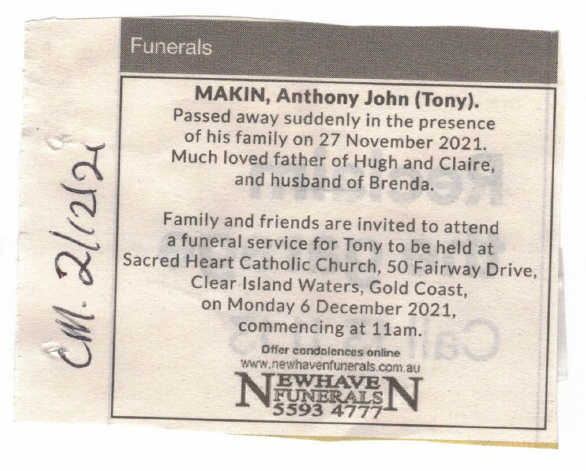
Categories
Podcast episode

EP116 – The Great Resignation

What’s going on with the Great Resignation, the record numbers of people leaving jobs in the US and the UK? Will we see it in other countries such as Australia? What can employers do to hold on to staff? In Episode 116, Economics Explored host Gene Tunny talks about the Great Resignation with his serviced office neighbours Anthony Bersz and Louise Gibson from Remedy Resourcing, a Brisbane-headquartered recruitment firm.

Here’s a video recording of the conversation via YouTube:

About this episode’s guests – Anthony Bersz and Louise Gibson, Remedy Resourcing

Anthony Bersz is Managing Director of Remedy Resourcing and Director of Remedy Information Technology. Anthony’s recruitment career started in 2010 working for one of the world’s leading recruitment agencies based in the UK. After a number of years supporting his candidates and clients throughout the North West of England, Anthony made the move to Brisbane, Australia. On arrival to Brisbane, Anthony continued his career within the same global brand supporting IT companies and professionals with their recruitment and career needs. After listening to the candidate and client frustrations of working with a large global agency, Anthony decided to create Remedy Resourcing to provide a more tailored and flexible approach.

Email anthony@remedyresourcing.com

Louise Gibson is Director of Remedy Legal. Louise’s recruitment career began in 2001 (whilst living in the United Kingdom) and for the next several years, she recruited for one of the largest recruitment agencies in the world, before obtaining a Directorship in the North West’s leading taxation and legal search and selection firms.  During this decade, Louise sourced both tax accountants and tax lawyers for Big 4 Accounting, magic circle law firms and other private practice and FTSE 100 companies.

Louise moved to Brisbane in 2012 and returned to the same international agency for several years where she took responsibility for managing the legal, professional services and finance team for their Brisbane office. It was here in 2015 that she was awarded the Queensland state record for the highest fees billed in a single period since records began. At the end of 2015, Louise joined Remedy to head up and develop the Legal recruitment arm of the business.

Email louise@remedyresourcing.com

Great Resignation charts Gene refers to in conversation

Who Is Driving the Great Resignation? HBR article

Top reasons for quitting jobs in the Great Resignation: health fears, burnout, and bad managers Washington Post article

The  Great Resignation Is Accelerating Atlantic Monthly article

Australia’s ‘great resignation’ is a myth — we are changing jobs less than ever before article by Mark Wooden showing Great Resignation hasn’t come to Australia yet

Escape to the country: how Covid is driving an exodus from Britain’s cities (September 2020 Guardian article)

Can Employers Lawfully ask Job Applicants if they have had the COVID-19 Vaccine? article mentioned by Louise in the conversation

Thanks to the show’s audio engineer Josh Crotts for his assistance in producing the episode. 

Please get in touch with any questions, comments and suggestions by emailing us at contact@economicsexplored.com or sending a voice message via https://www.speakpipe.com/economicsexplored. Economics Explored is available via Apple Podcasts, Google Podcast, and other podcasting platforms.

Categories
Economics Explored Live

Livestream featuring US jobless claims, Aussie GDP + farewell to Tony Makin

I did a livestream earlier today (Friday 3 December 2021) with my regular co-host Tim Hughes on the latest economic news of the week, including the latest US initial jobless claims confirming a strong US economy, the impact of the omicron COVID-variant on equity markets, and the September quarter Australian GDP figures which revealed the adverse impacts of NSW and Victorian lockdowns. You can click on and watch the video on YouTube below. You can also download the slides I showed.  

In the livestream, from around 22:05, I reflected on the late Professor Tony Makin’s contributions to the Australian economic policy debate, particularly on whether we should worry about the current account deficit in the late 80s/early 90s and on the effectiveness of the Rudd Government’s fiscal stimulus. On the current account deficit, Tony’s articles, along with the contributions of John Pitchford, clearly led to a change in the policy consensus on the current account, so it was no longer something that would be a macroeconomic policy target. Sadly, Tony died unexpectedly earlier this week. This came as a huge shock to so many of us, and it’s obvious from all the conversations I’ve had about Tony over the last few days just how much respect and admiration his colleagues and former students had for him. Tony’s funeral is on Monday on the Gold Coast (see notice below). 

Funeral notice for the late Griffith University Economics Professor Tony Makin, who will be greatly missed by his family, friends, colleagues, and former students.

Please get in touch with any questions, comments and suggestions by emailing us at contact@economicsexplored.com or sending a voice message via https://www.speakpipe.com/economicsexplored. Economics Explored is available via Apple PodcastsGoogle Podcast, and other podcasting platforms.

Categories
Podcast episode

EP95 – BS or pointless jobs

Nine-Fairfax media in Australia is reporting Record number of companies launched as COVID drives contractors, entrepreneurs. A couple of things are going on. There are people whose jobs were destroyed by the pandemic and have been forced into self-employment, but there are also people who have reassessed their lives and decided to quit their jobs and become self-employed.

This shift toward self-employment is understandable, given data which suggests that many workers in advanced economies think their jobs are mostly bullshit or pointless, as the late David Graeber, who was Professor of Anthropology at LSE, emphasised in his thought-provoking 2018 book Bullshit Jobs. Graeber nicely identified the five different types of BS jobs: flunkies, goons, duct-tapers, box-tickers, and taskmasters. I’m sure we’ve all known people who could have been characterised as one of these (hopefully not us)!

Even though I strongly disagree with Graeber’s main conclusions (i.e. many of these jobs really are BS from society’s perspective and we need to radically reform our economies), I must say I really enjoyed reading the book and was inspired to record an episode of my Economics Explored podcast on it. So please check out EP95 BS or Pointless Jobs and let me know what you think about the idea of BS jobs and whether you’ve seen people give up BS jobs to become self-employed or start up new businesses.

Please get in touch with any questions, comments and suggestions by emailing us at contact@economicsexplored.com. Economics Explored is available via Apple PodcastsGoogle Podcast, and other podcasting platforms.