Categories
Podcast episode

How I became an economist + advice for aspiring economists – EP141 transcript

Show host Gene Tunny (Left) having morning tea with Indonesian Ministry of Finance officials in October 2015, during a break from a short course on public policy processes.

In Economics Explored episode 141, host Gene Tunny discusses his career path as an economist and offers advice for aspiring economists in an interview with Francisco Garcia, host of the University of Queensland Economics Society (UQES) podcast Worldonomics.

You can listen to the episode using the embedded player below or via Google PodcastsApple PodcastsSpotify, and Stitcher, among other podcast apps. A transcript and relevant links are also available below.

Links relevant to the conversation

University of Queensland Economics Society

https://podcasts.apple.com/au/podcast/worldonomics/id1513275367

Transcript of EP141 – How I became an economist + advice for aspiring economists w/ show host Gene Tunny

N.B. This is a lightly edited version of a transcript originally created using the AI application otter.ai. It may not be 100 percent accurate, but should be pretty close. If you’d like to quote from it, please check the quoted segment in the recording.

Gene Tunny  00:01

Coming up on Economics Explored. And that was great because I got to spend a bit of time in Perth and Perth is a great spot. I love Cottesloe Beach, for example. And, yeah, there’s a great couple of great pubs there and there’s the Indiana tea house and it’s just magic walking along the beach in the morning.

Welcome to the Economics Explored podcast, a frank and fearless exploration of important economic issues. I’m your host, Gene Tunny. I’m a professional economist based in Brisbane, Australia, and I’m a former Australian Treasury official. This is episode 141 on how I became an economist, with some advice for aspiring economists.

This episode is based on a longer conversation that I had with Francisco Garcia from the University of Queensland Economics society. The conversation was for the society’s podcast; World and omics. So, if you enjoy Economics Explored, you might like to check out the UQES podcast too, after you listen to this episode of this podcast, of course.

I really enjoyed my conversation with Francisco. And it made me realize just how important certain skills and traits have been in my career so far, these are things I’ve had to work on, and that I’m still working on. One of those traits is being helpful to others. Because A, it’s a good thing to do and B, you never know just who will help you out in your career journey. It may not be who you expect at the time.

In the show notes, you can find relevant links and details of how you can get in touch with any comments or suggestions. And if you sign up as an email subscriber on our Economicsexplored.com website, you can download a copy of my eBook, Top 10 Insights from Economics.

Now for my conversation with Francisco Garcia of the UQ Economic Society. Thanks to Francisco for a great conversation and for letting me borrow the audio for this show. Thanks also to my audio engineer, Josh Krotz for his assistance in producing this episode. I hope you enjoy it.

Francisco Garcia  02:14

Hi, everyone. Welcome to another episode of our career pathway series. Today we’re joined by Gene Tunny, Director of Adept Economics. Gene, could you introduce yourself?

Gene Tunny  02:28

Hi, Francisco and if you’re in the audience, glad to have you with us. My name is Gene Tunny. I’m the director of Adept Economics. That’s a consultancy firm. We specialize in economic modelling, economic analysis, lots of cost benefit analysis, economic impact studies. And we’re based in Brisbane, Australia, although we work across Australia, we’ve done some work internationally too.

Francisco Garcia  02:55

Amazing. Thank you so much, Gene. We usually in our podcasts, we start with a fun question. So, Gene, if you were an animal, what animal would you be?

Gene Tunny  03:07

I think I’d be a tiger. Yeah, for sure. Just because, yeah, I guess I like the masculinity and the aggressiveness of the tiger. So, either a tiger or a lion. Yes, for sure.

Francisco Garcia  03:24

Oh, that’s amazing. That’s really good. Yeah. Fantastic. So, Jane, let’s start about your experience at UQ. So, what motivated you to study Economics?

Gene Tunny  03:41

Well, we have to go back a fair way. When I think about that, what motivated me to study Economics? So growing up in the 1980s, I don’t know if you’re familiar with Australia’s economic history, but we had a lot of economic challenges in the 80s. And we had a treasurer of Paul Keating, who was probably the most prominent treasurer we’ve had in the last several decades and in terms of getting out in the media and talking about economic issues. And I suppose, because there were all these economic challenges. So, it was obvious, perhaps, that we’re going to hear more from the treasurer, but Economics was always in the news in the 80s.

First, there was the flooding of the dollar in 1983. And then, there were, well, we had all these issues; with well, there was still some inflation, high unemployment as a legacy of the recession in 1983, we had what was seen at the time as a balance of payments crisis, we started having these big current account deficits, and then we had the dollar depreciated. And there were just all of this news about the economy and all of this discussion about what has to be done and there was talk about Australia becoming the Banana Republic, there was an infamous interview that the treasurer of the Australian treasurer, Paul Keating gave with John Laws, probably about 85 or 86. When he says if we don’t sort this out, we’ll end up as a Banana Republic by which he meant that we wouldn’t be a nation with a higher standard of living, we would end up at a lower level of economic development with perpetual political crises, unstable governments, and all the things you associated with that high budget deficits, high inflation, that sort of thing. And it really, captivated people; there was a lot of interest in economic issues, a lot of concern about the economy, and that motivated, well, that led to support for a lot of change. And so, there were things that the government of the day did cutting tariffs, and also, there was private there was privatizations of, of a government owned bank, the Commonwealth Bank; Commonwealth Bank used to be owned by the government, eventually, well, I think it was the next government how government had sold off Telstra; various micro economic reforms.

And this stuff was always in the news. When I was younger, this is going to sound a bit dorky. But I remember I used to watch business Sunday, when I was at school, and people like Terry McCrann, and who else was on it, some other prominent commentators at the time. And so, I just grew up absorbing this stuff and being interested in economic issues.

And so, I did study Economics in high school, but, it wasn’t really a major, I didn’t think of as a career path. I just did it because I was interested in the issues. What I did want to do, I did want to study law, I wanted to become a lawyer. Just because law was seen as an occupation, or something you did, if you were an academic high achiever. It was seen as a high-status profession. And so, I wanted to do law, so, I enrolled in law at UQ, and had to choose another degree because the double degrees were very popular at the time. And I had thought about either commerce or; I think I was initially thinking about commerce, that’s right. And nothing against accounting, I think accounting is important. I just thought based on what I was interested, I’d probably enjoy Economics more.

I wasn’t thinking of being an economist or having a career as an economist at the time, I was probably more interested in studying law; in becoming a lawyer, but I thought I Economics would be a good thing to pair it with.

So, that’s sort of how I ended up studying Economics that had to do with growing up with this stuff. Australia, having had that experience in the 1980s, all of those economic challenges, it’d been talked about within the community; it’s on the news, it’s on the radio, even, you know, ordinary people in the community are talking about this stuff more so than they are today, I think. So, it’s just generally fascinated by it. And I’ve been fascinated with Economics ever since. And so that’s why, it probably makes sense that I have gone down this route.

Francisco Garcia  08:28

Well, that’s amazing. Yeah, that’s really interesting. And so, I think you started then, law and Economics. So how was your experience at UQ?

Gene Tunny  08:42

I think it was excellent. Despite the fact that in the 90s, when I went UQ, it was a bit rundown. Now you go to UQ, it’s just beautiful. And you’ve got all these beautiful new buildings, and everything’s well maintained.

When I went in the 90s, In the early 90s, it was this period after there’ve been some reforms to the system, there was this dark analyzation; there was an expansion of the number of universities in Australia, and I think that meant less money for existing unis such as UQ.

UQ just didn’t seem to have the money to maintain the facilities. I remember that old physiology lecture theatre was just so rundown. So was engineering. But despite that, I shouldn’t be saying that. I’m just remembering what it was like back then. The facilities weren’t great. But what was great was just the environment and coming from high school where you just, I mean, you have to learn all of these formulae and you’re just getting drilled all the time, just having tests all the time and you have to turn up at this time for this class; it was just all very, what’s the word, regimental or authoritarian and uni was less so. I mean, you still had, you really did need to go to lectures, but no one was really forcing you to go. You went because you needed to go to be able to do well on the course. You go to uni; you’d know what it’s like. I mean, you meet a diverse range of people. You don’t just meet the people that you went to school with, you meet people from a wide range of backgrounds, and in even different parts of the world. You’ve got lecturers who, some of whom are great researchers who are well renowned in their field and really challenged you. And I thought it was fabulous, you know, learning and obviously you learn new things. And, you actually learn things more quickly than at school.

So, yeah, I thought it was fantastic. I really enjoyed University. And UQ I think is a great uni. Despite the built environment at the time being pretty rundown. It’s such a beautiful campus and the Great Court is, I mean, that’s got to be one of the best. quadrangles courts of any university within Australia. It’s just such a beautiful place. And when you have the jacarandas blooming in October to signify the exam period coming on. It just looks beautiful.

Francisco Garcia  11:31

That’s so true. The Great Court, it’s amazing, surrounded by sandstone buildings. Like I haven’t seen anything like that. But I think you just ruined the Jacaranda moment for me. I never associated it with the exams period.

Gene Tunny 

Oh, haven’t you? Ah, yeah.

Francisco Garcia 

Maybe it was my first semester too. But no, I’m kidding. It’s so beautiful. Like not only at UQ but close by in St. Lucia. Right. Like, I’m impressed with how good it looks.

And Jean, you also did an honorshonors. I understand it’s in the field of Economics, not the honorshonors from law, right? Yeah. Would you mind sharing how was that year for you?

Gene Tunny  12:21

Oh, that was great. I mean, that was probably after I’d studied a few years, I’d done both law and Economics. And I think at that stage, I was leaning toward perhaps, pursuing a career in Economics, or it was an option. I thought of it as an option. And hence, I thought, well, it would be good to do honorshonors in Economics for a couple of reasons. One, because I thought I’d learn new skills. And you have to do a thesis as part of that, and so that you get good experience writing reports, doing Economic Research; I thought that was important.

Possibly what tipped me into doing it was I did have some great lectures that I think, you know; one of the things you look back on, maybe you don’t realize at the time, but you look back, and there are some lecturers who do stand out and really, challenged you, and really made Economics enjoyable, and just made you see where it could go, what the big questions were, what good economic research and analysis looks like. And in the final year, when I did third year, there were two in particular; I don’t mean to sort of denigrate any of the others I had who were excellent, but the two are, I remember, were Harry Campbell, who was a professor of Economics there. And he did micro Economics, he did a really good class in Advanced Micro Economics. And that was fabulous. And Phil Boardman who did advanced macro Economics. And they’re both exceptional. And, both Phil and Harry and other lectures I had made me think, well, maybe I should think more about Economics.

The other thing I had in the back of my mind as well, it’s another year, I can always do law, I can finish the law degree afterwards. And it would be good to have; because at the time, maybe it’s less so now. But, in the 90s, it was very competitive to get into positions inside the Reserve Bank or the Treasury or the Productivity Commission. So, the top employers of economists at the time in Australia, I mean, they’re still good places to work, but there are more avenues now. More places to apply. You really needed an honors degree to work at those organizations and ideally, a first class honors degree. So that was in the back of my mind, too. Yeah, so that’s essentially why I applied, I thought it would be a good way to expand my skills. I was inspired by some of the people who were teaching me and also I thought, well, if I did want to get a job at somewhere like Treasury or reserve bank, then it would be good to have.

Francisco Garcia  15:17

Yeah, amazing. Yeah, that definitely explains it. It’s quite a good motivation. From what I heard, I think people planning to work at least at the RBA, I think it’s kind of recommended to have at least the honors. So yeah, no, I don’t think things changed too much from that. So, after finishing your honors degree. You worked for the public sector for quite a few years, right?

Gene Tunny  15:51

Eventually. So, I started doing a PhD at UQ. I never finished it. I mean, one of my great disappointments; I never really finished that. But after that, toward the end of it, I thought I wouldn’t mind getting some applied experience. So, I applied for a job in a research unit that was run by John Mangan. I don’t know if you know, John Mangan. He was a professor at UQ. And then he ended up running the Institute of Business Economic; very good liberal economist, very practical, great person.

John was the Research Director at this labor market research unit that was set up by the BT government, which was a Queensland State government here, back in the 90s; late 90s, early 2000s. And it was dedicated to doing research into the labor market, because we still had relatively high unemployment at that time. It might have been 8 to 9%; I can’t remember the exact number. But it was higher than it really is desirable. I mean, now we’re down to around 4%, right? So you think of that it was twice what it is now.

So, they set up this research unit. And I saw that and I thought, well, that would be a good place to work. So, I applied there and ended up working there. And just yeah, really found in working in that environment. Yeah, I enjoyed it. I enjoyed being involved in a job where you could do both Economics, you could do economic analysis, and research. And also, you could have some involvement in the policy process. And so yeah, that was essentially why I went that way. I thought, well, I really do want to do applied work. And yeah, there was that opportunity. So, I took that up at the time.

Francisco Garcia  17:57

Now that’s very interesting. Yeah, I didn’t know about the beginning of the PhD. But that’s super interesting. Well, I think then, after you work there, then you work a few years in the public sector, right? I would like to know, how was it? And how did you end up at Australian Treasury?

Gene Tunny  18:21

Oh, yes. So that research unit, I should have mentioned was in a public sector agency, it was in the Department of Employment and Training. And, yeah, I worked in that department for a few years. And then what happened? It was a big department and they got broken into two and I went from the one department to the breakaway department, which was industrial relations toward the end of my time in Queens and Public Service.

I went to work for a unit called the Workers Compensation Policy unit. And that was really good. There was a lot of really good applied work there, a lot of good policy work, whereby we were making changes to the funding; the way workers compensation was funded in Queensland. I had a really good boss there, Paul Goldsborough, someone who was a mentor to me, and I mean, very good policy operator; I learned a lot from him and he was very generous to me and very important in my career progression. So, incredibly grateful to him.

I got to know Paul; this is how funny things are right? I mean, so much, is influenced by things that you think are quite random. Okay?

One thing important that happened to me was when we had the labor market research unit, we were on the sixth floor of the Neville Bonner building on William Street in Brisbane. It was by the river. Jim saw it was a Lord Mayor thought it was the ugliest building in Brisbane, I think that was a terrible thing to say. He just didn’t like the modern architecture; I quite liked it. And being by the river, it was great, because you could easily get out onto the bike path. And I used to ride in from Auchenflower at the time, and it was easy to get out to go for a run along the river; I thought it was fantastic.

But anyway, we’re on the sixth floor of this building, Neville Bonner on the same floor as the director general. And across the hall, from me; across the corridor was the Workers Compensation Policy unit at the time ran by Paul. And I just got to know Paul, just because you know, you’d run into each other. And we have a laugh together. And occasionally, I’d help because I had good analytical skills. And so, I’d often help people in his team and with their briefings when they had to calculate different numbers they needed for their briefings. Because with workers comp, there’s a lot of analysis of how claim rates have changed, and that sort of thing.

So, as a percent of the total workforce, are there fewer injuries today than there were, you know, whenever in the past, and you’d analyze it by different occupations and different regions and things like that. So, there was a bit of number crunching, I’d help them out with that from time to time. And so, I got to know Paul. And then when he needed someone to help out on this cabinet submission on the funding of Workers Compensation in Queensland, whereby we introduced an explicit levy to fund workplace health and safety. So, I ended up going over to Paul’s team Workers Compensation Policy unit, which was part of the Workplace Health and Safety Division within the Department of Industrial Relations. So, I went over there; I moved out of the labor market research unit, and for a year or so, maybe a bit longer than a year, I was doing really practical policy work with Paul and you know. I really enjoyed that and we would be briefing the minister’s office or the minister would get into Parliament House and, you know, provide briefings to the minister, it was just really stimulating; really enjoyed it; I learned a lot about practical policy-making.

Francisco Garcia  22:36

Well, that’s super interesting, and how, how interesting it is how careers play out, right? It’s just someone that you were working and, and Matt in the same floor.

Gene Tunny  22:50

Yeah. And I think those opportunities are there all the time. And I guess the lesson is, I suppose you know, be friendly, be as open as possible. And yeah, because you never know, where those opportunities can come from. And when I look back, I mean, having been opposite, Paul, was so incredibly important, because if I was on a different floor, I wouldn’t have got to know him. And then I may not have ended up working for him for that time. And then, you know, getting that experience.

Paul’s been important in other regards too. There was also a great Director General, we had Peter Henneken, who was also influential to me. Paul and Peter were good mates. And Peter was a former Commonwealth public servant. So, I learned a lot from Peter too.

But how Paul is important in my story, too, is that it was Paul who took me to the breakfast that was; it was a function of the, I think it was the Australian Institute of Public Administration, the Queensland branch, and they held a breakfast sometime in 2004. Maybe it was June or so. And the speaker was Ken Henry, who was then Secretary to the Treasury. So, this is how I ended up at Treasury.

Although I’d always had in the back of my mind; always had the idea, it would be good to work in the Treasury one day, or I’d like to sort of, work on national economic policy issues. So, when I was really young, not always look at the bank notes, or the currency notes, and you’d see on the notes that there’s the signature of the Secretary to the Treasury, along with the Governor of the Reserve Bank, and when I was young, they were all signed by either Frederic Wheeler, or John Stone who followed Fred Wheeler. And I always wondered, well, who are they and they must be important people if they get to sign the bank notes. I always had this idea that the Treasurer was an important institution and could be a good place to work.

So, Paul took me along to this breakfast in June 2004. And Ken Henry spoke, and it was the time that Treasury was doing all this work on the intergenerational report on the ageing of the population and what that meant for future GDP growth and what that meant for the future budget.

Ken Henry was incredibly analytical, but he could explain what he was doing very simply. And, you know, he just went through it all and told us what the facts were and what they meant for the budget. And he had some great charts as well. You know who I’m talking about with Ken Henry? Very impressive operator. He worked for Paul Keating, at one stage; he was one of Keating’s advisers; very polished, very well presented, very calm; Ken was great. And I remember coming out of that thinking, I want to work for that guy. So, I wanted to work for Ken Henry.

So the next time that there was a Treasury, bulk round advertise; Treasury, every six months, has a recruitment round, where they just advertise for policy officers. And, I thought, Oh, this is great. I may as well apply; throw my hat in the ring. I applied for a mid-level position in the Treasury, which was sort of equivalent to what I had in the Queensland public service. And yeah, I don’t know. I think I was competitive for various reasons. I think I had a good CV at the time, I think I was confident, because I had some successes within the Queensland public service. And probably what got me over the line, though, was because I had been to that talk of Kens. I was able to say how much I respected what Treasury was doing, how much I was excited about it, how I really want to work with Ken. And, and I think that probably got me over the line just because it gave me that extra enthusiasm.

Possibly, because I’ve done work in labor Economics, one of the members of the recruitment panel, Steven Kennedy, who’s the current Treasury Secretary; maybe that impressed Steve, and I’m not sure. So. Yeah, that’s sort of how I ended up in Australian Treasury. Having gone to that breakfast that Paul took me to, was, I think that’s part of the story for sure.

Francisco Garcia  27:58

Wow, that’s true. Again, it’s incredible how things play out. And I’m sure that being that you’ve been in the same breakfast as him and saying that you really wanted to work for him helped you to join the Treasury. And how was your experience of working at the Treasury?

Gene Tunny  28:24

Oh, fantastic. I mean, I think lots of great experience and lots of high points. There were some low points, I mean, I did eventually leave. But mostly, it was very educational, a lot of hard work as well. And very important. I mean, you just realize that you can have an influence on economic policy at a national level, but you do need to do the work and you need to be well prepared. You’ve got to think about all of the issues and just what the impacts of policy can be.

I found it very rewarding. I mean, I worked on various different things; G20 matters, budget matters, industry policy matters, such as car industry assistance. And also, well, budget policy toward the end, the response to the financial crisis, debt policy issues, all of that sort of thing. So, a wide range of experiences within Treasury that I found rewarding.

Just toward the end, there was a very difficult period. And I think for a lot of people in Treasury, to around the time of the financial crisis; very long hours and very challenging issues. And at that time, probably around sort of mid-2009, I thought, well, now could be the time to take up a different opportunity and so I came back to Brisbane from Canberra to work with a good friend of mine Tony Hand, who I met at UQ when I was studying there and he was now running the Brisbane office of Marsden Jacob, which was a consultancy firm. And so, I decided to come back and I thought, well, Tony be good to work for again, and he’s someone who I was inspired by and very impressed with because he was incredibly analytical. He thought about things, very rigorous, nice person, great person too. I thought it would be a good time to come back. So I came back to work for Marsden Jacob.

Francisco Garcia  30:47

Ah, wow. Yeah. That what I believe during the crisis, it might be definitely not the easiest time to work in a Treasury or anything related to economy of finance, and many other places. I was working for, P&G at the time. And I remember, I was an intern, almost of none of the interns were hired as a full time at Procter and Gamble, especially the ones in Sales; I was lucky to be the one in IT. So, I got the job, but a lot of people didn’t. So, not that easy.

About Marsden Jacob, would you mind sharing a little bit what you guys did over there?

Gene Tunny  31:34

Okay. Well, it’s a consultancy firm. So, it does work for clients. And it had a bit of a specialization in Natural Resources and Water and agriculture – agribusiness. Projects I did there included things like analyses of irrigation, investments, that sort of thing. Investments in, there are things called lateral move machines and center pivot machines for irrigation, or they could be building a larger dams for example; those sorts of projects.

So, we did some analysis of that for a department, which was subsidizing some of those investments. There was some money that was set aside for improving water use efficiency on farms for as part of the Murray Darling Basin Plan. That was a sort of thing we’d do.

We were contracted by the Natural Resources Department here in Queensland to do that sort of analysis to help them assess different proposals for that scheme. That was one example. There are examples of, you know, evaluation of different policies, such as the TravelSmart programme in WA; so one of the most enjoyable projects I did when I was at Marsden Jacob was a review of this programme to encourage public transport and also active transport, so cycling and walking in Perth. And so, we looked at a whole range of data to look at, was this actually having an impact? What’s the return on investment there?

And that was great because I got to spend a bit of time in Perth and Perth is a great spot. I love Cottesloe Beach, for example. And, yeah, there’s a couple of great pubs there, and there’s the Indiana tea house and just magic walking along the beach in the morning.

So, I really enjoyed that; it was probably the highlight of Marsden Jacob. Think about a lot; there’s a lot of travel. One thing with consulting, because you often have clients all around the country, occasionally internationally, you do a bit of travel and Marsden Jacob; because it was a national firm meant that I was travelling quite a bit.

So, a wide variety of projects, some private sector projects. Some helping a manufacturing business; look at the Economics of their product, like what cost savings does their product, what could it deliver to customers such as a council for example. One client that I did work for initially at Marsden Jacob and then later I’ve done work for them at through Adept Economics was a company called Urban Turf Solutions, UTS which produces synthetic turf. The artificial grass and I did some work showing just the cost effectiveness of that product just how much you save by not having a mullet, and not having to weed, not having to use pesticides etcetera.

So, they’re all the savings from having that product. And so, I was able to demonstrate that. I did work for the education department here in Queensland, looking at the Economics of a new school that they were looking to set up in Townsville at James Cook University. It didn’t go ahead at the time. The Economics of it weren’t great, because there were already a lot of high schools in Townsville with spare capacity. I don’t know what the situation is now. But at the time, it just wasn’t the right time for it. Yeah,  various different projects.

So, it was very enjoyable. And yeah, I really did enjoy the travel now that I think about it. I got to go to lots of interesting places, you know, travelled across the country, I really enjoyed that.

Okay, we’ll take a short break here for a word from our sponsor.

Female speaker  35:56

If you need to crunch the numbers, then get in touch with Adept Economics. We offer you frank and fearless economic analysis and advice. We can help you with funding submissions, cost benefit analysis studies, and economic modelling of all sorts. Our head office is in Brisbane, Australia, but we work all over the world. You can get in touch via our website, http://www.adepteconomics.com.au. We’d love to hear from you.

Gene Tunny  36:25

Now back to the show.

Francisco Garcia  36:29

So now finally, we are at Adept Economics. Gene, can you tell us how it was to start Adept Economics and what you guys have been working with?

Gene Tunny  36:44

Okay, it was actually easier than I expected to start the firm, at least in terms of the mechanics of it. It’s just incredibly easy to set up a business nowadays with modern technology and software services. So that sort of thing was quite straightforward. I mean, I had to just have to get an Australian business number. So, you will register for GST. You’ll need a website that you can find; there are cost effective ways to get a website. I knew someone who was able to give me a good deal on developing a website, you could also use something like I think it’s Squarespace or Wix, you could probably do it yourself. There are so many good templates out there.

The challenging part is, of course, getting the business, getting the revenue, getting the clients; I guess I was lucky in that I already had a really good network. And there are people I’ve done work for, as a consultant already through Marsden Jacob and I didn’t steal any clients or break any agreement I had with the company. I think that sort of thing is, is not cool. So, I didn’t do anything like that. But I didn’t steal any exclusive clients or clients that I got through Marsden Jacob.

There were clients that only came to me when I was at Marsden Jacob because I was there. So, they’re effectively my clients. So, I knew that because I was able to bring in work when I was at Marsden Jacob that I could probably do it on my own. It was one thing I found when I was working for Marsden Jacob which is a very good firm, I don’t want to run them down at all. But when you work as a consultant, you often; and a lot of firms are like this, you eat what you kill, if you know what I mean. You often have to bring in the business. Some other firms are set up a bit differently. So, if you’re in a big four firm, there’s the finder, minder, grinder model, whereby if you’re the grinder, you’re the junior person, you just do all the sort of data analysis, I was going to say data entry, but no one does that anymore till you just get everything online or just read things in from the PDF. Then, do the charts – the grinding work, reading the papers, summarizing information into tables, that sort of thing.

Then, there the mind, is the manager who oversees the work. And then there are the finders. They’re the partners; they’re the ones who have all the connections and they’re the ones who bring in the big contracts.

In boutique firms, in smaller firms, you often end up having to bring the work in yourself, you’re the one who’s sort of, needs to bring in the clients and then you work on those projects. You can team up with others in the firm to help you win projects. But it does help a lot if you’ve got your own network and you can bring them in. And so, from my experience in Marsden Jacob, I realized I could probably do that; it wouldn’t be as easy as it was in Marsden Jacob because I was working with others there in the firm on to get different projects and the company did have a, it had an established presence in the market. So that was helpful. But I thought I am doing a lot of things on my own already. And I can probably, it probably made sense for both me and for Marsden Jacob as well for me to leave the organization. And so, I went out and set up on my own. Yeah, seems to have worked out, I have managed to keep going, to stay in business. And you know, the goal now is to try and grow that business to expand.

Francisco Garcia  40:53

That is that is very interesting. And if you would summarize a little bit, what type of work do you guys do in Adept Economics, what would they be?

Gene Tunny  41:09

It’s all sorts of things. It’s business cases. So, for example, I’ve looked at the Economics of an algae farm for a company Woods group out at Gunde-Windy. So, they’re developing an algae farm, they’re looking at producing some products, using that algae, some food supplements, potentially an omega 3 rich oil from the algae. And so, I’ve helped them out with some economic analysis.

More recently, I helped out a managed fund or a fund manager here in Australia – Coolabah Capital. I did some work for them, forecasting state budgets. I’ve done work – well, I do a lot of work with Nicholas Gruen, who’s an economist in Melbourne, quite prominent economist. He’s got a business called Lateral Economics. So, I often work with Nicholas on projects for various clients. We did something earlier this year. And the year before for Services Australia, which is the agency which oversees Centrelink, basically. And we did some analysis of the potential benefits of a programme of work; they’d been undertaking called the welfare programme infrastructure transformation. So, Services Australia has been putting a lot of effort into upgrading their systems to make them all run more smoothly and make it easier for Australians to access their services via myGov. So, making that experience better, which is potentially going to save users a lot of time and deliver value to the community. So, Nicholas and I did some analysis for them of that.

Also, we’ve done economic impact studies, looked at various policy issues, negative gearing, for example, for a financial planning firm, I’ve helped; I helped Toowoomba Council get some funding, I think it was about 5 million, they got some funding to upgrade a railway goods shed that they had in Toowoomba. So, I helped them with their funding application for that. Because whenever businesses or councils are making applications for funding for grants, they’ll often need some sort of economic study, or if they want to get a development approval or some sort of tick, they’ll often need an economic impact study, or a cost benefit analysis to show that this project will deliver these benefits to the community or create these jobs.

So, there’s a bit of work doing that sort of thing. I’ve also been involved with the whole process around Paradise dam, and looking at the Economics of that dam and what the costs of the community would be if they didn’t repair the dam properly, which would mean that you might not have as much investment in macadamias, and high value crops as otherwise, and then that would be a loss to the community. So, I was involved in that process.

The State Government has decided that it will repair that dam, which is good news. So, it was a dam that was damaged when there was a big flood back in 2014. And they lowered the dam wall temporarily because they were worried about dam safety. There is a risk because if a dam was damaged, then if you get enough water behind it, the dam could crack, the dam wall could fail. It could break open water, lots of water rushes down into the valley, and obviously bad results. You don’t want that. So, government’s right to probably right to lower the dam, then they were thinking, well, maybe we don’t put it back where it was because, well, they were arguing that that additional water wasn’t necessary because it wasn’t purchased. But what the community argued was, well, we will purchase it in the future, because we’re investing in all of these high value crops. So, there was a bit of an economic analysis there that I did of what the future looked like. So, and that arguably did help that contributed to the state government’s decision to repair that dam.

So, wide range of things and can be, stuff can be influential in decision making, and government decision making. I’ve also done teaching, as part of my work through Adept, because I have that flexibility, effectively self-employed, I mean, I’ve got a research assistant who works for me. But I’m effectively, self-employed. I can choose my own sort of jobs; I can do what I want to do. And one of the things I like doing is I like doing some teaching, from time to time, I’ve done a bit of work with UQ International Development with the University of Queensland economic development. Then the economic development arm of UQ. And they do a lot of capability, building courses for foreign officials, particularly in our region.

So, I’ve done several courses with Indonesian officials from their finance ministry or Ministry of Economic Development, bapandass; things, courses on just general public policy, processes and cost benefit analysis, natural resource Economics. What else have we done stuff on? Infrastructure financing, a range of courses. And that’s been a great opportunity, because that’s meant that I’ve had an interaction with officials in Indonesia and learned a lot about the issues affecting their economy. And I’ve also travelled over there and delivered courses in Bandung, in Java; And that’s generally where we’ve held them. There’s a great hotel on a gorge there. The, I think, it’s the Padma Bandung; it’s a great hotel, a beautiful location. Indonesia is a beautiful place, very lush. And I mean, you’ve got old Java, you know, fascinating place, Jakarta is a huge mega city. And there’s also Bali, I mean, Bali is an amazing Island, just one of the most beautiful places in the world. So always love working with, doing work for UQ International Development and doing those courses for Indonesian officials. It’s such a great opportunity and privilege.

Francisco Garcia  47:56

Gene, at this point of the podcast, we might start wrapping up, right? I think, like we explored your whole career. And so back to Adept Economics, if our listeners are interested in working with you, what advice would you have for them,

Gene Tunny  48:16

I would say that they really should work on developing their skills; just be as good as you can be in your field. I mean, that is just so invaluable. Just become the best economist or the best financial analyst or, or whatever it is you’re doing. Just become the best you can be or the best Economics or finance student at UQ or whatever university you are.

Really develop those skills and be able to demonstrate that you can apply those skills; and that’s not necessarily with work experience that could be through articles, or it could be through a sub stack or it could be through recording your own videos or doing your own podcasts. I mean, what’s amazing nowadays is that, with technology, everyone has access to the means of production, okay? Like 30 years ago, when I was at uni, I mean, the idea that you could record yourself with reasonable quality and broadcasted to the whole world was just ridiculous. You couldn’t do that, you’d need to have your own radio studio to do that right? I mean, we couldn’t do this sort of thing.

Likewise with video, I mean, maybe you could you get a camcorder and record yourself on on a videocassette, on a VHS tape, but you can’t broadcast, you’d have to you know, you’d have to send it to Channel Nine and they’re not going to do anything. They’re not going to broadcast your amateur video recording. But now, that everyone’s got access to the means of production, and as a uni student, if you’re asking on behalf of uni students, you can create content. You can write papers; you can write articles. So, I’d be trying to develop those skills. I mean, some work experience could be good if you can. I’m limited in what I can offer, because I’m just a small operation. And I can’t I don’t take on interns generally, because I just don’t have the capacity. But some other organizations do take on interns. So, if you get an internship, or a part time job, but it’s not essential, because there are other ways of demonstrating those skills.

Really work on your craft. A couple of books I can recommend, well, a few books, actually, there’s one book by Seth Godin Linchpin; “Be Remarkable”. So, one thing that Seth Godin says is remarkable people don’t have CVs. Now, this sounds a bit crazy. What are you talking about? What he’s saying is that if you’re truly remarkable, then it’s your work that speaks for you, you’ve got products or content out there. And it could be papers, it could be articles on websites, it could be podcasts, it could be videos; that’s what is important nowadays, in the modern economy. And in, in this new world that we’ve been living in, that started off in the mid-90s, with the arrival of the World Wide Web and in which has just transformed the way we live and the way we work. It’s just so profound. And yeah, that means that there’s an opportunity for everyone, if you can work on developing your skills and producing good content, you can reach an incredible number of people.

I wouldn’t think about well, what do I need to do to work for a particular firm? I’d think about how do I make myself as remarkable as possible in this field? In the field that I’m interested in? Look at what the people who are at the top of the field; well maybe a few years ahead of where you are? What are they doing? What have they done? What are they producing? Can I do something similar? Can I engage with them? Can I comment on their blog? Or could I, you know, provide? Is there some way I can add value to them? Can you email them? Can you say, Hey, I listen to your recent episode, do you know about this book, or this article; you might be interested in this, that sort of thing?

I don’t know, there are a whole range of things you can do. But it’s about being remarkable. Just trying to learn as much as you can and also interact with the people ahead of you in the field, I think that can help. So that’s one thing, try and be a linchpin that Seth Godin spoke linchpin. I read that; I think that’s what encouraged me to start blogging back in 2010. Because I read Seth’s book. And Seth is very strong on this point about well, remarkable people don’t have CVs, their work, speaks for them. And that made me think, okay, if it’s not for where I’m working, like, is there anything about me that’s remarkable, right? Like what do I have to show that I’m a good economist, that I’m someone people should pay attention to. And that encouraged me to start doing more work, to start trying to write more, do blogging, write articles for publication, that sort of thing.

So, I know that sounds hard, but that’s what you’ve got to do, unfortunately, in this modern world. Well, not unfortunately because if you produce good work that that’s good for you that that makes you feel good. And you’re participating in this great thing we’re all involved in; this great conversation. So, I think that’s one bit of advice.

Also, I’d be reading books by Cal Newport; or following Cal Newport, his stuff, his Deep Questions podcast is excellent. His book, Deep Work, which encourages you well, I think is a good guide on how to be incredibly productive, how to be focused. The type of work you should be doing is the deep work really, really delving into a topic. Making sure you understand it, really do the focused work and try and produce a product that you can present to the world and get feedback on; something that is remarkable. He’s trying to get you to that position where you’re so good, they can’t ignore you. That’s another one of Cal Newport’s books I’d also recommend.

So yeah, that’s what I would say. Just really focus on being as good as you can and figure out how you can demonstrate that. So, you try and try and produce work that will impress people that people will; maybe impress is the wrong word, that others would be interested in reading and can give you feedback on and then that will help you progress that will help you improve over time.

Francisco Garcia  55:20

What a fantastic advice like a range of advice here. Gene Tunny, thank you so much for joining our podcast. It was a pleasure talking to you.

Gene Tunny  55:34

Okay, that’s the end of this episode of Economics Explored. I hope you enjoyed it. If so, please tell your family and friends and leave a comment or give us a rating on your podcast app. If you have any comments, questions, suggestions, you can feel free to send them to contact@economicsexplored.com and we’ll aim to address them in a future episode. Thanks for listening. Till next week, goodbye.

Credits

Big thanks to Francisco Garcia from UQES for interviewing me and for letting me borrow the audio, and to the show’s audio engineer Josh Crotts for his assistance in producing the episode and to Peter Oke for editing the transcript. 

Please get in touch with any questions, comments and suggestions by emailing us at contact@economicsexplored.com or sending a voice message via https://www.speakpipe.com/economicsexplored. Economics Explored is available via Apple PodcastsGoogle Podcast, and other podcasting platforms.

Categories
Podcast episode

Economic development through savings and credit groups w/ World Neighbors CEO Kate Schecter – EP140

Kate Schecter leads World Neighbors, an international NGO helping poor communities in developing economies lift their living standards through local savings and credit groups among other measures. In Economics Explored episode 140, hear Kate describe how these local savings and credit groups differ from Grameen-style microfinance. Also hear Kate describe how on-the-ground, practical measures can give people a hand up, not a hand out.

You can listen to the episode using the embedded player below or via Google PodcastsApple PodcastsSpotify, and Stitcher, among other podcast apps. A transcript and relevant links are also available below.

About this episode’s guest – Kate Schecter, Ph.D.

Kate Schecter, Ph.D., joined World Neighbors as President and CEO in June, 2014. In her previous position, she worked for the American International Health Alliance (AIHA) for 14 years. As a Senior Program Officer at AIHA, she had responsibility for managing health partnerships throughout Eurasia and Central and Eastern Europe (CEE). She also managed a blood safety program in Ukraine, Central Asia and Cambodia from 2012- 2014. In the early 2000’s she managed a program on the prevention of mother-to-child-transmission of HIV (PMTCT) in Ukraine and numerous pilot sites in Russia and Central Asia.

Through her work with over 35 partnerships addressing primary healthcare, chronic disease management, hospital management, maternal/child health, Tuberculosis, blood safety and HIV/AIDS, she has extensive experience successfully implementing AIHA’s health partnership model.

Before joining AIHA, Dr. Schecter worked as a consultant for the World Bank for three years (1997-2000), specializing in healthcare reform and child welfare issues in Eurasia and CEE. She taught political science at Tel Aviv University in Israel for a year (1992) and at the University of Michigan in Ann Arbor for four years (1993-1997).

She has written extensively about the Soviet socialized healthcare system and was a principal investigator for the Carnegie Corporation’s Russia Initiative where she researched the issue of social cohesion in Russia. She is the co-editor and co-author of Social Capital and Social Cohesion in Post-Soviet Russia (M.E. Sharpe, 2003), author of a chapter in Russia’s Torn Safety Nets: Health and Social Welfare in Post-Communist Russia (St. Martin’s Press, 2000), and an entry on Chernobyl for Scribner’s Encyclopedia of Europe 1914-2004, (2006). She also has made three documentary films for PBS about the Former Soviet Union. Dr. Schecter holds a Ph.D in political science from Columbia University in New York and an M.A. in Soviet studies from Harvard University.

Links relevant to the conversation

A New Paradigm for Microfinance: Savings and Credit

COVID-19 and the Global Food Supply: Big Lessons from the World’s Small Farms

Videos – World Neighbors

Transcript of EP140: Economic development through savings and credit groups w/ Kate Schecter

N.B. This is a lightly edited version of a transcript originally created using the AI application otter.ai. It may not be 100 percent accurate, but should be pretty close. If you’d like to quote from it, please check the quoted segment in the recording.

Gene Tunny  00:01

Coming up on Economics Explored.

Kate Schecter  00:04

We went way up into the mountains in Timor-Leste. And they had saved this community in a couple of years, had saved $36,000.

Gene Tunny 

Wow!

Kate Schecter 

And we were able to then loan to each other and start to develop really wonderful businesses.

Gene Tunny  00:23

Welcome to the Economics Explored podcast, a frank and fearless exploration of important economic issues. I’m your host, Gene Tunny. I’m a professional economist based in Brisbane, Australia, and I’m a former Australian Treasury official. This is episode 140 on economic development, through savings and credit groups. My guest this episode is Kate Schecter, President, and CEO of World Neighbors, a non-government organization supporting economic development projects in emerging economies across the world.

I got a lot out of my conversation with Kate. In particular, I learned about the power of local savings and credit groups in rural areas. I also learned a lot from Kate’s stories in the field working on economic development projects. For instance, I learned that Guinea pigs are a delicacy in Peru. Why is that fact relevant? Please listen to the episode to find out. Unfortunately, the internet connection was a bit unstable early on in the conversation, but it gets better later on. So please stick around. As Kate has a lot of really valuable things to say about economic development. Please check out the show notes for relevant links, any clarifications, and details of how you can get in touch with any comments or suggestions? I’d love to hear from you. Right on, now for my conversation with Kate Schechter of World Neighbors. Thanks to my audio engineer, Josh Crotts was assistance in producing this episode. I hope you enjoy it.

Kate Schechter, President and CEO of World Neighbours, welcome to the program.

Kate Schecter  01:51

Thank you for having me.

Gene Tunny  01:52

It’s a pleasure, Kate. Keen to speak about the work of your organization and the work you do in economic development worldwide. Could I ask you first about World Neighbors, a bit about the organization? What it does, and also its history please?

Kate Schecter  02:13

Oh, thanks so much for asking. World Neighbors is a 71-year-old organization. So, it was founded in 1951. It is a non-sectarian, it’s not a faith based organization. But it was founded by a Methodist minister in Oklahoma, in the United States. And it has; the founder was very, how should I say it, but he was quite prescient about some of the challenges that we all face in the development sphere. He realized very early on that he wanted to create a methodology that would not create dependency, that would allow people to lift themselves out of poverty, as opposed to sort of handing out things to people. And he created this organization that really tried to reach the poorest of the poor, in the most remote, isolated rural areas of the world. And the organization has thrived despite all the challenges that, you know, all of the people who want to do good for the poor have faced over the years. And we’ve been, at this point, we’ve been in 45 countries. Today, we’re in 14 countries in Asia, Africa, and Latin America. We reach about 600,000 people a year. And the way we do that, we have; it’s a relatively small organization. We only have 57 staff around the world, with offices in the capitals of some of these countries. But the way we do it is through community-based organizations. So we go into these very poor communities, we look to see are there any kind of community organizations formed to kind of, lead the charge, and if we don’t see that there is a leadership formation, then we help them create their own community-based group that will follow through on all of this training that we’re going to do. So, the basis for our work is training. And I think a lot of organizations will tell you that, you know, the best way to help people is to do capacity building, and to create demonstration sites, etc. The big challenge there, of course, is you can train and train but if somebody doesn’t actually follow through, and watch to see that, that everything that you’ve invested is really happening on a regular basis, then, of course, it’s kind of, it could be wasted effort. So, we create these community-based organizations to be the eyes and ears on the ground and to mentor and to lead within the communities. The organization focuses on, obviously, like everybody, on sustainable development. We’re not, although, we do differentiate ourselves from humanitarian aid, we try to go into communities that are relatively stable so that we can help them to lift themselves out of poverty, and then become independent. We have a methodology that recognizes though, that this kind of change in these very rural areas can take a long time. And so, we stay in a community for 8 to 10 years. And we; with different levels of funding at the beginning and at the end, but in the middle, we’re really kind of, we’re at a high point of a lot of training and a lot of mentoring, and then ratcheting it down as we tried to help them figure out how to attain funding for all the things that they want to do. It’s, of course, focused a lot on women, because we’re trying to help women in these poor and rural communities to have more of a voice. Many times, we go into the communities, the men have to go out to, to get jobs in the cities or even out of the country. And then they send home remittances. So of course, one of our goals is to try to help these families stay together, and to have thriving farms and thriving businesses so that they don’t have to be separated. So, the model is taking from many different places. We’re partners with, wherever we can be with other organizations or with umbrella organizations are focused on innovations in agriculture, in new forms of energy, and whatever might be happening on the ground. We are part of several umbrella organizations in Africa, especially, that are doing a lot of innovative work in growing crops that are more resilient to climate change. And that can last longer, so that the communities will have more food security for more of the; for a year. And that’s happening in India and Nepal, as well. And in Indonesia, and Timor-Leste.

The other thing that’s kind of exciting about having an organization like this is that we can share these innovations around the world. So, I have a, you know, the opportunity and get to see what’s happening in all of these different communities. Well, before COVID, I was travelling a lot, to see what was happening. And I would be able to say to farmers that I met in Peru, for example, who were trying to figure out the changing rainfall patterns. Well, you know, that kind of work is also going on in Indonesia. And we could share some of the innovations that are happening there. So, that kind of; we have globalization, you could call it that or, or sharing of innovations is something that’s happening, not just at World Neighbors, but in a lot of these smaller grassroots types of development groups that are working on the ground and in agriculture, especially.

Gene Tunny  08:33

Okay. Can I ask you about whether you get support from World Bank or any of the other development banks or the overseas development assistance organizations in different countries? I know Britain has, there’s a lot of funding from Britain and then there’s USA. Is there; you’ve got; there’s an Aid organization in the US. Do you get support from those organizations?

Kate Schecter  08:59

Yes, we do. We get grants from the United States Agency for International Development USAID. But I’ve tried to not become like a lot of other organizations in the United States, who are primarily dependent on US government funds. So, we’ve tried to keep a diverse portfolio of funding. We have funding from the US government, but we also have funding from private foundations. We’ve been able to get corporate funding from corporations that have separate foundations that they’ve formed to provide funding to nonprofits. We have family foundations in the United States, that are, individual families that are interested in these kinds of work. And then we have individual donors that we reach out to and many of them have been giving, for as long as World Neighbors has been in existence, so, we are dealing with generational giving as well. So, it’s a wide portfolio of funding sources. And that’s something that we try to keep it that way. We don’t want to become dependent on one source.

Gene Tunny  10:18

Right. Yep. Fair enough. I think that’s, that’s a good strategy. So, you mentioned two countries that are close to Australia. And I mean, I’ve had some involvement with one of those – Indonesia. So, I’ve done some work with their finance ministry and their Economic Development Ministry, just short courses. We, our foreign affairs, office, funds, short capacity building courses for foreign officials. And so, I’ve managed to, you know, meet a lot of people from Indonesia and learn about their challenges. I mean, it’s, it’s similar to other emerging economies where you have still a large agrarian workforce, lots of people in the informal economy. And I mean, it sounds like you’re, so you’re part; you’d be partnering with, say, a local organization in Indonesia. So, would you be relying on the local organization to go out to the community; define the communities where you can set up these – what did you call them? You set up local organizations, community based, right? So, would you, you would rely on partners in these countries, but, and you’ve got your people in, in Oklahoma City or in other places? And would they go out and they would help; they will coordinate? Or do they need to be on the ground? Or do you rely on the people in those countries? I am just trying to understand how it all works.

Kate Schecter  11:47

Yeah, that’s a great question. And I neglected to say that, we only hire, our staff are all local people. So, they’re all people who are from the countries where we work. We do that, so that, well, for very many different reasons. One is that they are able, they speak the languages, many times we’re dealing with dialects, not just the sort of main language. And you know, that’s true in, in Indonesia, for example, that every, most people speak Bahasa, but then of course, there are other dialects. And we, so we really try to only hire people who are from the countries. We are not the kind of organization that does such grassroots that we don’t, you know, keep in touch with the government. So, one of the other motivations for having local staff is that they have relationships, and can negotiate and make sure that we’re in compliance with all national and local laws. So, we’re trying to coordinate with national programs. And Indonesia is a very good example of that. We have, we are registered in every country where we work as an international NGO. And then we create MOU – memoranda of understanding, to make sure that we’re in line with the other development groups, and with the national programs, because our main goal here is to help and then, hand over so that the villages, the communities can get the assistance that they might have, you know, might have access to local government that they don’t know about. So, we’ve become a kind of liaison for that. And in terms of identifying the communities, that’s done in conjunction with our staff. So it’s not that, you know, that the local people tell us, oh, this is where you should go, it’s more of a process of going out, making sure that we’re working in an area, in Indonesia, you know, we agree to work only in particular, on particular Islands in particular areas. Because there are so many other groups. And that’s true in many countries, too. You know, for example, in Haiti, you have a situation, there’s so many different development groups. So, you want to make sure that you’re working in a place where there’s a real need for you, there’s a real demand for you. And of course, you know, when there is a need, and there is a demand, and people are helping themselves, and there’s going to be more ownership of the changes that that are implemented. And of course, that leads to far more likelihood of sustainability in the long run.

Gene Tunny  14:41

Right? Yep, absolutely. Okay. And so, in Indonesia, have you been helping improve sustainability of agriculture is that one of the things you’re doing? I’ve seen, I saw on your website, there was an article climate change and Indonesia’s slash and burn agroforestry can help

Kate Schecter  15:00

We’re working in agriculture, we’re working in all kinds of aspects of water, making sure that people have clean potable water that they are, you know, that they have enough water for irrigation, but also managing the water so that you catch it when it rains. But then you have it when there’s drought, a lot of work on savings and credits, which we, I hope to talk more about, to help people to save money so that they can then invest in individual businesses or in their communities. We do a lot of work on disaster/risk management, or preparing for disasters, because as you know, Indonesia is very prone and at risk for all kinds of natural disasters. So, creating community groups that will then manage the situation, should there be an earthquake or, you know, a tsunami or whatever. And that has actually been very successful. We’ve had several situations now, where, on Lombok, there were some earthquakes that our communities were more prepared for, and then could help neighboring communities to manage the situation when the earthquakes hit. So that’s another thing I wanted to mention is that we work in individual communities, but the idea is to have this kind of grow organically, and not to just restrict it to only the community that we are investing in. So, we’re looking for growth, not necessarily that we’re going into every single one of these communities, but allowing neighboring communities to come in to join in the trainings, to emulate their neighbors, and in some cases, we have really great examples of farmers and community members then going and kind of becoming consultants on their own. So, once they learn these skills, they then kind of, leverage them to teach their neighbors and become quite successful as trainers.

Gene Tunny  17:21

Yeah, yeah. Okay. I would like to ask you now about the savings and credit. So, you’ve written a really nice piece – this is about five years ago for Stanford Social Innovation Review, a new paradigm for microfinance, savings, and credit. And you’ve developed or you’re implementing this new approach which is distinct from what many of us may sort of understand as the traditional or well, the micro financing in the tradition of, is it Grameen from Muhammad Yunus, if I remember correctly, won a Nobel Peace Prize. And you’ve written that to counteract the traditional short-term approach, more and more international development groups are moving away from micro-financing in the Grameen tradition, small loans from banks with low interest rates toward local savings and credit groups. So, Kate, it’d be great if you could explain, what was the, why you’re doing something different from that traditional micro-financing, and what the benefits you see of that approach. Also, I’m keen to understand how did you sort of, come across this approach? Is this something you developed in-house? Or was it something that I mean, I guess you developed it over the years of, of learning out in the field? Could you tell us that story please?

Kate Schecter  18:55

Sure. So, I think that World Neighbors is not the originator of this idea. I think it’s been happening for about 20 years and it’s evolving. And I know that there are much larger groups that also do different, slightly different permutations of this approach. The idea is well, there are a few things that it’s addressing. One of the problems with the more traditional idea of micro-financing, is that it is small loans to individuals from banks with lower interest rates, so that the idea is that the per se you know, the classic ideas is, we’ve seen is a seamstress who gets enough money to buy a sewing machine and then she starts her own business. One of the big problems that we found with that is that you’re still in debt to a bank. You have to have access to a bank. And then, what if you default on your loan? You could get into the same trap that so many people got into before the idea of microfinance that you’re still, you’re still in debt to an institution. And, you know, the, the interest is accruing and you’re, you’re getting into the trap that, that the whole idea behind microfinance was trying to avoid. So, one other things that you realize when you go out to these communities, which are very, very hard to get to, there are no banks out there, they don’t have access to this your traditional credit and loan environment that you would need for even for micro-financing. So, this evolved, I think, originally from traditional mechanisms that were already in place in communities. For example, in many parts of East Africa, they had something called a merry go round, where they were essentially doing the same kind of saving together. So, my sense is that about 20 years ago, maybe 25 years ago, at this point, this started to evolve. And it became more formalized through groups like World Neighbors. The Gates Foundation has put a lot of effort into this idea of savings and credits, sometimes it’s called savings and loans. But it’s all because they allow for communities to start to accumulate capital, they allow for, if there’s some kind of a default of one of the individuals who’s gotten a loan, then the community can kind of support that person and figure out how to help them. They are, in our case, in World Neighbors case where we’re helping women who would in other; without this kind of a mechanism, would really have no way of getting out of the home, and getting having enough access to credit to be able to start their own businesses. Of course, the groups are combined men and women. But what we find is that the interest is primarily from women who otherwise would have no other way. So, the way it works is we go into a community, we talk about how are you going to address the issues that are going to help you lift yourselves out of poverty. And when we initially talk about savings and credit groups, women will say to us, we don’t have any money, how are we going to save any money if we don’t have any money. And so, it starts very small. I mean, it could be, you know, 10 cents a week, everybody brings to the group and it starts to accumulate. What I found coming from my background is in big, giant, USAID grants for International Health Care Development, before I came to World Neighbors, so I was honestly quite skeptical about this mechanism. But I’ve been out to the field and I’ve seen in the, we went way up into the mountains in Timor-Leste, and they had saved, this community in a couple of years had saved $36,000. And we’re able to then loan to each other and start to develop really wonderful businesses. It does help when the government or your, local government or national government kind of, sees that this is working. And in the Timor-Leste case, they had built, or they had built a road that led up to this town. And all of a sudden with the road and with the savings that they’ve been able to make, they were able to really start to carry their produce down to sell in a much larger market area. And that, of course, was helping them to accumulate more and more money and then to be able to invest more into their communities. So, people invest in their children’s education, in health care, but we really try to make sure that as we’re teaching them this mechanism, that they’re not just investing in the family, but they’re also investing in some kind of business that will bring revenue in.

Gene Tunny  24:35

Right. Okay, we’ll take a short break here for a word from our sponsor.

Female speaker  24:43

If you need to crunch the numbers, then get in touch with adept economics. We offer you frank and fearless economic analysis and advice. We can help you with funding submissions, cost benefit analysis studies, and economic modelling of all sorts. Our head office is in Brisbane, Australia, but we work all over the world. You can get in touch via our website, http://www.adepteconomics.com.au. We’d love to hear from you.

Gene Tunny  25:12

Now back to the show. So, you mentioned a figure. I can’t remember the exact figure, but it was something like was it $36,000 or so? So, can I ask what currency are they are they saving in? Were they saving in their local currency? Or are they saving in, I mean, were they using US dollars?

Kate Schecter  25:34

Yes. First thing you can think about Timor-Leste is they use dollars there, US dollars. Yeah. Okay. I mean, that was strange to me. But you’d see that sometimes in these very, very small countries. I mean, I worked for years in Kosovo, Kosovo is on the euro. Even though it’s been a real struggle for them to be on the Euro they are on.

Gene I just wanted to mention, because I realized I neglected to mention that we actually have gotten grants from; a long time ago, before my time, we got a big grant from the Australian government actually, in Timor-Leste. And we recently got a couple of smaller grants from the government of New Zealand in Timor-Leste. So, we have had support from your part of the world, in Indonesia and Timor-Leste.

Gene Tunny  26:28

Oh, that’s good. That’s really good. I mean, they’re important neighbors of ours. So yeah, that’s good to see that, that we’ve done that. Right. Yep. So that’s really interesting. So, I just want to understand what they’re doing. So, you mentioned, there’s no bank involved, or one of your principles. So, you’ve got six principles, which I really like you’ve set this out? Principle 5 is don’t involve banks, which I think is fair enough. But then does that mean someone in the community has to act as the banker?

Kate Schecter  27:02

Well, good, good question. And what you see happen is that, as the money starts to accumulate, initially, we just use lock boxes, and it’s passed around and you know, there’s this sort of very simple mechanisms for making sure that, the money is safe, but also not, you know, there’s no risk of somebody stealing it. But, very quickly, that becomes too simple, and people need a bigger, more institutionalized form of savings. So, the next step many times, is to create a community bank, a community-based bank, where it’s like a cooperative. And because they’re farmers, many times, they’re already very familiar with the cooperative model. So, it kind of, there’re these different stages that it goes through, from this very sort of localized and individual community based, saving together and sharing with each other.

The other thing I want to point out here is that, we have to teach people basic financial skills. I mean, sometimes we’re dealing with communities where people are semi-literate. And so, they may not really have the skills to figure out, you know, how to create percentages for loaning to each other. So, it enhances so many different skills beyond just allowing them to have access to some funding. Now, of course, you could get in, we have gotten into situations where it’s gone from just, so there’s a nice cooperative, in a central cooperative in the village and people come there. To them, it’s becoming more of a community bank model. Because, you know, there’s just, they’ve been saving for many years, more and more people want to have access to you know, you don’t want to shut people out. Initially, these are small groups of no more than 20 or 30 people. And then, as they grow, you want to make the capital more accessible to larger people, larger groups. There’s a really nice example. In Nepal, when I first started, I went to a community where they had been, beneficiaries of World Neighbors, but many years ago, and now, they had graduated years ago. And they had built a kind of a building that housed a cooperative bank, a clinic that they had built because the government had not really provided that. So, they were able to get a government worker to be the nurse at the clinic but they had built the clinic themselves. And they had a training center. So, they’ve kind of, gone from this small savings and credits model to a much larger kind of business that was addressing a lot of different issues within the community. And it had a cooperative bank for loaning to farmers.

Gene Tunny  30:24

Okay. And I’m just wondering, I mean, how, what sort of gains and living standards are you seeing through this approach? I mean, is this a way to really lift some of these communities from a subsistence level? Are you seeing really significant improvements in living standards in these communities?

Kate Schecter  30:46

Absolutely. So, I think the premise of the sort of real core value of World Neighbors is that; and you’ve heard this line many times, but I mean, we really adhere to it. We are giving a hand up, not a hand out. And it can be very tempting to just go into a very poor community, and bring things you know, material and medications or whatever, that people want to donate, or even just to bring money and to think that that somehow, is going to help them but you and I know that the real way to help people is to help them help themselves. And then, they’re going to feel a lot of pride and how they’ve been able to lift themselves out of poverty, their children will have a different; will have more access to education. So yes, we’ve seen incredible change around the world. And, and I think the main thing that I’ve really picked up is people want to be able to share their knowledge. If they’ve learned all these new skills, and they want to be able to go out and teach others, they don’t want to just, sort of, hold back on their private farm. And I think that’s the real kind of core aspect of this is that it creates pride, and it creates capacity that then is being shared and reaching more and more people every year. But I think the Nepal example is a great one, you know, you kind of imagine that you’re gonna go out to these very poor villages, and you get there, and they’ve built these beautiful buildings. They presented me with a PowerPoint presentation about their consulting firm, and all the trainings that they’re doing. And how they had, you know, built this clinic and how many people there are treating every year. It was very sophisticated. And that was eight years ago. So, I can’t even imagine today, what it looks like. And you see that all over the world. Then, of course, the farms are thriving. I mean, we haven’t even talked about genius that now with the war in Ukraine and this fear of the coming food shortage and fertilizer shortage, this kind of grassroots effort is so important because not only were our communities much more self-sufficient during the whole COVID pandemic, but they’re also going to be better off in not being dependent on imports and, and chemical fertilizers. Because they do sustainable agriculture.

Gene Tunny  33:42

Right. Yeah, I’m keen to chat about agriculture. But first, you mentioned Nepal, and you probably got a better idea than I have, because you’ve done more recent work in, economic development and field visits. How do they power themselves? Do they have a mixture of diesel generators and solar power in these communities? And what’s their internet like? Do they have satellite broadband? I mean, how well connected are they?

Kate Schecter  34:11

Shockingly, well connected. Yeah, I mean, it’s so real. It’s really incredible to me, I mean, the only place I’ve been where I did not have internet connectivity was when we went way, way up in the mountains in Bolivia. Okay, and the only time my phone literally just went black on me, you know, just went dark and I was honestly, you know, being way too dependent on connectivity. I was a little freaked out. But and, you know, they were kind of laughing at me and my staff were saying, okay, might be good for you to have a good day or two without connectivity. But, it’s surprisingly well connected. I mean, Nepal will face a very serious problem because they do import oil and gas. And that’s something that there’s a lot of concern about. But there also is a lot of work being done on solar energy throughout these very, very rural communities so that they’re not so dependent on the national grid. But, they’re more advanced than you would expect. Let’s put it that way.

Gene Tunny  35:28

Oh, that’s good. No, just wondering.

Kate Schecter  35:31

Everybody has these cell phones. They seem to be able to charge them. And it’s amazingly connected.

Gene Tunny  35:38

Yes, yes. Yeah, that’s right. Okay, very good. So, on agriculture. Now, the traditional way that economists think about agriculture and economic development; there’s this story that well, in developing economies, there’s too many people on the land, working on the land and agriculture labours badly, it’s underutilized in agriculture, very inefficient. And so, you get big economic gains, when you move people out of agriculture, you get more efficient in that – move them to the cities, and this is a big part of what’s happened in China. So that’s the sort of traditional economic development story. But, and so what I found interesting or fascinating is your article; so you’ve written an article in 2020: COVID-19 and the global food supply big lessons from the world’s small farms. And you’re talking about the benefits of small farms and locally produced fruits, vegetables, and meat. And so, this is, I want to understand this perspective and the benefits you see in small farms. And I mean, coming to you from a country where we have some very large farms, and you got to own a farm in Australia, and you hardly see anyone like that. But here, you’ve got still a lot of people on the land. So, are you arguing that you can still have people on the land working on the land, that don’t necessarily have to move to the city, they can have a sustainable lifestyle in their existing communities?

Kate Schecter  37:27

Absolutely, I think. I mean, I agree with you that there has been this, I would call it a bias that you know, who wants to stay in these rural places? Everybody wants to get to the city. You know, that’s where, they think that they’re going to be jobs. And, of course, there’s going to be higher level of technology. And so, there’s an attraction, which we all understand to moving to urban areas. Of course, you know, what’s happened, which is that, as more and more people move to the cities, the cities can’t necessarily absorb these people, then you get these urban slums with terrible poverty in urban areas as well. So, our goal is to try to help people to have better lives where they are, and not be tempted to either migrate to cities, and then get trapped in this urban poverty. Or as we have in the United States, a big problem with migration from Central America, to the United States. We want to try to help people to stay in their countries and to help them to make their farming profitable and attractive to them to stay there. You know, so trying to help them have better homes, access for their children, better health care where they are, as opposed to having these mass movements of people, which has created more and more poverty for them. And I would argue also, and I’ve written about this, I don’t think people really want to leave their homes, they leave because they have really no other alternative. In Central America, there are these gangs and crimes that’s pushing people out, in addition to climate change and poverty that they’re facing.

So how do we deal with that? We’re trying to enhance the value of their land by not doing sort of the massive Agro business type of approach of you know, mono cropping one commodity product, and so having multi cropping; having a variety of different sources of income from not just, you kno55w, sort of straight out agriculture, but also teaching them about having, you know, having animals and we do a lot of work on trying to help people to grow chickens, because they are such a lucrative business in Peru.

I know this is kind of gross to many of us, but they eat Guinea pigs and Guinea pigs are considered a delicacy, and they are not difficult to grow. And they bring in a lot of money. And so, we help women especially, to grow these very lucrative Guinea pig farms. We were focusing in on the health of the soil, the cleanliness, and the accessibility of water. One of the things that we’re really focused in on for example, and I forgot to mention this in Indonesia, is having the water much closer to the village, you know, so many poor communities, the women and the children walk for hours and carry water back. So, figuring out pretty straightforward mechanisms for canals, wells, water catchments, to have access to water, and make sure it’s clean. One of the wonderful small innovations that I saw early on is that in so many of these poor places, women and children walk for hours to get fodder for their animals in, you know, forests or jungles. And then they walk back, you’ve seen many pictures of you know, or we’ve travelled, you’ve seen them carrying it. So instead of this really sort of dangerous and time-consuming practice, we have started to teach farmers to grow the fodder right in front of their homes, they have a lot of wasted land a lot of times, patches of land, where they can grow nutritious fodder for their animals right there in front of them. And that’s been an incredibly successful and simple change. So, the whole idea is to kind of reverse a little bit what you just described, to help people to stay on the land, to enhance the quality of their lives, to diversify. Oh, another thing that I didn’t mention is encouraging people where they have access to water to creating fish farms, fish ponds. And that has been a lifesaver in Haiti, for example, where there’s so many natural disasters, our communities, which we work with are way up in the mountains. And they all have fish ponds, which provide protein to them when they can’t go down to the coast to get fish. And then they sell the fish. And that’s also created an income for them. We see fish ponds, in Mali, in Kenya, you know, all over the world. So, if you have this kind of diversified farming, where there’s various different income streams, and you’re working on better crops that provide, you know,  you don’t know. I saw, when I was in Kenya, that they’re growing a type of kale that produces leaves, all for eight months. So, they’re trying to get it to be more productive for even longer, during the year, and many different other kinds of crops also where they’re trying to extend their production. So, all of this is really to enhance life for people, not to prevent them from abandoning their, you know, their homelands and their farms and to create long term, healthy environments.

Gene Tunny  44:31

Right. Okay. So, your involvement, would it involve both assistance with some of the technology you talked about or the things on the ground, the canals, and I mean, maybe rainwater tanks, but also education in farming methods, is that right? It looks like you have a focus on organic agriculture. Is that correct?

Kate Schecter  44:53

That’s right. So yes, we would be involved in all of the different aspect of this that I’ve just described. You know, both training people, but also learning from them, we try, as I said earlier, you know, we might see that there’s a very innovative way, to do water catchment, and then we could share that with others. Our involvement is primarily training, and then following up to see that things are actually working, we don’t want to do a lot of training, and then come back, you know, after; oh, and the other thing we do that I think is done by a lot of different groups do agriculture is what we call Farmer Field schools. So, taking a taking a farm, that might be a real successful farm and identifying leaders, to train other farmers through basically demonstration sites, and then allowing; then those farmers might farm the land together, and sell the food that they’re growing together. But also, it allows for them to have a mechanism for continuing the training, after World Neighbors leaves. We have lots of these successful farmer field schools, where World Neighbors isn’t there anymore? We’ve moved on. We call them graduated communities, they’ve now, they’re running these on their own.

Gene Tunny  46:32

Great, okay. That’s excellent. Can I ask you about value adding? Is that one of; do you try to encourage some value adding to the crops where you can?

Kate Schecter  46:44

Absolutely, and honestly, Gene, in that case, we see them, you know, doing it on their own, and then we might help them to sort of, scale it up. But a lot of that happens through the community. So, a good example is women in Guatemala, who were, they had a savings and credit group. And then they got together and realize that they all knew how to make jams. So, they started to figure out how to sell the jam, not just locally, but start to move it into bigger cities. In Africa, there’s a lot of focus on value adding by drying different types of crops and making them last longer. They’re making soap in Burkina Faso, that they sell. So, that’s where we’re kind of allowing, you know, for ingenuity and innovation without directing it. I mean, we’re not in the business of telling people, you know, this is what you should do. We’re trying to get them to have that spark happen through their own work with each other.

Gene Tunny  48:06

Great. Okay. So, I’ll put a link to this article: “COVID-19, and the global food supply; a big lessons from the world’s small farms”, and you set it up quite nicely. You talk about how the COVID 19 pandemic has revealed both the strengths and limitations of globalization and the problems with the industrialized food production. So, I think there’s some good points there. And the costs of that system, the cost to the environment workers, small farmers into a regional individual nations food security, those costs have led many people to look once again at the benefits of small farms and locally produced fruits, vegetables and meats. So, I’ll put a link to that. So, if you’re listening in the audience, yes, yeah, I think it’s some;

Kate Schecter  48:58

One thing I didn’t mention is this whole concern now about the rising price of chemical fertilizers? And one of the things that’s also been happening, I don’t think a lot of people know about, is that, there has been more and more change and improvement of organic fertilizers. And we have been able to share these mechanisms for creating organic fertilizers around the world. So now, our farmers not only use, you know, manure, but also, all the waste from their animals and kitchen wastes to compost and they’re making so much of it that they can sell it. So, it’s not just being used on their farms, but they’re actually able to take their organic fertilizers and pesticides and sell them. So, there’s this kind of nice circularity to, to what they’re, you know, to all the wastes that they have. Yeah. And that’s true for the fish ponds as well. They don’t buy feed for the fish. They use their own kitchen scraps for feeding the fish.

Gene Tunny  50:20

Oh, that’s clever. That’s very economical and efficient and circular. You mentioned circularity before. So, I think that’s excellent. Okay. All right. Kate, do you have this; won’t it be nice to have a YouTube channel because it sounds like a lot of these things would be; they’d make great videos just to see?

Kate Schecter  50:41

We have some videos on our website. Okay. If you go to where it says news, and there you can see some videos there of work that we’ve done in India, Indonesia, and Timor-Leste. They’re a few years old now. But they do demonstrate quite a bit of what we’ve talked about today.

Gene Tunny  51:05

Oh, fantastic. Okay, I’ll put the link to the website and the show notes for sure. Kate, anything else to add? I mean, I think I’ve learned a lot and about what you’re doing and the savings and credit groups. I think that’s a great innovation I’ve been, I was stunned by some of the examples you gave and just how successful they’ve been. That’s, great to see. Any, other points before we wrap up?

Kate Schecter  51:37

Well, I really want to just thank you again, for your interest. I think that my sense of having done a lot of talking about this, and, you know, speaking with Rotary Club groups here in the United States, and various different, you know, churches and various places around the country, at universities, a lot of universities that we are all hungry to hear about and to learn about what’s happening out there. We are, I think, we’re more global citizens than we admit sometimes. And there’s so much, you know, focus right now on this horrible war. But I think that it’s important for people to educate themselves about these successful things, to not sort of think of the world as so divided between the rich and the poor. And the more that the people can kind of, educate themselves about these innovations and these successes, I think it provides a lot of hope that we will get through this and that we can then learn from each other.

Gene Tunny  52:50

Absolutely. Okay, I think that’s a great note to end on. So, Kate Schecter, the President and Chief Executive Officer of World Neighbors. Thanks so much for your time. I really appreciated the conversation again; I really learned a lot. So, thanks. Thanks again. And yeah, hopefully, I’ll catch up with you sometime in the future and learn about your latest successes. So, thanks so much.

Kate Schecter  53:20

Thank you.

Gene Tunny  53:23

Okay, that’s the end of this episode of Economics Explored. I hope you enjoyed it. If so, please tell your family and friends and leave a comment or give us a rating on your podcast app. If you have any comments, questions, suggestions, you can feel free to send them to contact@economicsexplored.com and we’ll aim to address them in a future episode. Thanks for listening. Until next week, goodbye.

Credits

Big thanks to EP140 guest Kate Schecter and to the show’s audio engineer Josh Crotts for his assistance in producing the episode and to Peter Oke for editing the transcript. 

Please get in touch with any questions, comments and suggestions by emailing us at contact@economicsexplored.com or sending a voice message via https://www.speakpipe.com/economicsexplored. Economics Explored is available via Apple PodcastsGoogle Podcast, and other podcasting platforms.

Categories
Podcast episode

The Go Woke, Go Broke hypothesis w/ Darren Brady Nelson – EP139

I had a great conversation with regular Economics Explored guest Darren Brady Nelson on the Go Woke, Go Broke hypothesis in episode 139 of the podcast. I’ve cut a couple of clips (see below) from the video of our Zoom conversation so you can quickly see some of the highlights.

You can listen to the conversation using the embedded player below or via Google PodcastsApple PodcastsSpotify, and Stitcher, among other podcast apps. A transcript and relevant links are also available below.

Please get in touch with any questions, comments and suggestions by emailing us at contact@economicsexplored.com or sending a voice message via https://www.speakpipe.com/economicsexplored. Economics Explored is available via Apple PodcastsGoogle Podcast, and other podcasting platforms.

Categories
Podcast episode

A UBI advocate on its benefits and costs – EP137 show notes & transcript

In episode 137 of Economics Explored, Australian Universal Basic Income (UBI) advocate Michael Haines chats with show host Gene Tunny about the benefits and costs of a UBI, with an extensive discussion of how it’s paid for in Michael’s proposal. The conversation considers money creation and so-called Modern Monetary Theory (MMT).

You can listen to the conversation using the embedded player below or via Google PodcastsApple PodcastsSpotify, and Stitcher, among other podcast apps. A transcript and relevant links are also available below.

About this episode’s guest – Michael Haines

Michael Haines is the CEO of VANZI, the Virtual Australia and New Zealand Initiative. Michael has 40+ years of experience in a wide variety of senior management and consulting roles across a range of industries: government, telecommunications, brewing, construction, consumer goods, car manufacturing and transport and logistics covering a wide range of disciplines. While he has previously sat on the Board of the Australian Logistics Council and remains a member of Austroads Intelligent Transport Industry Reference Group, he was instrumental in establishing VANZI and his entire time is now devoted to the VANZ project.

Links relevant to the conversation

What’s Better: Welfare, A Job Guarantee, Or A Universal Basic Income? | By Michael Andrew Haines. | Apr, 2022

UBI: Universal Basic Income w/ Ben Phillips, ANU – EP126 – Economics Explored

Poverty In Australia 2018

Basic Income Australia (overview of UBI policy Michael is proposing)

Money creation in the modern economy | Bank of England

Transcript of EP137: UBI advocate Michael Haines on its benefits and costs

N.B. This is a lightly edited version of a transcript originally created using the AI application otter.ai. It may not be 100 percent accurate, but should be pretty close. If you’d like to quote from it, please check the quoted segment in the recording.

Gene Tunny  00:01

Coming up on Economics Explored.

Michael Haines  00:04

Whether it’s through accident, the health, being sacked, being divorced and losing the income of your partner. All sorts of reasons why suddenly you lose that income. Well, if you’ve got a UBI coming in, at least you’ve got enough to live on.

Gene Tunny  00:24

Welcome to the Economics Explored podcast, a frank and fearless exploration of important economic issues. I’m your host, Gene Tunny. I’m a professional economist based in Brisbane, Australia, and I’m a former Australian Treasury official. This is Episode 137, on benefits and costs of a UBI, or universal basic income.

I’m joined this episode by a retired Australian CEO in the manufacturing and logistics sectors, Michael Haines, who has been doing a lot of thinking about the benefits of a UBI and how to cover its costs. This conversation will give you a good idea of what advocates of a UBI see as its major benefits. You’ll also hear a discussion about the relevance of so-called modern monetary theory, MMT to the UBI debate. If you’re a regular listener, you’ll know that I’m highly sceptical about both UBI and MMT. But I did my best to remain openminded in my conversation with Michael.

Please check out the show notes for relevant links, any clarifications and for details of how you can get in touch with any comments or suggestions. I’d love to hear from you. As Michael indicates in the discussion, he’d welcome your thoughts on his ideas and his proposal. So please send them my way. And I’ll pass them on to Michael. Righto. Now for my conversation with Michael Haines on the benefits and costs of a UBI. Thanks to my audio engineer Josh Crotts with his assistance in producing this episode. I hope you’ll enjoy it. Michael Haines, welcome to the programme.

Michael Haines  02:01

Well, thank you, Gene, very much for having me here. I’m really excited to have the opportunity to speak to your audience who is probably more educated in these topics than the people I normally speak with. So I’ll be looking forward to any feedback you receive.

Gene Tunny  02:17

Okay, yeah. So keen to chat with you about universal basic income. I’m interested first in your journey to becoming an advocate for a UBI. Could you take us through that, please, what got you interested in this as an idea, and then we can go into what you see as the merits of it.

Michael Haines  02:39

Have you got time for a life journey, Gene?

Gene Tunny  02:41

Oh, please.

Michael Haines 02:42

Back in the 1980s, I was group general manager of one of the top 200 public companies, and first to actually, as far as I know, get involved in the use of trusts to minimise tax in a public company. And in the course of that, I guess I began to query myself as to the whole issue of why we pay tax and the complexities of our tax system and money system. And so through that, I just took a journey myself to explore tax law and integration with the money system, banking system, and so on, and develop thoughts then around how we might integrate a flat tax system on spending with a flat payment, which is effectively a UBI, which would turn the tax on spending effectively into a progressive tax on income if it was structured correctly. So I have worked my way through that for quite a few years and talked to a few people about it. But it really never gained any traction. I didn’t have the academic background, because I was involved in business, to really progress it, and drifted over the years.

And then I guess more recently, it’s become apparent that across the world, there’s a lot more interest in a UBI. And that spurred me to… I’m now 73. So I’m effectively retired. It spurred me to do something about it. So, a bit over a year ago, I got involved with a group called Basic Income Australia. And through them, I undertook the task to write a policy document, which is about 111 pages long, and I don’t expect anybody to read it. It was really aimed at capturing our understanding of all of the ins and outs of a UBI across the world, pilots that have been undertaken, what they tell us, what the academic community feels about it, pros and cons, and then to, I guess, evolve the ideas that I hope to talk to you today about, which we believe provides a bit of a different wrinkle to how UBI is seen and how it can be implemented with relatively low risk. So that’s my journey.

Gene Tunny  05:17

Right. And can you tell us a bit about Basic Income Australia, please, who’s involved in it?

Michael Haines  05:23

It’s just a small group that was started by a guy called Josh McGee a few years ago. He’s a highly talented mechatronics engineer, and he’s just qualified. And he took an interest in the UBI quite a few years ago, and gathered together a group of miscellaneous miscreants who had a similar interest. And so it’s not a professional group. It really is a cross-section of people who are interested in seeing the basic income become a reality in Australia. So I guess I’ve endeavoured to bring some sort of more rigour into the specifications of what a UBI might entail. And that was through the process of writing that policy document. So I’d very interested in, as I’ve been speaking to you earlier, to get the feedback from your audience, as to what they think about the proposal.

Gene Tunny  06:27

Absolutely, and I’ll put a link to that policy document and some other articles that you’ve prepared, or that you were telling me about, some Medium articles, is that right?

Michael Haines  06:37

I’ve just completed a series, or completed a series of about seven articles that look at the rationale for UBI compared with welfare and the job guarantee, look at how we can implement it without increasing taxes or debt or taking money from other programmes or incurring excessive inflation. So that sounds like magic. But we believe that there is a way to do it. Another article then considers in more detail, how to implement it with low risk. And then three papers looking at the benefits. About 24, we’ve identified for the individuals, about 19 or so I think, or 17 for business and the economy and maybe 19 for government and individuals. So that series, we hope, they’re only about a five-minute read each, should give people a good understanding of what we’re about.

Gene Tunny  07:39

So it’s interesting, you were thinking about this in the 80s. And that it’s recently that you’ve come across this UBI idea, that this is something that is, this idea is taking off worldwide. And I’m trying to remember when I first heard about it. It probably would be in the last maybe 5 to 10 years, it’s associated with the sort of Silicon Valley crowd, isn’t it?

Michael Haines  08:05

[Unclear 00:08:05] and BIEN as well, Basic Income Earth Network, which Guy Standing and others have been involved in. I think the history of it goes back to Thomas Moore, and others. So we’re talking about people throwing these ideas around for a long time. But one of the biggest concerns people seem to have, and rightly so, is the cost because most people say that’s a wonderful idea. And, you know, if I was to say, well, we’re gonna give everybody a super yacht, similarly, that’s a great idea. Yeah, I’m all for getting my own super yacht. But, you know, quite realistically, we can’t pay for it. So that’s one of the major focus points that we’ve looked at, you know, how do we afford it.

Gene Tunny  09:03

Yeah, yeah, we’ll definitely come to that. I just want to start off with… Before we get to that, I’d like to ask you, what do you see as the merits of a universal basic income? And I know that you’ve referred back to, well, prehistory in a way, haven’t you, in thinking about that? So could you take us through what you see as the merits of it, please?

Michael Haines  09:28

If we go back to prehistory, every human born had a basic birthright, which was to live off the land. And the richness of the land would determine basically how well you lived, but that birthright was there regardless. With the advent of property rights and money and a system of paid work, that is no longer available for most people to live off the land. It’s meant that the human species now, at least in the developed world, is absolutely reliant on money. You have to have money if you want to buy a sandwich down the street, a bottle of water. It doesn’t matter what, money is the source, or the access point for the resources that you need to survive.

And so given that, we then have to look at well, while this whole new system has been really advantageous for the great bulk of people, lifting living standards, health and so on, for a section of the population, it has really left them out. About 12 to 14% of the population, in most of the developed world, live in poverty. They’re mostly single women with kids, aged, disabled, they’re unpaid carers, mostly family, and also people who are between jobs, all of whom lack savings and family support. So in Australia, that’s about 3.2 million people and 17% of all children.

So it’s an indictment not of those individuals, but of the system, that they are living in poverty in what is essentially a very wealthy country. So there is no doubt that we have the resources to ensure everybody has enough to survive, food, clothing, housing, and so on. So what is lacking is neither the resources nor the money. We create the money. So what the problem is, is getting the money into the hands of people who need it, and the way that we’ve traditionally done that is through welfare.

But welfare comes with a poverty trap. And that is, it is perfectly rational for a person to look at a benefit and say, I’m gonna take the benefit instead of this shitty low paid job. So it’s nothing to do with moral failings. It’s, you know, you and I, given the choice between the two, we’re gonna say, well I’m gonna take the low pay benefits. So it is then perfectly rational for government to say, well, hang on, we’ve got work out there that needs to be done. We got people who are capable of doing it. So we must keep the benefits really low in order to encourage those people to take the work that’s available. And that works in the main, right? People, if they can get off the welfare benefit and into work, and they can do it, they will.

But there is a whole section of the population who cannot do paid work, which as I said, is the single women who are caring for kids and they’re carers for the aged and so on, so that it’s creating a poverty trap, which we could solve with more welfare, or higher benefits, if we absolutely could guarantee the ability to identify those people who genuinely can’t work at any time, and have a real time system that as soon as people fell into poverty or came out of it, we could always capture them immediately. And some countries do that better than others, but nobody has really solved it, because as we said, across the world right now, we are faced with 10, 11, 12, 14% of the population who are in poverty.

So what we’ve looked at is said, well, a universal basic income in which everybody has, as of right, a payment to ensure they can meet their needs, well then they’ve got that money, there’s no need to apply. There’s no need to justify. And if you suddenly find yourself without an income, so most people are at risk of losing that income overnight, whether it’s through accident, their health, being sacked, being divorced and losing the income of your partner. All sorts of reasons why suddenly you lose that income. Well, if you’ve got a UBI coming in, at least you’ve got enough to live on.

And so yeah, that’s where, I guess what we saw as the rationale for a UBI. But we’ve also identified over 50-odd benefits that once you do have it in place will flow from it. So I don’t know where you’d like to go from here. I can talk through how we might fund it, how we can introduce it, we believe, with low risk, and what some of the benefits are.

Gene Tunny  14:51

I’m keen to stay on the benefits for a while. What do you see as those as those benefits? I mean, you talked about the fact that it is an income redistribution tool.

Michael Haines  15:04

Can I stop you there, Gene? I don’t see it as an income redistribution tool. And this is why it’s necessary to explain how we see funding it. Because we don’t believe it is necessary to take anything away from anybody in order to ensure that everybody has the basics, simply because we do have the resources in Australia, to feed people, to clothe them, and ultimately to house them. What we don’t have is a mechanism to get the money into people’s hands. And so we believe we can do it without redistribution, which is what I’d like to explain.

But if we put that aside for the moment, and again, just look at the benefits, for a very simple one, it would reduce for an individual reliance on debt. So no more payday loans and the stresses that that brings. It provides us with sort of indicated income and basic income insurance, because if you lose your job, at least you’ve got that money coming in to live on. It eliminates, as we said, the welfare poverty trap. It eliminates bureaucracy for people. You no longer have to be worried about, you know, these mutual obligations and ticking boxes and just going through the hoops, for the sake of quotes, proving your entitlement. It eliminates social stigma and intrusion into your life, because you’re just getting it as of right like everybody else is. It underpins lifelong learning. It means that people who might want to take some time off to do a short course will cut back their hours. So I can’t do that. I’m struggling to meet my daily needs. With the UBI coming in, it will assist them in that.

It empowers people also to do the right thing. So we know that people through the threat of poverty are forced to do unsafe, illegal and unethical work. And when now as a society getting to the stage where we’re recognising the need for consent in the bedroom, a UBI empowers people to have that same consent in the workplace to be able to say, no, this is unsafe, this is illegal, this is unethical.

It provides some flexibility too for where you might work and the type of work you do, because it gives you some income to actually move to where the work is. If you are destitute, it’s all very well to say, hey, there’s new work in New South Wales. But how do I get there, and my few goods from where I am to where the work is? But with the money coming in, it provides increases in employment opportunities, because what it means is that as the money gets spent into the economy, it is going to generate more demand, which will generate more need for more labour.

It provides some recognition for in-home care and home maintenance and looking after families and creating the social bonds that people do who are not in quotes paid work. But maintaining those social bonds in the home are critical to a well-functioning society. At the moment, we don’t place any monetary value on that, and a UBI would, by paying a person to do that work. In effect, it provides respite for home carers. So people who are struggling to look after aged and disabled now will have a bit more money coming in to maybe put the person that they’re looking after into care or taking some time themselves. It actually adds to the income also of the aged and disabled.

We see it working such that the UBI would be treated as income under our existing welfare systems. So as the UBI increased, it would naturally reduce benefits, but the benefits would remain intact. And so depending on the level of the UBI, it would supplement the benefits that are netted from the existing system so nobody can be worse off. But most people in that circumstance should be better off.

Another big factor is it ought to reduce the incidence of family violence and also facilitate escape, because a lot of family violence is created from the financial stress that occurs when people are living on the edge. And so by leaving that financial stress, it should reduce the incidence of violence, but for women, and it’s mostly women who are caught in that sort of relationship, they now find that they can’t escape, because where are they going to live? How are they going to survive? They’ve got no income, they’ve got no job, whereas with a UBI, they’ve got that money coming in and can move anonymously and set up a new life. So it helps them. As we said, it is enables escape from poverty. That’s probably number one.

From around the world, we’ve seen studies where ensuring people have enough to live on, it improves their cognitive function and improves behavioural disorders, prevents suicide that is driven by financial stress, helps kids focus on schoolwork and higher education, for the same reasons it improves cognitive function. And evidence from the pilot says that it also improves nutrition, and in fact, reduced alcohol and tobacco use.

Gene Tunny  21:18

Right. Do you know which pilot that was?

Michael Haines  21:20

Yeah, I can give you that detail. I haven’t got it off here. But I can certainly give you that. And it would enhance self-determination, which is especially important for our First Nations people who have for a couple of centuries now been treated as a society of dependent individuals who have to be looked after, and so on. Whereas, if we pay UBI, unconditionally to everybody, well, that includes those of our First Nations people who can then make their own decisions that they are able to thrive instead of just simply survive, especially by pooling their resources, and so on.

So, I mean, these aren’t silver bullets that are going to solve all the problems, but they are additive and cumulative in the way that they can help us address some of these issues. So that’s just the 23-odd benefits for the individuals. There’s a whole lot for, as I said, business and the economy, for government and for the people in general. I don’t know whether you want me to go through all of those how much time we’ve got.

Gene Tunny  22:38

I can put a link in the show notes to that list. I want to ask you about this concept of technological unemployment. Is that one of the motivating factors behind UBI? Have you thought about that? Is that one of the reasons you’d advocate for it?

Michael Haines  22:57

Yes, absolutely. And so one of the things that we’ve looked at is that once we get the UBI to the poverty line, and there’s a whole process to get there, then what we’re suggesting is, in fact, the UBI be set up and managed by a new authority under its own charter, independent of normal government. Funding would not go to the government deficit, because the money would not be going to the government, it’s actually going directly to the people. And so that authority would manage the money. Now I’ve lost track of what the question was you asked me.

Gene Tunny  23:37

I was asking about technological unemployment.

Michael Haines  23:41

So that authority then would have the capacity to say, well, we’ve now got the UBI to the poverty line. If as a result of automation and virtualization, we start to see a drop-off in employment, we can then increase the UBI and allow the market to rebalance dynamically, back to full employment, because everybody has a different propensity to take on paid work, depending on their age, the commitments or the money they might have coming in.

And so as the UBI is raised, there will be people will say, hmm, I will now live on this money with whatever else I might have. I’m no longer going to worry about looking for work. And so we can tell, as people drop out of the workforce, we will begin to see a lengthening of standard recruitment times. The labour market will be seen to be tightening and the authority says oops, well, we don’t need to go up any higher. We’ve gone as far as we need to go. The market is back at…

So it gives the government through the authority a much more targeted or more precise tool to help manage and balance the labour market than simply the cash rate through the Reserve Bank or fiscal spending, which is a very indirect means for managing it. But because the UBI is income for people, then as their incomes change, they will make real time decisions about whether or not to move in or out of the labour market. So we see it as a very valuable new tool for the government to manage this disruption. Personally, I don’t see there’s any end to work. It’s going to be a never ending requirement for people to be doing different things. But there will certainly be disruption as traditional work is overtaken through automation and virtualization.

Gene Tunny  25:53

Okay, just thought I’d ask you that. Because my impression was that one of the reasons that a lot of the Silicon Valley people have been advocating for a UBI is that they see this new world in which there’s all this automation and AI, and you’ll have lots of people without work. And I mean, I know with automation of the vehicle fleet in the United States, for example, that they’re talking about the next 10 or 20 years, you could have 3 million people driving trucks who are no longer needed.

Michael Haines  26:32

It’s going to come quicker than that, through what I’ve just recently seen, that there’s a new robotics company, which is taking a very different approach to robotics in the workplace. Whereas there’s two types of robots, or three types, there’s the traditional type, which is very structured and has to go through these very specific steps. There’s a new type that has got some spatial awareness and some ability to act autonomously. But nowhere near the general intelligence required to do sophisticated manual handling work and so on and making decisions on the fly. Well, what this company is doing is saying with high-speed internet, now, we can actually globalise the workforce, while the worker is the robot in the local economy, controlled remotely by somebody anywhere else in the world. And that, in my mind is a major shift in how our labour markets… So now again, I’ve lost my train of thought.

Gene Tunny  27:45

We were talking about robots and being controlled by people remotely.

Michael Haines  27:51

It’s just that new way should see the continued globalisation of the workforce, despite the re-localization of the production capacity. So we’re seeing more and more production capacity relocalized. A lot of it is automated, but still a lot would remain with a need to have local people doing many of the jobs. But if a robot can be controlled remotely, then that’s a whole different ballgame again, so yeah.

I think the essence where I differ with maybe the Silicon Valley tech view, which has been promoting quotes a basic income as truly basic, and that what you end up with is, you know, millions and millions of people just eking out a living and a terrible society, structured with a few earning huge money and the rest eking it out. If we take the view that the UBI should be set to balance the labour market, then individuals are making their own choice about whether I go off and do other things, creative things or become more engaged in the community and sport. I mean, there are hundreds of thousands of things that human beings can do other than work once they actually have the freedom of mind to do that. You know, there is the whole issue around work providing meaning, and it does but there are lots of things that people find meaningful which don’t necessarily involve paid work, and a lot of paid work is hardly meaningful. It can be bloody soul-destroying. What it does, it allows each person to make their own choice in a market where the UBI is set to achieve balance.

Gene Tunny  30:05

Okay, we’ll take a short break here for a word from our sponsor.

Female speaker  30:10

If you need to crunch the numbers, then get in touch with Adept Economics. We offer you frank and fearless economic analysis and advice. We can help you with funding submissions, cost-benefit analysis studies, and economic modelling of all sorts. Our head office is in Brisbane, Australia, but we work all over the world. You can get in touch via our website, http://www.adepteconomics.com.au. We’d love to hear from you.

Gene Tunny  30:40

Now back to the show. So we might go into the particular plan that you have, Michael. I’m keen to sort of explore that. Because as you know, I mean economists are going to be… Well, I think economists are very concerned about the cost of a UBI. They would say that you need to pay for it somehow. There’s no free lunch. So that’s a maximum of economics, there’s no such thing as a free lunch. So would you be able to take us through your concept, please, and explain just how it works? Because I know I’ve got some questions about it. But I want to make sure I understand the logic first, please.

Michael Haines  31:27

Well, you’re absolutely right about no free lunch. I guess the lunch part of it is to do with our actual resources, right, the sandwiches we eat, the houses we make, the engineers we have, and the chefs available to do the work. So that is the constraint. And one of the things that we’ve looked at is to the whole modern monetary theory, and which doesn’t have a good name broadly through the economics profession, and I think, to some extent, rightly so, because unfortunately, the way in which it has been pitched is as effectively an unlimited flow to government to then make decisions about how the money gets spent into the economy. You then have politicians and bureaucrats, you know, with their hands on this, quotes, unlimited spigot of money, and expecting that they are going to make good decisions that support the wellbeing of the whole economy. So we’ve looked at it different.

And so let’s go back to first of all understand how money gets into the economy. And apart from quantitative easing, which in fact, most of the money went into the financial economy, the real economy, but most of the money, as I’m sure your audience knows, gets into the real economy through bank lending. And so as a borrower goes to a bank, the bank creates the money, the borrower says, thanks very much and spends it in the economy, creating new activity that would not have occurred had that borrowing not take place, because the money is effectively new purchasing power, and it redirects our resources. It’s the source of growth in the economy, as businesses borrow and others borrow to spend into the economy.

So if we are creating money for that purpose, then the opportunity is to do the same thing, create money out of thin air, but instead of giving it to borrowers who are obliged to repay it, and so they should, because they’re getting an advantage purchasing power that they haven’t created or added to themselves. So they should work, add value out of that value, earn the money to repay the loan. So that works fine.

But if we’re now going to pay, create money and pay it to every single person to meet their basic needs, then we’re able to look at this and say, well, if there’s an example where suggesting that the amount of money should be $500 per week per person. Now, that comes out, for 20 million adults, about 520 billion bucks a year. Absolutely can’t be sustained.

But if you offset it against the welfare benefit, if you recover a substantial proportion through earned income and allow for the fact that some of the money is going to be recovered again via taxes, as the economy grows through the spending, some is going to go offshore, some into the financial economy. We think there’s about $100 billion net that would get injected into the economy of new money every year.

Now, some of that can be offset simply by reducing bank lending, because bank lending is putting new money into the economy every year. So instead of the new money all going in via bank lending, some of it now would come in through the UBI. And we can manage that as we do now, by managing interest rates. So as interest rates go up, there’ll be less bank lending, but there’ll be more UBI coming in, which should continue to ensure the economy maintains full capacity. But more of the capacity will be going to meet basic needs and less on other spending.

Business will have to adapt to that new pattern of demand. And we are suggesting a way to implement that with low risk by starting small, so just 10 bucks a week to start with, paying everybody, ramping up over five years. So what that does is allows the supply chain time to adapt to the new pattern of demand without causing shortages that drive inflation. And then you’ve got, at the end of the day, more money going in via UBI, and less via bank loans.

If there’s a net addition, we’re still looking to grow the economy 3or 4%, we’re looking for 2 to 3% inflation, and $100 billion in a 2 trillion economy is about 5%. So we see that it ought to be feasible to get to that 500 bucks a week level with the offsets that we’ve designed in. But we don’t know, and nobody knows, and nobody can really model it. But we don’t have to model it or guess, because if we start small and increase slowly, we can actually see what happens. We can see what’s happening in the economy. And if it looks like the negatives are starting to outweigh the positives, then we hold it and address the negatives.

My feeling is that, as we talked about the benefits to the individuals and the many other benefits, we will see a wealth of positives. And that’ll encourage us to actually speed up the rollout rather than cut it back. We don’t have to guess because we can actually see what happens. So that’s how we’re looking to implement it. And I haven’t spoken in detail about the offset and the recovery. But I’ll leave you to ask the questions now.

Gene Tunny  37:53

Yeah. So that recovery, I think one of the things you were talking about is what Ben Phillips was talking about when I spoke with Ben about the claw-back. I mean, what is that recovery as you as you earn money from work? And you know, what happens to the UBI payment? I mean, is there any claw-back of that? Is that what you’re talking about?

Michael Haines  38:17

Yeah. So what we see us that we don’t want to touch welfare as it is, but we treat it as income for welfare. So all of the rules and entitlements and everything stay the same. And the same with our tax system. We don’t want to touch the tax system, because that gets into all sorts of arguments. What we want to do is, under the separate authority, every week, they will be paying out the 500 bucks a week to every person, but they will appoint the tax department as their agent to recover the UBI from people via group tax, the GST system or the annual returns based on a very simple formula, that you will have to pay back 32.26% of your gross income through the tax system, in addition to whatever tax you’re paying, because the tax you’re paying relates to your income. The recovery relates to your UBI. So we’re going to give you the UBI. But the more you earn, the more you will have to pay back, so that by the time you get to $80,600, everybody earning that and more, they’ll be getting their 500 bucks a week in, and every week or so over the paying the 500 bucks back to the authority. That money gets put back in and recirculated in the next cycle.

And you say well, hang on, why pay people 500 bucks just to take it back off them? And the answer is because circumstances change overnight. And by paying people the money, it becomes like basic income insurance. It ensures that if I suddenly lose my job, I get sick, I have to care for a family member, for whatever reason, my income is suddenly lost, a pandemic comes along, there’s floods, fires, storms, whatever throws people into… They get divorced. That money is there coming in.

And now when I’ve lost my income, there’s no more recovery. So I’m getting the full amount, there’s no delay, there’s no need to apply. And then when I find I’m in a position to look again for work, I can do it without having to go and tell anybody. I don’t have to tell anybody what I’m doing to get it or whether I’m retraining myself. I don’t have to tell anybody how much I’m earning or any details at all, other than, of course, the tax department, which I normally have to do. And through that tax department, once I start earning again, the recovery would start to take place. But again, I’m better off because whatever I’m earning, at less the tax, is on top of the net that I get out of the UBI.

So up until $80,600, I am going to be better off by having the UBI. And we think that covers probably 75% of the population, and the other 25% are no worse off, which is why I said earlier, we don’t see this as a redistribution. What we see it is as a way of providing people with the means to express their needs in the market, and for the market to respond to meeting those needs. without taking anything off anybody else. You could say that if interest rates are going up, then people are unable to borrow as much as they might have. But on the other side, the money that’s going into the economy is going in debt-free. And that money will therefore, as it flows through the economy, to profits and investment, it’ll help the economy to grow and stabilise without the need for such high levels of increasing debt. So we see that’s also an advantage for the economy.

Gene Tunny  42:29

Yeah. Okay. So I think that argument would be more persuasive if we did have this high level of technological unemployment, if we had a large amount of unemployed resources. And that argument is going to be more persuasive. I guess the concern that economists would have is that, well, if you’ve got an economy that’s operating near full employment, as you could argue the Australian economy is now, then we don’t really necessarily want to be adding that additional demand to it because it could be inflationary. So concerns about inflation will be one of the major concerns about this proposal.

Michael Haines  43:12

So you’re right. And that’s why we are proposing to start small, because at 10 bucks a week, that is really a big deal for somebody living in poverty. That’s food for a day. So it might not seem much to you, or to most people, but at 10 bucks a week, it’s a start, but it’s not going to destroy the economy. It’s not going to, you know, cause havoc. But in a quarter’s time, we would see that being increased by $25 a week. So people are now getting 35 bucks a week. So it’s a bit more, and we can see what is happening.

Our expectation is that while there are inflationary pressures, they are in specific parts of the economy. And for things like food and clothing, and some of the basics, the opportunity is there for businesses to redirect resources. At the moment, you’ve got cafes and people like that crying out for labour and so on. But if the resources are directed towards meeting more basic needs, because people now have the money to express those needs, we would simply see over time, a shift in the way the economy is structured, which is why we are wanting to do it slowly, so over five years. Otherwise, you put 500 bucks a week into the economy, even with the claw-backs, it would create havoc, as we have seen with the disruptions due to the pandemic and now the war, where you alter the supply chain overnight, literally. It creates bottlenecks that are really hard to manage.

I was once manufacturing manager for Toyota, and also on the board of the Australian Logistics Council and ran a major logistics company in my day. So I really understand how the supply chain works. And you can’t just turn a tap on and say, okay, now people start spending this money, and expect it to just flip overnight, but you can expect it to change over a period of five years. And in that time, we are going to see more and more automation. And the UBI, in fact, could assist in helping firms to automate, because there’ll be a number of factors in play.

You will have people who are getting the UBI, who now say, well, I’m not going to work, I’m happy to live on the UBI. So the labour market might tighten. But you also might have people who are you saying, well, I’ve now got the UBI as a base, I’ll actually take on this extra work, which wasn’t previously worth my while because of the benefits I lost. But now I’ll take it on. And the new automation pressures might come in that interplay. We don’t know whether there’s going to be more people wanting that extra work or less.

But over time, regardless of what people are doing in terms of offering themselves to the labour market, it’s clear that there is going to be more and more automation, and virtualization. So virtualization is a hidden factor in that you don’t realise what you don’t have. And if you look at all of the devices that the smartphone replaced, there’s a huge amount of what used to be physical work and effort in producing all the goods that’s now all done by software on a little phone. And that’s just going to continue now. And so we are going to see this automation play out more and more.

Gene Tunny  47:24

Remember when there used to be Kodak processing centres all over the country, all over the world, and don’t have those anymore. Right. Okay. Now, one of the other things I want to ask you about, Michael, is this… You do recognise rightly that your proposal is leading to an expansion of the money supply. And look, you’re right about bank lending and what it means for the money supply. That’s correct. There’s a Bank of England article about that. And I’ll link to that on money creation.

Michael Haines  48:01

That is the best article. When I said I was back in the 1980s, one of the things that I – realisation I came to was actually how money was created. And talking to economists back in those days, it was absolutely shot, because until that Bank of England paper came out, there was often not the recognition of just how money was created. And so, yes, I really appreciate you making that link. Because it is such a good, clear, concise paper.

Gene Tunny  48:40

Yeah, money creation in the modern economy. I think I mangled it before. I mispronounced it. Yeah, well, I think, yeah, there was this debate in the ‘60s and ‘70s, about monetarism. And there were economists at the time who were pointing out that money was actually endogenous to the economy and that it was associated with the actions of banks and people borrowing money from banks. Who was it? Was it Nicholas Kaldor, who was one of the famous Cambridge economists? He was a student of John Maynard Keynes, whereas I think Friedman made a lot of great contributions, but he was probably off track a bit where he was assuming almost that the money supply was this exogenous variable that could be controlled easily by the central bank. Now central banks, obviously, they can influence it, but it’s not necessarily…

Michael Haines  49:46

It’s not easy to control. And so, one of the things that we would see is that the new authority with the central bank, as the UBI was raised, it’s very important that because that UBI is now signalling new demand, that firms and individuals be able to borrow, to increase capacity to meet that demand. And we don’t want the cost of that borrowing to go up. And so what we would want is for individual banks on a case by case basis, under guidelines, making decisions to say, well, you’re asking for this loan to help increase our capacity to meet the basic needs of our citizens. So you’re going to get this at no extra cost. But if you’re borrowing for other, say, nonessential purposes, then we want that borrowing to be reduced to free up resources to shift across to meeting more basic needs. And so the cost for you to borrow is going to go up. Now, this is a whole different way of thinking about it. It’s applying a premium on top of a set of loans rather than increasing the base, which is what we do with the cash room.

And so let’s take an example of how that could work, say in housing. At the moment, housing prices go up and the bank starts to worry, we’re into an inflationary period, we’ve got to crunch it and increase interest rates. That increases interest rates for everybody, including the poor little guy who’s got his highly productive business, but now it’s pushing him on the margin, when really all we want to do is we want to increase the supply of houses and reduce the price pressures in the housing market. And the way to do that is very simple, to say, well, if you’re going to borrow for an existing home, you’re going to have to pay an extra margin, and that margin won’t go to the bank. It will go to the central bank. It’s there purely to dissuade you from borrowing for an existing home. We’re not going to charge anything extra on the cost to create a new home because that’s what we want. We want new homes built. And so what it does is it depresses the price of existing homes, in favour of new builds.

And so again, this is I guess, outside the whole UBI debate. But again, we would see that treating the money as an essential part of the driver of economic activity, and making specific decisions about what it is that we as a society want. We want, for example, basic needs met. And we want houses built to meet accommodation needs. And so we ought to be able to make those high-level targets and aims, but leave then market to sort out where it’s done and how it’s done and what’s provided based purely on the availability of funds made at specific interest rates under those guidelines.

What I’m talking about here I don’t think is entirely necessary for the UBI to be put in place as a starting small and growing it, because we can do that, whatever happens in the broader economy, because at any point, we can stop increasing. So we might, under normal circumstances, not get to the poverty line, but we’ll get somewhere. If we then begin to think about how else we can manage this broader economy to rebalance the inflow from borrowing and the UBI, then I think we can get to that poverty level with maintaining full employment, maintaining full economic activity without high inflation.

And we’ve got plenty of time to sort of sort through. We are aiming for, we would like to see a government, not in this Parliament, but three or four years’ time at the beginning of the next Parliament, agree to implement it. And that might be 2025. And it wouldn’t be fully implemented until 2030. So in that intervening period to then discuss these other mechanisms to refine them and test them and talk them through. So we don’t want to hold up the UBI until we’ve sorted out all these other problems, because we think that the low-risk way of implementing it should address concerns regardless of what the final decisions are.

Gene Tunny  55:21

Right. Okay. Look, that’s given me a lot to think about, Michael. Yeah. Now did this issue, did this idea of yours of, well, you have to intervene in bank lending, so you’re trying to control the growth of the money supply by… You need to increase the cost of borrowing for… You’re saying that you’ll just have that limited to borrowing for existing property. Now, that’s a lot of the borrowing that does occur. Right. But then you’d say that you would have it that they wouldn’t be able to… I’m just trying to think about how this would work in practice. I mean, are you saying that there’s a particular interest rate you have to lend to people who want to build a new house or buy a new house?

Michael Haines  56:14

So the market, whatever the cash rate is at the moment, there is a market rate for lending. And so the idea is that you don’t interfere with that, that what you do then is simply say, well, we want to discourage certain types of lending and borrowing, because it’s not achieving our overall economic objective. Our overall economic objective is, A, to meet our basic needs. And we want business focused on doing that. So it’s not a socialist method of providing the goods and services. It’s simply targeting the money to drive the market.

And so we’re saying that, yeah, we would need to have banks be given some guidelines. And they only need to be broad guidelines about the types of lending we want to promote and the types of lending we want to discourage. And then seeing what happens in the market, that if interest rates increased by an extra margin, that then goes to the Reserve Bank. If those interest rates start to really negatively impact the economy, just like increasing interest rates do anyway, at some point, you will then say, okay, well, that’s enough, we’re not going to do any more, we’ve achieved as much as we can do, because to go any further now might end up pushing us into recession. And in fact, our feeling is that the Reserve Bank is never going to get it right, we are going to go through these cycles that we already have. They’ll push it too far. It’ll start to go into recession.

But with the UBI, we can make that a very shallow recession, just like we did with JobKeeper. we put the money into the people. It keeps them going and keeps the economy going. So we will still have swings and roundabouts. But they should be less severe than we’ve seen in the past using the UBI as a floor.

Gene Tunny  58:33

Hmm, that’s an interesting concept. I’d like to just look at it a bit more closely and think about how’d it all work. I mean, I think you’ve got the right idea. It started off low, and you’d experiment with it, just to see how it actually works in in practice. I mean, my natural inclination is, against intervening in the banks in that way to say, well, we think you should be doing that lending rather than this other lending, because who’s the… The bank should be making that decision based on what it thinks is sensible? It should be looking at, well, can the person actually afford this loan? Are we going to get our money back? And they should be charging for that based on the cost of their funds, right?

Michael Haines  59:38

So what you say is true, Gene, all of that process should still happen. The difference is that instead of the cost of funds being pushed up from the bottom, across all lending, it would be added to on the top, so the banks will still be making the same margin that they would have, because instead of having to pay a higher cost of funds, their cost of funds won’t have changed, they will be making the same decision to lend to the same people. But the person who is borrowing will now have to factor in that in addition to paying the bank’s interest, I’ve now got to pay this extra margin. And that will dissuade some people from borrowing. If it dissuades some people from borrowing, that means that there is less money that is being created through the banking system going into the economy. Now, that is what we want, because we are at the same time putting money into the economy through the UBI. And there should simply be over time, a shift in productive capacity from spending more on basics and less on whatever else would have been done.

So it is a policy decision of society to say, yes, we want everybody in our society to have their basic needs met, as a priority for any other things that money might be spent on. And the reason is, because we have now created this wonderful system of property rights money and paid work, which is delivering huge value for us. But in its design, at the moment, it is forcing millions of people into poverty. And we don’t want that. So it is a policy decision. Right. And once we make that decision, I believe the economy will chug on even better than it has, because you’ve now got a demand being expressed that was previously latent. And that’s bad for the people who miss out on the goods and services. It’s bad for the businesses who could meet that demand. And ultimately, it’s bad for society.

So yeah, look, we recognise that this is not going to be a simple discussion, but hoping over the next three years to get one of the major parties at least, if not both, to begin to seriously examine it with a view to, as we said, implementing it, not in the upcoming parliament, but the one after, and that taking this slow approach should make people feel comfortable that it is a pretty low-risk strategy for what potentially could be massive, massive benefits.

Gene Tunny  1:02:45

Right. Okay. So I’ve got two more questions, and then we might wrap up, just on the cost of it. And you talk about this authority. And I think you’re suggesting that this could be off budget. Now, have you had any advice on this, or have you talked to any statisticians about this issue? Because it just seems to me that this is effectively government spending, this is a transfer payment, and therefore, under the guidelines from the IMF, on government finance statistics, it should strictly be counted as government spending. So have you thought about that? Do you have any advice on that?

Michael Haines  1:03:35

You’re right, this hasn’t been an issue, up until now. And so there isn’t a neat place to put it. But the way I try to characterise it was to say, look, new money is created under the banking system, under the auspices of the Reserve Bank, and the other banking authorities. And so it’s government regulated, but the money when it’s created, goes to individuals who spend it. And that money, even though it’s created under the auspices of the government, is not treated as government spending, because it isn’t government spending, it’s spending by individuals. And the same thing here that what we’re doing is that we’re reducing the amount of money that is spent by individuals through bank borrowings and increasing the money spent by individuals through direct payments to them of new money. So it’s not transferred, it’s not come out of tax. It’s not come out of anybody. It is just like the bank lending new money, but it’s now going to everybody to meet their basic needs.

And so this does require a different categorization, a different way of thinking. And you’re right, probably as things stand, people will struggle, Gene, with coming to grips with that. But yeah, if we don’t regard bank lending as government spending, why should we regard spending by individuals who are not being directed by the government, it’s not supplying government goods and services, it’s not coming out of the hands of taxpayers, it is new money created by the Reserve Bank, just like it’s new money created by the banks for the borrowers.

Gene Tunny  1:05:26

Okay, I can tell you what the economists will argue. And I mean, I don’t necessarily want to be negative about this, because I’m trying to be open minded. But what they will argue is that how you’re paying for this in part is through an inflation tax. So that’s one way that you would be paying for that, because there’s this, you know, there’s the money creation, and in the long term that will be inflationary. And so there’s a transfer of resources from between households, because with the inflation, that’s going to be reducing the value of money holdings of other households in the economy. That’s why economists I think would argue that there is a redistribution and it’s being paid for by an inflation tax. So I think that’s what they would come back with. They would just argue it is effectively… It’s similar to government, a government transfer payment.

Michael Haines  1:06:39

And you’re right, to the extent that it is inflationary. But as you would know, we’re looking for some amount of inflation, maybe 2 to 3%, in order to maintain a sort of a forward-looking economy. And we’re also looking for, 2 to 3 to 4% growth. And that amount of money has to be to support that inflation target and that growth. New money has to get into the economy. And so at the moment, it’s coming in virtually all through bank lending, through newly created money, driving additional activity. And so what we’re saying is that, yes, there would be a redistribution then, not out of the past earnings or the past wealth. So we’re not taking it away from your earning capacity, or out of the wealth that you have. What we would be doing is shifting the ability of some people to borrow and get new money versus the payment directly to people without borrowing. And so that certainly will result in a shift in economic activity. But it’s a prospective shift. It’s not a past shift or a current shift, because you’re restricting people’s ability to borrow for the future.

And so it is a slightly different view. But even if that view isn’t accepted, then we would be arguing that the amount of inflation is not excessive, if given our $100 billion a year net payment, is the total amount being put into the economy every year, which is about 5% of our GDP. But beyond all of that, we are suggesting that by starting small, we don’t have to theorise, we don’t have to guess, we can actually see what happens. And if through automation and through other adaptive means the supply chain shifts to provide extra basics, we might find that that extra capacity is generated over five years without changing anything, that the economy will continue to grow with people borrowing for new housing and everything happening, and people won’t even notice the shift because the economy is continuing to operate at full capacity.

Gene Tunny  1:09:44

Right. Okay. Well, I think, yeah, it would be an experiment. I mean, I’m not entirely sure what would happen. I mean, I’ve got my suspicions of how it would play out, but I think it’s something that you would want… To get the best evidence, you really need to implement it, right? This is something that would be very difficult to model. And so, yeah, so I think that’s good you want to start out small just on the bank lending. The other point I’d make is that the bank lending, as you know, that it is accompanied by a requirement that it’s paid back by the household. The money supply expands with the bank lending, and then as households pay it back, then that’s pulling it back in.

Michael Haines  1:10:42

It’s the net of advances versus repayments that actually drives the growth. So over time, if you’ve got more new lending than you have repayments, you’ve got a net extra going in. And so we would see that people are still going to borrow for homes. They’re going to borrow for all sorts of reasons, as they do now. And we don’t want to stop anything any more than the banks, the central bank now looks at housing prices and other prices and says, look, things are heating up too much, we’ve got to quiet it down. So the same approach would exist except hopefully a bit more targeted, and with an additional tool, which is the UBI to keep lifting the floor up, so that we don’t send the economy into the dire depths that sometimes occurs when the central banks get it wrong, and they go too far. So we’re not changing that approach. We’re changing the way in which the tweaks are done, to some extent.

Gene Tunny  1:11:53

Okay. Now, finally, yeah, there are actually two things I wanted to sort of ask. One was about poverty. And you were mentioning, several million in poverty. I’m interested in where you get that that impression from. I mean, I know that there are certainly households that are doing it tough. Yeah, I just want to, because I know a lot of people will go, oh, hang on, there are a lot of… The problem with our poverty definition is that is relative and, and we’re often over-counting the number of people who are in poverty. So I’m just interested in that. And second, did you think about whether this sort of thing could be funded with a wealth tax or inheritance tax, or are you just against that sort of thing?

Michael Haines  1:12:37

Well, I’ll answer the last one, at least. Look, if somebody can get it up with a carbon tax, a wealth tax, income tax, GST, that’s great. Our concern is that if we go that route, you are setting up oppositions and arguments and having a fight that really is unnecessary, because if we do it, as we’re suggesting, and starting small, we don’t have to say to anybody, other than possibly some borrowers, that it’s going to impact you negatively at all. There’s going to be a lot of people who it’s going to impact positively. But we’re not going to have any negative impact. So we’re removing that fight. But yeah, I’d be happy if anybody can get up a tax to partly fund it, then that means that there is a less pressure on managing the money supply through bank lending. So yeah, it’s not out of the question, but it’s not vital.

As for the poverty stats, I’ll send you the link. I haven’t got it on the top of my head, but it’s come through I think, might have been Anglicare or Uniting or somewhere who are looking at the stats based on their data, for people who are looking for charity and support. As I’ve said, it’s mostly single women with kids, aged, disabled, they have family who are caring for them without any pay, and people who are literally between jobs, while they have no work, they’ve got no savings, and they’ve got no family support. And when you add up all those people at any…

This is why it’s a system problem and not a moral failing because the people in that group constantly change. The kids grow up. The disabled age. The aged die. The unpaid carers and the jobless find work, but they’re replaced by a new cohort continually. So despite 30 years of continuous growth up until the pandemic, that percentage of population has hardly budged. So all those factors show that it is a system problem. And the UBI tackles that problem at root, by providing the money to allow people to express their needs in the market. So it’s not a socialist ideology driving it. It’s a market ideology, because in order for people to participate in the market, they need money.

Gene Tunny  1:15:36

Yeah. Now, you know, there are certainly people who are falling through the cracks of our existing welfare system. I mean, just look at the growing number of homeless people in Australia. So yeah, certainly people who are–

Michael Haines  1:15:52

I mean, who could live on, what is it, 43 bucks a day?

Gene Tunny  1:15:55

So we’re talking about the JobSeeker payment, are we?

Michael Haines  1:15:58

Yeah. I mean, who can live on that? I mean, it’s just nonsense. But as we said, there is a rationale for it. It’s not because people in government are cruel by nature. It’s evidenced when the JobSeeker supplement was being paid, the employers are saying, hang on, I’ve got young kids and others here, they’re not prepared to work, because they’re getting all this money. And so you drop the money, and now they suddenly are looking for a job. And that’s all rational behaviour. It’s rational behaviour by the people who want to stay on the benefits rather than work. And it’s rational behaviour by the government to say, well, we’ve got to create these at poverty level. But what it does indirectly is push all of these people who can’t do paid work into poverty. And that is an indictment on our current system.

And we can solve it, we’ve got the resources, we’ve got the means of creating the money, we’ve got a means to manage the way in which the money goes into the economy without creating excessive inflation. And we can keep the economy at full capacity, which is in the interest of business, by allowing over time a shift in the pattern of production to meet the new needs that are evidenced by the UBI.

Gene Tunny  1:17:26

Okay, I mean, what I would say in response to that, Michael, is that that is your hope for the policy. I mean, as you’ve mentioned, you’d roll this out, you’d start off small, and then we’d test whether that would be the case or not, because I mean, economists, as I’ve mentioned, they’re going to be concerned that, well, this is inflationary, this is modern monetary theory.

Michael Haines  1:17:53

Not all of it I agree 100% with, Gene. If we can do it slowly, then there should be no reason why. In effect, what we’ve had is lots of pilots around the world where it’s been focused on a particular group of people or a particular region. And it’s been set at a level which from day one, is regarded as adequate for whatever the purposes of the policy are. But people look at it and said, well you put that across the whole of the country and who knows what’s happening.

So by starting small, we are effectively doing a proper pilot at a national level, to see what are the impacts. And at a very low level, there are probably zero negative and plenty of good impacts. And as we increase, we can determine, are the negatives becoming unsustainable here? And if they are, then we better halt it, keep the UBI at the level, whatever we’ve reached, and look at well, can we measure these problems and go forward, or is that it, we’ve gone as high as we can go? So we’re not taking away any welfare. So whatever level we get to is better than it was. We’ve not increased anybody taxes. So again, there’s been no negative as a result of that step. And up until that stage two, we’re not even saying to the banks to change their lending practices. We’re not changing any of the interest rate margins, or adding any extra margin on top, so we’re just paying the benefit and seeing what happens.

Gene Tunny  1:19:41

Michael, any final words before we conclude?

Michael Haines  1:19:45

I think you’ve exhausted me. I’ve been able to give you something of an insight. But there are a series of I think about seven articles that I’ve now written on Medium, and I’ll send you a link to the first article, and each article then links to the next, which hopefully is a bit more coherent than I’ve managed in our discussion, having lost my train of thought a few times, but yeah, the articles ought to spell out what I’ve been trying to explain here. And yes, I really look forward to hearing from your audience, their feedback, and, you know, whatever concerns that they might have. I will certainly be looking to take them on board and see how we might address them. And maybe another day, Gene, in the future we look at those, and come back and have a talk about it.

Gene Tunny  1:20:50

Yeah, absolutely. I mean, I know there’s a lot of interest among listeners in this topic. And it was suggested by one of my listeners, and then I had been on and then I’ve had other people get in touch. And I know that there certainly is a lot of interest. So yes, sorry if I’ve exhausted you, but I wanted to chat about it, because it’s an interesting proposal, and it’s innovative. And you have thought about the implications of it. So now, while I might disagree on whether, you know, this would be a good thing to do or not, I understand that you actually have thought about it, and in your judgement, this is the right way to do it. Now, I think that’s good you’ve thought through the implications of it and what you’d have to do to manage it. And that was the discussion we had about bank lending. So look, it’s given me a lot to think about. And if you’re listening in the audience, and you’ve got thoughts on the proposal, then please get in touch and I’ll pass them on to Michael. And Michael, as you suggested we could possibly talk again?

Michael Haines  1:21:57

That would be really appreciated, Gene, after we get the feedback from your listeners, because that will be valuable for me as well, because as I said, I’m now beginning to talk to people in the political parties, and whatever views your listeners express, I’ve gotten to encounter in those broader discussions. As they say, forewarned is forearmed. So I really, really appreciate the opportunity to chat with you, Gene. And thank you.

Gene Tunny  1:22:33

Oh, pleasure. Okay. Michael Haines, thanks so much for your time. Really appreciate it.

Michael Haines  1:22:38

Thank you, Gene. All the best. Bye.

Gene Tunny  1:22:42

Okay, that’s the end of this episode of Economics Explored. I hope you enjoyed it. If so, please tell your family and friends, and leave a comment or give us a rating on your podcast app. If you have any comments, questions, suggestions, you can feel free to send them to contact@economicsexplored.com and we’ll aim to address them in a future episode. Thanks for listening. Until next week, goodbye.

Credits

Big thanks to EP137 guest Michael Haines and to the show’s audio engineer Josh Crotts for his assistance in producing the episode. 

Please get in touch with any questions, comments and suggestions by emailing us at contact@economicsexplored.com or sending a voice message via https://www.speakpipe.com/economicsexplored. Economics Explored is available via Apple PodcastsGoogle Podcast, and other podcasting platforms.
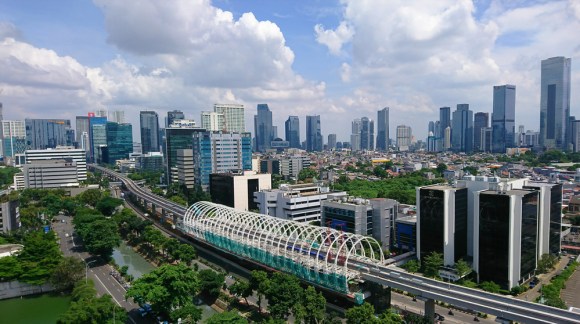
Categories
Podcast episode

Wider economic benefits of infrastructure projects – EP136

Jakarta Mass Rapid Transit system (under construction), an example of a public transport program which could deliver wider economic benefits.

Wider economic benefits are increasingly being estimated in the economic assessments of infrastructure projects. In Episode 136 of Economics Explored, show host Gene Tunny and his colleague Arturo Espinoza Bocangel chat about how some infrastructure projects, particularly transport projects, can stimulate new economic development, increasing the density of businesses and workers in an area. This can boost innovation and productivity through knowledge transfer and greater specialisation, among other mechanisms. The expected wider economic benefits of the Cross River Rail subway project in Brisbane, Australia are discussed.

You can listen to the conversation using the embedded player below or via Google PodcastsApple PodcastsSpotify, and Stitcher, among other podcast apps. A transcript and relevant links are also available below.

Transcript of EP136: Wider economic benefits of infrastructure projects

N.B. This is a lightly edited version of a transcript originally created using the AI application otter.ai. It may not be 100 percent accurate, but should be pretty close. If you’d like to quote from it, please check the quoted segment in the recording.

Gene Tunny  00:01

Coming up on Economics Explored. The more we engage with each other the more knowledge is shared, the more we learn from other people. And this actually helps us in an economic sense.

Welcome to the Economics Explored podcast, a frank and fearless exploration of important economic issues. I’m your host, Gene Tunny. I’m a professional economist based in Brisbane, Australia and I’m a former Australian Treasury official. This is Episode 136, on wider economic benefits. I’m joined this episode by my Adept Economics colleague, Arturo Espinoza Bocangel. Arturo and I chat about how some infrastructure projects can stimulate new economic development, increasing the density of businesses and workers in an area. We talk about how this can boost innovation and productivity, through knowledge transfer, and greater specialisation among other mechanisms. Please check out the show notes for relevant links, clarifications and details of how you can get in touch with any comments or suggestions. I’d love to hear from you. Also, check out our website economicsexplored.com. If you sign up as an email subscriber, you can download my e-book, Top 10 Insights from Economics. Righto, now for my conversation with Arturo on wider economic benefits. Thanks to my audio engineer, Josh Crotts, for his assistance in producing this episode. I hope you enjoy it. Arturo, good to be chatting with you again.

Arturo Espinoza Bocangel  01:33

How are you? It’s my pleasure to be here.

Gene Tunny  01:36

Excellent. Yes, keen to chat with you about wider economic benefits. So you helped me out regarding that presentation I gave last month in March to the Indonesian government officials. So as part of a short course, through University of Queensland international development, so you helped me get ready for that. And yeah, that was great. And you dug up some really interesting studies on wider economic benefits, and it helped me understand what they are and how you might measure them. So I thought that was really useful. I thought it could make a good conversation. And hence, I thought, well, let’s chat about it on the programme.

So yes, I guess where we should begin is just this. What is this idea of wider economic benefits? It’s benefits that are additional to the standard ones that you estimate in a cost-benefit analysis, isn’t it?

Arturo Espinoza Bocangel  02:41

Yes, that’s true.

Gene Tunny  02:42

It’s benefits that are in addition to the travel time savings, for example, or the reduction in greenhouse gas emissions that you might get, or the reduction in vehicle operating costs that you would get if you invest in public transport, for example, or if you make the roads more efficient, if you build a new road, you increase road… Actually, that’s probably going to… Yes, that would. That should reduce greenhouse gas emissions to an extent if people aren’t stuck in traffic as long. But yeah, it’s something additional to those normal benefits that are counted in a cost-benefit analysis. And it’s things like an improvement in productivity that comes from what they call agglomeration effects, that sort of thing, isn’t it, and having more people in a region, a thicker labour market? I think that’s how they refer to it. There are all these benefits that they try to estimate, in addition to the standard benefits, is that right?

Arturo Espinoza Bocangel  03:55

Yes, that’s right, Gene. And also, those wider economic benefits can involve some potential impacts on the market, the labour market. They can create more jobs in terms of supply and demand. So that is another WEB that we can consider too.

Gene Tunny  04:17

Right. So yeah, the idea is that there’s some sort of development or infrastructure investment, typically a transport infrastructure investment, and it opens up a new area, or it increases the access to a particular area. And we know that there’s been a bit of focus on what’s called transit-oriented developments, the TODs, whereby if you have a new railway station or subway stops, so you have a new subway system, then the idea is that this can activate new parts of the city. It can create little hubs, little clusters of activity and we see that with what is called the Cross River Rail project here in Brisbane. So this is a subway system.

Now, I’ve questioned in the past the economic viability of it, but they did manage to produce a cost-benefit analysis which had a positive benefit-cost ratio of over 1.4. And they also looked at, well, what could the wider economic benefits of this project be. And if you look at what the government says about the project, a lot of how it sells the project relates to what you might call wider economic benefits. So it talks about revitalised inner city precincts ready to connect, create and advance the region globally for generations, connect industry talent and major facilities, create communities employment and economic value, advance global competitiveness, livability and visitation.

So these are really sort of high level, or these are ambitious benefits, and not just your standard, oh we’re building a new subway system, and people will be able to get to work faster. And so they won’t be wasting time on a congested train network anymore. So that’s one of the ideas of Cross River Rail. Their concern was that there was a bottleneck at this railway bridge in Brisbane, the Merivale Street Bridge. Do you know that one? It connects South Brisbane and the city, so via Roma Street Station. I don’t know if you know that railway bridge.

Arturo Espinoza Bocangel  06:45

Probably yes, I pass by that bridge, but I’m not sure.

Gene Tunny  06:51

That’s okay. That’s okay. But apparently there’s some congestion issue there. And they needed to build this subway system to take pressure off of that. And there’s a bit of a debate to what extent that’s actually the case and whether that is such a serious issue. But anyway, let’s just take their word for it. Let’s just accept that that’s the case for now.

And it’s interesting that in selling this project, probably because perhaps they realise that the actual benefits in terms of travel time aren’t really that great. They have to make this bigger case for Cross River Rail. And it’s all about… Well, it seems to me a lot of it is about the wider economic benefits. And it’s about activating or revitalising some of these inner-city precincts, and they’ve got an interesting document, and I’ll put this in the show notes about Cross River Rail.

And they talk about their Boggo Road precinct. So that’s out near the… There’s an old jail that they’re no longer using, or an old prison at Annerley called Boggo Road. There’s no Boggo Road. Boggo Road was Annerley Road. And because once upon a time, it didn’t have any bitumen on it, it would just get muddy if it rained. And people would get bogged in the road, you know, in their horse and cart or their horse and buggy. And so they call the Boggo Road.

Arturo Espinoza Bocangel  08:30

That’s funny.

Gene Tunny  08:31

We’ve got this area of Brisbane now called Boggo Road, even though there actually is no such thing as an actual Boggo Road. But anyway, and what the government’s tried to do there is it’s tried to create, they call it a world class innovation precinct specialising in health science and education jobs of the future.

So I guess this is consistent with this idea of agglomeration effects, because if you make it easier to get to this Boggo Road precinct where you’ve got this cluster, this health sciences or biotech cluster, then that might encourage biotech firms to locate there or suppliers to biotech firms to locate there. And then you get these conglomeration benefits these efficiency benefits from colocation of businesses that can benefit from being near each other, the synergies so to speak. Economists talk about increasing returns to scale from having more economic activity and having the sum of the parts, sorry, the actual outcome being greater than the sum of the parts, so you get more than the components. Does that make sense? I probably didn’t explain that very well. You get more than the actual sum of the parts. That’s the idea, isn’t it? You get all these synergies.

Arturo Espinoza Bocangel  10:01

Under economic theory, when we talk about economies of scale, that mean a firm or an industry is operating under decreasing cost per unit. So as soon as you use more input, could be labour, capital, etc, that mean, as you increase in that proportion, let’s say a given proportion of those inputs, your return is going to be rather than that. So that is when we talk about when we are under economies of scale.

Gene Tunny  10:42

Yeah, yeah. Yep. So, there’s this idea that you get these benefits from greater density, this clustering. And I mean, we’ve got it to some extent in our cities. I mean, all cities have clusters of some kind, or many cities do, and they’re talking about this health sciences cluster at Boggo Road. They’ve got some other examples. Wooloongabba they want that to be a vibrant world class centre for community sport and health. So that’s centred around the Gabba Stadium, the Wooloongabba Stadium, which is a cricket ground. They play Australian rules football there, Aussie rules as well. And it’s going to be where the opening ceremony of the Olympics is going to be held in 2032. So there’s going to be a lot of investment there. I think they’re going to spend over a billion dollars upgrading that stadium. Yeah. Again, whether that’s economic or not, who knows? But let’s put that aside for now.

Yeah, so this idea that we sort of have all of these clusters, and we’re going to get similar firms locating with each other, and there are all these stories about what benefits this brings. And so as part of getting ready for this and getting ready for the short course presentation, I mean, we had a look at how do you explain these wider economic benefits, these agglomeration effects, these benefits from greater density? We know they exist. I mean, we know there are regions such as Silicon Valley, which specialises in tech, and you get the benefits from having firms and, you know, co-located near each other, you’ve got the workers from the firms talking to each other. They’re learning from each other informally. Yeah, there could be more formal learning between, say, a business and its suppliers. I mean, businesses could be learning from suppliers who are helping them out on something. But there’s informal learning, there’s the watercooler effect that they talk about. And so we had a look at what are some of these wider economic benefits, how do you explain them, and there are some really great articles out there.

There’s one I found by Gerald Carlino, Gerry Carlino. This is one of the best ones I’ve found. He was an economic adviser in the research department of the Philadelphia Fed, so the Philadelphia Federal Reserve Bank. He’s still got some emeritus professor there now, but I don’t think he’s active as he was when he wrote this article in 2001. Knowledge Spillovers: City’s Role in the New Economy. So this is terrific. I’ll put it in the show notes. And I mean, he gives some great examples, particularly from tech because a lot of the really good examples are from that technology industry.

And he refers to a book by AnnaLee Saxenian. In the 1994 book, I’ll have to look that up, she described her gathering places such as the Wagon Wheel bar, located only a block from Intel, Raytheon, and Fairchild Semiconductor. This is in Silicon Valley. She wrote about how they served as informal recruiting centres as well as listening posts. “Job information flowed freely along with shop talk.” So that’s what she wrote. And then other examples of high-tech hotspots include the Route 128 Corridor in Massachusetts, the Research Triangle in North Carolina, and suburban Philadelphia’s biotechnology research and medical technology industry.

And then Gerry Carlino goes into some other examples and he talks about Los Angeles he talks about Hollywood. “The geographic concentration of the motion picture industry in LA offers a network of specialists, directors, producers, script writers, set designers, each of whom focuses on a narrow aspect of moviemaking. The network allows easier collaboration, experimentation and shared learning among individuals and firms.” And then he gives some other examples. Talks about medical research, facilities and teaching institutions having concentrated along York Avenue on Manhattan’s Upper East Side. And so he goes into these different examples. So that’s a great article.

And that’s an example of where you’ve got benefits from firms and workers in the same industry clustering together. So that’s a particular type of agglomeration benefit or knowledge spillover. So there’s a knowledge spillover. The knowledge spillover is driving the benefit there, isn’t it? It’s the fact that there’s this knowledge being transferred from people who have the knowledge to people who don’t have it, obviously. And so what Carlino, how he describes this, he calls it an MAR spillover, and he names it after three famous economists, Alfred Marshall, Kenneth Arrow. Can you guess who R is, Arturo? It’s Paul Romer. Sorry, that was a…

Arturo Espinoza Bocangel  16:39

I am not sure.

Gene Tunny  16:40

It’s all right. I was just wondering if it was obvious, but it’s… You know Paul Romer, did all that work on endogenous growth theory?

Arturo Espinoza Bocangel  16:49

Oh Paul Romer.

Gene Tunny 16:50

Yeah, Paul Romer.

Arturo Espinoza Bocangel 16:51

Definitely, yeah, I know him.

Gene Tunny  16:53

Yeah.

Arturo Espinoza Bocangel  16:54

Thanks to him I learned about endogenous growth, economic growth.

Gene Tunny  17:00

Oh, right. Yeah, yeah. So he’s one of the big names in that literature. Love to cover that in another episode. I guess this is related to it. I mean, this is about increasing returns to scale. In part, so, I mean, that’s relevant to endogenous growth. So that’s what we’ve been talking about here. So Carlino, what he writes is in 1890, Alfred Marshall… So Alfred Marshall was one of the great British economists at Cambridge University at Trinity College at Cambridge. He was a teacher of John Maynard Keynes. So he developed a theory of knowledge spillovers that was later extended by Kenneth Arrow and Paul Romer, hence the name MAR spillovers. According to this view, the concentration of firms in the same industry in a city helps knowledge travel among firms and facilitates innovation and growth. Employees from different firms in an industry exchange ideas about new products and new ways to produce goods. The denser the concentration of employees in a common industry in a given location, the greater the opportunity to exchange ideas that lead to key innovations. And that’s what we were talking about just before. There were these common places that people would get together such as this Wagon Wheel bar in Silicon Valley, and that was a source of knowledge exchange, people learning from each other.

Arturo Espinoza Bocangel  18:31

That’s interesting.

Gene Tunny  18:34

Okay, we’ll take a short break here for a word from our sponsor.

Female speaker  18:39

If you need to crunch the numbers, then get in touch with Adept Economics. We offer you frank and fearless economic analysis and advice. We can help you with funding submissions, cost-benefit analysis studies, and economic modelling of all sorts. Our head office is in Brisbane, Australia, but we work all over the world. You can get in touch via our website, http://www.adepteconomics.com.au. We’d love to hear from you.

Gene Tunny  19:08

Now back to the show. So we’ve talked about the MAR or MAR spillovers. There’s another concept of spillovers, which is called Jacobs spillovers, which is named after Jane Jacobs and this is the idea that you get benefits when people from different industries are different sectors clustered together or are co-located and you get synergies in that way. So that’s another concept. And just because you’ve got that flowing of ideas, so of things that people may not have thought about before. And one of the one of the points that Carlino makes in his article is that refers to some other authors here. As John MacDonald points out, both Jane Jacobs and John Jackson… So Jane Jacobs is the – I think she was a journalist, but she became famous for writing that book The Life and Death of American Cities. And she had a really interesting take on what made for a good city and she was very much into the medium density type of city you want to have. You don’t want to have tall towers, because they’re really lifeless. You want to have some intensity, some density. So it’s medium density. So similar to what you see in the apartment buildings in New York City, but not the really tall ones, not the Trump Tower. But you want people to have eyes on the street. So you want enough people that it’s vibrant, and exciting, but you don’t want too many that it just becomes lifeless and soulless. So she’s got a really interesting take on the life of cities.

But anyway, as John McDonald points out, “Both Jane Jacobs and John Jackson have noted that Detroit’s shipbuilding industry was the critical antecedent, leading to the development of the auto industry in Detroit. In the 1920s, Detroit exported mainly flour. So Detroit exported flour because of the industry was located north of Lake Erie along the Detroit River, small shipyards developed to build ships for the flour trade. The shipbuilding industry refined and adapted the internal combustion gasoline engine to power boats on Michigan’s rivers and lakes. As it turned out the gasoline engine rather than the steam engine was best suited for powering the automobile.” Okay, and so that’s interesting. And so because they had that sort of knowledge to begin with, and that sort of led on to the motor industry. So that’s an interesting example.

And there’s another great example in this book by Cal Newport, Deep Work. So Cal Newport’s got a great podcast, Deep Questions, which I thoroughly recommend to anyone is interested in productivity and working on the right things. So doing the things that matter. And he’s got this great example of building 20 at MIT, which was this temporary structure that they built during the Second World War. It was meant to house the overflow from the school’s bustling Radiation Laboratory. It wasn’t a very well made building. And they just put all of these different departments in it, people who couldn’t fit it in another building. And this is how Cal Newport describes it. “The result was a mismatch of different departments from nuclear science to linguistics to electronics. They shared the low-slung building alongside more esoteric tenants, such as machine shop and a piano repair facility. Because the building was cheaply constructed, these groups felt free to rearrange space as needed. Walls and floors could be shifted and equipment bolted to the beams.” And there was an article in The New Yorker where the author pointed out regarding the scientist Gerald Zacharias, his work on the first atomic clock, it was important that he was able to remove two floors from his building 20 lab, so he could install the three-storey cylinder needed for his experimental apparatus. So that’s pretty interesting.

But in MIT law, so in the stories they tell at MIT, it’s generally believed that this haphazard combination of different disciplines thrown together in a large reconfigurable building, so this is the important bit, that led to chance encounters in a spirit of inventiveness that generated breakthroughs at a fast pace, innovating topics, as diverse as Chomsky grammars, so that’s what Noam Chomsky contributed to linguistics, the Loran navigational radars. I think that’s how you pronounce it or Loran, and video games all within the same productive postwar decades. So he’s saying that this sort of odd mix of people from different disciplines led to these breakthroughs because people were talking to different people, perhaps that that encouraged them to think differently. Does that make sense? That sort of thing?

Arturo Espinoza Bocangel  24:35

Yeah, that makes sense? Yeah. That’s a very interesting point. I think the most popular example is all the technology developed in the military side was then, for example, in the case of microwave, that is a technology developed by the military side on military technology. And then that was applied for civil life. So I think that is the most popular example that we can use. But it’s true. You enrich your thoughts, your knowledge, when you have information from other fields, for example, in this case rather than economy.

Gene Tunny  25:28

So guess what all these stories are trying to show is that there are benefits from having people interact. I mean, it sounds obvious, doesn’t it when you think about it? Well, yeah, I guess that that makes sense, doesn’t it? I mean, the more we engage with each other, the more knowledge is shared, the more we learn from other people. And, you know, this actually helps us in an economic sense. And I mean, this is very difficult for… Well, you can’t really model this or predict this, but it’s something that occurs. And so hence, there can be benefits from getting people in the same place, making investments that can create these hubs, so improve the density, increase the density of particular areas. I mean, we know that density does matter to an extent because we know that cities develop central business districts and over the decades firms have found it advantageous to be in the CBD. I mean, it used to be more obvious that there was a benefit from being in a CBD, or a major activity centre somewhere in the city. It used to be more obvious than it is now. We can chat about that in a moment.

But I guess, if we’re talking 20 or 30 years ago, you could say, well, if you want to be in the CBD, or in an activity centre, say in Brisbane, Toowong or if you’re in Melbourne, it could be Box Hill or wherever, or if you’re in Sydney could be Parramatta. So you want to be in a place like that, because then you’re close to the bank, you’re close to the post office, you’re close to the stationery shop, you might be close to your clients. And so therefore, you’re going to get benefits that way, it’s going to make your life, your business easier to run.

Arturo Espinoza Bocangel  27:28

Exactly.

Gene Tunny  27:29

Yeah. And so that’ll make you more productive. Now, of course, now, we’ve discovered with COVID that, and this is one of the questions that one of the course participants asked, well, what do you think’s gonna happen with everyone’s working from home now? I mean, are these agglomeration benefits as big a deal now that we’ve discovered that we can work virtually and, you know, maybe there aren’t the same benefits to colocation as there once were? And I think that’s an interesting question. I mean, I think that’s something we probably do need to explore and look at what the evidence is over the next couple of decades or so. So I thought that was a good question. I mean, I don’t have the answer to that at the moment. All I know is that pre-COVID It did appear that regions which were denser, where there was a greater concentration of workers, and businesses seem to be more productive. And there were real benefits from this colocation. Do you have any thoughts on that, Arturo?

Arturo Espinoza Bocangel  28:37

Yeah, I remember that. I heard something about that, how it will be the impact of working from home in terms of productivity. I remember that. The results were positive, some cases, and the people now is more productive than before. So definitely, that topic is very interesting and it should be studied.

Gene Tunny  29:11

I think where we’ll end up is that it’ll turn out that that hybrid mix is probably optimal. I mean, you want the best of both worlds in a way. Now, I found this write-up of a study on the Vox EU website so Working From Home: Too Much of a Good Thing. So this is by Kristian Behrens and some of his coauthors. And this is on 13th February 2021. So Kristian Behrens, he’s a professor of economics at the University of Quebec in Montreal. And their abstract of this article, “Containing COVID 19 has required more people to work from home accelerating the trend towards telecommuting. This column uses a general equilibrium model to analyse the long-term effects of this trend, and finds that it may prove to be a mixed blessing.” I think that sounds right. So they go on. “Working from home saves time that would be spent commuting, but deprives firms of the benefits from information and knowledge spillovers. Firms use less office space, but workers require more space at home. Overall GDP will likely be maximised when working from home occurs one or two days per week.” Okay, so I think that sounds pretty much what I would expect. So I’ll put a link to that in the show notes. Do you have any reactions to that, Arturo?

Arturo Espinoza Bocangel  30:55

I need to check that papers in detail.

Gene Tunny  31:00

Yeah, of course. Yeah, it’d be worth having a look at. This one I just found preparing for this conversation today. But yeah, I’ll send that to you. And I’ll put a link in the show notes. So if you’re listening, and you want to check that out. But that sounds fairly sensible to me. So there will still be benefits of agglomeration, there are, but you may not need to be in the office five days a week. You’ll get a benefit if you come in three days a week or something and you’re mixing with your colleagues. You want some mixing with your colleagues. But you don’t need to be mixing with them all the time.

Arturo Espinoza Bocangel  31:45

That’s right.

Gene Tunny  31:47

And that’s what we’re finding, people are just, you know, they’re coming in for a few days a week. And it seems to be that the days people don’t come in… And I think this is replicated in cities across the world, or at least Australian cities. I’ve seen a study of this. People don’t come in Fridays. I mean, there are always fewer people coming in Fridays anyway. But that was because people tended not to… They wouldn’t have a part-time work day on a Friday. But now we’ve got a lot of people working from home on a Friday or Monday too.  People who want to have those days that adjacent to the weekend. So you can have a long weekend. Yeah. So that’s increasingly popular. But I guess there is still that recognition that you need to be working together for some time. There are these benefits from colocating. And so yeah, I don’t think the pandemic has wiped out the argument in favour of wider economic benefits. I think that’s still there. And this is what these authors, Kristian Behrens and his coauthors are arguing that you wouldn’t want people working from home all the time, because then you will lose these benefits. Yeah.

Okay. So, what I thought we should chat about… What else? Oh, what are actually these benefits from agglomeration? I mean, how substantial are they? And there was this great paper by Peter Abelson where he reported that the average elasticity of output to employment density, so this is the percentage by which output… So the value added, the percentage by which that changes for every percentage point increase in employment density. So he reported the average elasticity of output to employment density appears to be in the order of 0.02. Doubling employment would increase output per worker by 2%. So if you have twice as many people in an area, so, say a square kilometre, or say a pocket of the city, precinct of the city, you have twice as many people, then you can increase your output by worker by 2%. So that was the empirical finding.

And it appears that the most important mechanisms, so this is from our presentation, from our slides, the most important mechanism is that both scale and density created an environment where firms and workers can develop highly specialised products, services and skills, e.g. these typically are inputs to firms from specialised  suppliers. Okay, so more firms, more businesses, specialisation and you get efficiencies from that specialisation. So that’s the general idea, isn’t it?

Arturo Espinoza Bocangel  35:15

Yep, that’s the general idea.

Gene Tunny 35:17

Good one. Okay. And then we also note that a further mechanism arises as competition is likely to be intense in a large and dense cluster. So monopolistic pockets of inefficiency are less likely to survive. Okay, so there’s that idea that you get more people in an area, it’s a bit of a hothouse, isn’t it? There’s more competition. Everyone’s striving, everyone’s working harder to compete against the others. And then that benefits everyone through greater efficiency and productivity. So I think that’s a good point. What did you think of the whole agglomeration economies argument and these estimates such as what Abelson reported, that if you double the amount of people in an area, you’re going to increase output per worker by 2%? Do you think that sounds reasonable?

Arturo Espinoza Bocangel  36:08

Yeah, I think so. Isn’t that depend on which area you going to study? Right? Each country, each city has its own features. And you need to take into account that. Of course, you will have different electricity from each cities or areas.

Gene Tunny  36:33

You need to take into account the specific circumstances. But I think generally, it sounds reasonable. It’s not over the top. I mean, if he was saying that it increased productivity by 10%, maybe I’d be sceptical. But there certainly are some benefits from increasing density.

Cost-benefit analysis studies, one way they estimate a dollar value for wider economic benefits is through looking at how density and productivity for particular industries appear to be related across the city or across different cities. And that’s what they did in that cost benefit analysis of Cross River Rail. So I’ll put a link to that in the show notes. They’ve got a bit of a discussion, not as much detail as I would have liked on wider economic benefits, but they do mention that they’ve estimated these wider economic benefits by looking at how much Cross River Rail could increase the density, the effective employment density, or the business to business effective density, they call it, how it could increase that in those particular clusters. So places like Dutton Park, or the Boggo Road precinct there, or RNA or in other places, and it looks at well what could that… It makes some assumptions as to what that could do to productivity, and then estimates a dollar value based on that. So that’s an interesting approach.

They estimate that that if you take that into account, then that increases the benefit-cost ratio of Cross River Rail from something like 1.4 to 2.2. That’s one of the major benefits. And I think there are a couple of other types of benefits they estimate in their wider economic benefit analysis, but it’s something that’s on top of the standard cost-benefit analysis. They report the normal cost-benefit analysis. And then they say, well, okay, there are these other things you could take into account. They’re not standard. They’re additional lists. They’re a supplement to this. They bolster the case. They enhance the case. That’s the idea with wider economic benefits. They’re not your standard benefits you include in a cost-benefit analysis. But you can estimate them. Your estimates of your wider economic benefits are probably more… Would you say they’re more speculative, more of a guess? You could say they’re a guess. They probably aren’t as robust or reliable as your normal estimates of travel time savings, because what they’ll be doing with the travel time savings is they’ll have a detailed transportation model for the city. So they’ve probably got more confidence in our estimates of what it means for travel time savings. If you build a new road or you have a new subway system, they probably got more idea what that means for travel and how much time people save than they do of what is this actual benefit from creating this new activity centre.

Look, to some extent, what happens is you open up a new regional, you make it easy to travel to one particular part of the city. You’ll just have firms moving from another part of the city to that part of the city, right. So, you know, the benefit has to come from this increased density, so a greater density than you’d get otherwise, because these… I mean, how much benefit is that really? Like, it’s hard to know. I mean, you can tell stories about knowledge transfer, but I mean, does that always happen? I don’t know. I often wonder how much confidence we can place in these wider economic benefits. I would say you’d probably have a very wide confidence interval, a very wide gap between the lower and the upper bound of the estimates.

Arturo Espinoza Bocangel  41:05

Yeah. Those are estimates. You need to take into account some source of potential benefit that perhaps they’re not going to accrue.

Gene Tunny  41:18

Yeah. Yes. Right. So yeah, wider economic benefits. And the one other thing I wanted to mention was that you discovered this great paper from the World Bank on wider economic benefits of transport corridors. And this is something that the world, the World Bank, has been interested in these wider economic benefits, because the World Bank has a mandate to improve developing economies, emerging economies to promote economic development. And they’re looking at well, are there investments, we can finance transport projects that can increase economic growth opportunities. And one way you can possibly do that is building railroads or building ports or building roads.

And they’ve done this great study where they looked at a few dozen, or maybe it was over 40 transport corridor projects in developing economies. And they looked at the nightlight data from satellites, and they use that to assess how successful these different projects were. And then they determined Well, what are the markers of success, what actually contributes to the success of a project? And in a way, what they found was, I guess a little bit obvious. I mean, if there’s a project that connects with the sea, then that actually is more likely to lead to additional economic activity as measured by the nightlights, more nightlights. And that’s probably obvious, I guess, in a way because, well, if you’ve got that port, then what you produce, you can easily export. And that’s one way that we know that export led development. That’s been important for quite a few developing economies that ended up going into middle income or advanced economy status around the world.

And another thing that mattered a lot was the actual logic behind the investments. So did they have a real theory of how this would deliver benefits? And in a way, that’s just the rationale. Was this a sensible thing to invest in to begin with? And so I guess that shows that you got to do the thinking about, okay, do we actually have a legitimate reason for building this project? Does it make sense? It’s not just if we build it, they will come. You need to think about are we actually providing something that is delivering real value. This transport corridor is, say, connecting important city centres or it’s connecting a hinterland to an urban area to a port where the products can be exported. I mean, is it actually delivering some real benefit like that?

So I think this is a really great paper. And it begins by talking about how there’s a number of ongoing and proposed initiatives for transport corridors. One ambitious proposal is to revive the Grand Trunk Road from Kabul, Afghanistan to Chittagong, Bangladesh, connecting areas that are home to a significant share of the world’s poor. That’s probably on hold now that you know what’s happened in Afghanistan with the US pullout and Taliban taking over. An even more ambitious initiative is the Belt and Road Initiative proposed by China.

Okay, now, again, look, there are all these geopolitical issues related to these projects we can’t go into. But it’s interesting that the World Bank, they’re examining it, they’re thinking about these wider economic benefits. Can we develop new roads, new railways that open up regions, that encourage investment, foreign direct investment, for example, that create jobs, that lead to additional economic activity, and, you know, help these economies grow? So I thought that was a really great paper, and I’ll put a link to the show notes. So yeah. Well, that’s me having rabbeted on a little bit about wider economic benefits. Is there anything we should add before we wrap up, Arturo?

Arturo Espinoza Bocangel  45:54

Well, I think you have covered the most important WEBs, the wider economic benefits related to [unclear 46:02] and productivity. Also, you mentioned some positive impacts on labour markets. Also, you should have mentioned some important things related to land. In the case of, for example, when you improve on infrastructure, for example, this case, a corridor, the land use, for example of some bar or close to that in infrastructure improvement, possibly that will cause more investment. For example, new households, new unit can be built after improving that corridor, let’s say. So I think that is another thing that we need to take into account, some potential effects in terms of change of land.

Gene Tunny  47:04

Yeah, right. I think that matters a lot in developing economies in particular, so if you’ve got land that’s being used for agriculture, and maybe not used very productively, and then suddenly you open up this new… You’ve got this new road, or this new rail line, and then that encourages industrial development and urban development. And that’s a higher value use. And you mentioned the labour market. So this is this idea of a thicker labour market, or say, for example, Silicon Valley, if you’ve got Silicon Valley as a cluster, and then you’ve got, you know, all the specialised tech firms, all the people who are interested in tech or have got the qualifications in tech or experience, they move to Silicon Valley. And so it’s easier for the firms to find the people they need. That’s that sort of thing. That helps with the firm’s finding the people. You could have a transport investment that makes it easier to get to a particular area, or a particular cluster or an activity centre. And that increases the supply of labour. People might be more willing to work because it’s easier for them to get to work, to travel. So I think that’s an important benefit.

Okay, that was a bit of a whirlwind tour of wider economic benefits, agglomeration effects, increasing returns to scale. I think we’ll have to come back to this again, because there’s so many… There are a lot of different economic concepts here. And they’re important ones, and I think probably need to cover this again, to really do it justice and get that conceptual framework right. These are very important concepts, very important issues. And I think I might have to come back to really explore this again. So any final words, Arturo?

Arturo Espinoza Bocangel  49:14

No. Thank you again for having me here. Was a pleasure again. Thank you.

Gene Tunny  49:19

Very good. Thanks, Arturo. Okay, that’s the end of this episode of Economics Explored. I hope you enjoyed it. If so, please tell your family and friends and leave a comment or give us a rating on your podcast app. If you have any comments, questions, suggestions, you can feel free to send them to contact@economicsexplored.com and we’ll aim to address them in a future episode. Thanks for listening. Until next week, goodbye.

Links relevant to the conversation

Cross River Rail business case

Cross River Rail project benefits

Knowledge Spillovers: – Cities’ Role in the New Economy – article by Jerry Carlino Gene quotes from in the episode

The wider economic benefits of transport infrastructure paper by Peter Abelson 

Working from home: Too much of a good thing – article by Kristian Behrens and others

Wider Economic Benefits of Transport Corridors : Evidence from International Development Organizations – World Bank paper using nighttime lights data

Clarification

In the episode Gene didn’t get the title of Jane Jacobs’s famous book on cities right. The correct title is The Death and Life of Great American Cities

Credits

Big thanks to EP136 guest Arturo Espinoza Bocangel and to the show’s audio engineer Josh Crotts for his assistance in producing the episode. 

Please get in touch with any questions, comments and suggestions by emailing us at contact@economicsexplored.com or sending a voice message via https://www.speakpipe.com/economicsexplored. Economics Explored is available via Apple PodcastsGoogle Podcast, and other podcasting platforms.

Categories
Podcast episode

Nominal GDP targeting w/ Stephen Kirchner – EP135

Market monetarists such as Stephen Kirchner argue nominal GDP targeting would be better than inflation targeting and could help central banks such as the RBA and the US Federal Reserve get back on track. Stephen is Director of the International Economy Program at the United States Studies Centre at the University of Sydney. 

Stephen spoke about nominal GDP targeting with Economics Explored host Gene Tunny in episode 135 of the show, recorded in April 2022. Among other details of nominal GDP targeting, Stephen discussed the potential role of a nominal GDP futures market and for blockchain and Ethereum in such a market and in financial markets more broadly. You can listen to the conversation using the embedded player below or via Google PodcastsApple PodcastsSpotify, and Stitcher, among other podcast apps.

About this episode’s guest – Dr Stephen Kirchner

Dr Stephen Kirchner is Director of the International Economy Program at the United States Studies Centre at the University of Sydney. He is also a senior fellow at the Fraser Institute in Canada, where he has contributed to research projects comparing public policies in Australia, Canada and New Zealand.

Previously, he was an economist with the Australian Financial Markets Association, where he worked on public policy issues relating to the efficient and effective functioning of Australian financial markets and Australia’s position as a regional and international financial centre.

Stephen has been a research fellow at the Centre for Independent Studies, a senior lecturer in economics at the University of Technology Sydney Business School and an economist with Standard & Poor’s Institutional Market Services based in both Sydney and Singapore. He has also worked as an advisor to members of the Australian House of Representatives and Senate.

He has published in leading academic and think-tank journals, including Public Choice, The Australian Economic Review, Australian Journal of Political Science and The Cato Journal.

His op-eds have appeared in publications including The Wall Street Journal, Straits Times, Businessweek, The Australian Financial Review, The Australian, and Sydney Morning Herald.

Stephen holds a BA (Hons) from the Australian National University, where he was awarded the L. F. Crisp Prize for Political Science, a Master of Economics (Hons) from Macquarie University, and a PhD in Economics from the University of New South Wales.

Stephen posts regularly on his substack: 

https://stephenkirchner.substack.com/

Links relevant to the conversation

Stephen’s papers on nominal GDP targeting:

Reforming Australian Monetary Policy: How Nominal Income Targeting Can Help Get the Reserve Bank Back on Track

The RBA’s pandemic response and the New Keynesian trap

Transcript of EP135: Nominal GDP targeting w/ Stephen Kirchner

N.B. This is a lightly edited version of a transcript originally created using the AI application otter.ai. It may not be 100 percent accurate, but should be pretty close. If you’d like to quote from it, please check the quoted segment in the recording.

Gene Tunny  00:01

Coming up on Economics Explored.

Stephen Kirchner  00:04

If you want to avoid, you know hitting the zero lower bound or expanding your balance sheet by a significant amount, the way to do that is to respond quickly and aggressively upfront. If you don’t do that, then you fall behind the curve and then monetary policy has to work a lot harder to stabilise the economy.

Gene Tunny  00:23

Welcome to the Economics Explored podcast, a frank and fearless exploration of the important economic issues. I’m your host, Gene Tunny. I’m a professional economist based in Brisbane, Australia and I’m a former Australian Treasury official. This is Episode 135 on nominal GDP targeting. My guest this episode is Dr. Stephen Kirchner, who is Director of the International Economy Programme at the United States Studies Centre at the University of Sydney in Australia. In this episode, Stephen tells us why nominal GDP targeting would be better than inflation targeting and how central banks such as the Reserve Bank of Australia and the US Federal Reserve can get back on track. Please check out the show notes for relevant links and for details of how you can get in touch with any comments or suggestions. I’d love to hear from you. Righto, now for my conversation with Dr. Steven Kirschner on nominal GDP targeting. Thanks to my audio engineer Josh Crotts for his assistance in producing this episode. I hope you enjoy it. Dr. Steven Kirchner of the US Studies Centre. Welcome to the programme.

Stephen Kirchner  01:36

Thanks for having me, Gene.

Gene Tunny  01:37

It’s a pleasure, Stephen, keen to chat with you about a paper you wrote last year on Reforming Australian Monetary Policy: How Nominal Income Targeting Can Help Get the Reserve Bank Back on Track. So there’s a lot to talk about here. And I think this is of general interest to people in other countries, as well, other than Australia, because this idea of nominal income targeting, it’s been raised in other countries, I know that you’ve appeared on David Beckworth’s podcast, Macro Musings, and I know that David Beckworth is a proponent of this in the United States. So I’d like to ask about, essentially, what is this nominal income targeting compared with how we normally, or how central banks have been running monetary policy? Would you be able to give us an overview of that, please?

Stephen Kirchner  02:38

Sure. I think nominal income targeting is actually not a huge change from where we are at the moment. So most central banks do what they call inflation targeting. And as part of an inflation targeting regime, they’re typically adjusting their monetary policy instrument, usually an official interest rate in response to deviations in inflation from target. But also responding to deviations in output from its full employment, or potential level. And the reason you have output as part of your reaction function is the output gap is predictive of future inflation outcomes. So if you’re running an inflation targeting regime, you want to respond to both deviations inflation from target, and output from potential.

Well, if you think about those two things, inflation on the one hand, and output on the other, if you put those two things together, then you’ve got nominal income, or nominal GDP. So in some respects, nominal GDP targeting or nominal income targeting is just a really weighting of that standard central bank reaction function. So if you think about a Taylor rule, which is just an empirical description of how the interest rate responds to deviations and inflation from target, and output from potential, all nominal GDP targeting is doing is saying you want to put inflation output together and weight them equally in terms of the interest rate response.

Gene Tunny  04:14

Ah, right. Okay. Yeah, that’s a good way of describing it. Yeah, please go on.

Stephen Kirchner  04:18

Yeah, so in that sense, it’s not a huge leap from where we are at the moment. But what it does mean is that the central bank is a bit more agnostic about its response to inflation, and deviations in output from potential. So it’s saying really we want to stabilise both, and the reason you want to stabilise both is if you’re just focusing on inflation, one of the problems you face is not all of the deviations in inflation from target are reflective of aggregate demand shocks. As we know, especially at the moment inflation can deviate from target due to supply shocks. Supply shocks have the effect of lowering output. And so this creates a dilemma for a central bank in how do you respond to a supply-driven inflation shock, or deviation from target. Because if you respond to the deviation in inflation from target and raise interest rates, then that’s going to compound the reduction in output you’d get from a supply shock.

Gene Tunny  05:28

Right. So one example, I’m just thinking, Stephen, is one example of this, did this occur, arguably a policy mistake? Was it 2008 when the European Central Bank put up its policy rate? Not long before the financial crisis? Because there was a supply shock? Or was there an increase in the price of oil? I’m trying to remember, is that one of the examples I give?

Stephen Kirchner  05:55

Well, I think the canonical example here is what happened in the 1970s, when you had very significant increases in oil prices giving rise to higher rates of inflation. And central banks did respond to those oil price shocks through tighter monetary policy. And so there’s an influential paper by Ben Bernanke, Watson and Gertler in 1997, which showed that the propagation of the oil price shock to the US economy was essentially through the monetary policy reaction. And so it was the central bank that actually put the stag into stagflation.

Another example of this would be if you go to September 2008, the FOMC meeting took place a couple of days after the failure of Lehman Brothers. And this was at a time when inflation expectations were collapsing and nominal GDP expectations were collapsing. At that meeting, the FOMC incredibly left the Fed funds rate unchanged, and cited inflation pressures arising from higher oil prices as the reason for keeping monetary policy steady. So this is a very good example of monetary policy being led astray by inflation outcomes that are being driven by supply shocks rather than aggregate demand shocks.

And so what we want is the central bank to respond to inflation pressures to the extent that they’re reflective of aggregate demand shocks, not aggregate supply shocks. And nominal GDP lets you do that without actually having to take a view on what’s driving inflation. So nominal GDP outcomes will tell you the extent to which your inflation issues are being driven by aggregate demand rather than aggregate supply.

Gene Tunny  07:51

Okay, so yeah, a few things to try and explore here. Stephen, inflation targeting. So it’s typically going for something around well, in Australia, it’s 2 to 3%, we’ve got a target band for inflation. And in the US, is it 2%? Or I remember thinking of Bank of England? But the different countries have just slightly different targets.

And what’s fascinating is that when these things were first formulated, we had much higher inflation. And I think no one ever expected we’d be getting consistently, we’d inflation outcomes consistently lower than those targets. And it makes it difficult to think about what’s the appropriate monetary policy response.

I better make sure I understand your argument about why you think the Reserve Bank needs to get back on track. Are you suggesting that the fact that Australia is similar to some other advanced economies, who’ve had inflation outcomes below the target for a substantial amount of time, that would imply that the Reserve Bank, the central bank had scope to expand to have a more expansionary monetary policy which could have pushed the economy closer to full employment? Is that the argument, broadly?

Stephen Kirchner  09:14

Yeah, that’s certainly true of the sort of pre-pandemic period basically, the period in which the RBA was undershooting from approximately 2014 through to the onset of the pandemic and even into the pandemic. So it’s certainly in the last couple of quarters that inflation has returned to target. I mean, I think the specification of the inflation target inevitably is a little bit arbitrary. What matters most is not the exact target range, but the fact that you hit that target more often than not over time and thereby establish your credibility in relation to that target. So ultimately, what you’re trying to do is condition the expectations of price, and wage setters in the economy should be consistent with that target. And so whether it’s a 2% target or 2 to 3% target, it’s less important than the fact that you have one and that you actually stick to it.

But the case for nominal income targeting is to say if you’re only targeting inflation, and this creates a bit of a presentational problem and a sort of implementation problem, which is that what happens in the context of a supply shock when inflation might be above target? How do you explain to people the fact that you’re not hitting your target, even though there’s probably a very good reason why you’d want to look through that supply shock.

If you’re expressing your monetary policy target in terms of nominal GDP, that task becomes a lot simpler, because yes, you may be above target on inflation, but in the context of a supply shock, output is going to be lower. And so you don’t get the same sort of deviation from target under a nominal GDP targeting regime than you would under an inflation targeting regime. Policymakers are less likely to be led astray, because by focusing on nominal GDP, they don’t have this issue of trying to figure out whether inflation outcomes reflect demand shocks or supply shocks.

Gene Tunny  11:23

Okay, so how would this work in practice? So in nominal terms, so by nominal, you’re talking about, we’re not talking about a real GDP measure where we adjust for inflation, we try and get things in consistent dollars, you’re just talking about the total value of the economy, in GDP in nominal terms, so what it is in current dollars, and say that it’s over $2 trillion in Australia annually. And so would the Reserve Bank have a target? They would have an expectation of what that nominal income for Australia should be in 2022, what it should be in 2023. So it should be 2.3 billion by this date or something? Is that Is that how it’s formulated? A trillion I meant, not billion. Sorry,

Stephen Kirchner  12:16

You can’t express it in level terms. So with a nominal GDP target, you can express it both as a growth rate or an implied path for nominal GDP. But I think it’s important to emphasise that, just as with inflation targeting, you don’t target inflation outcomes, necessarily. What you’re targeting is actually the inflation forecast. So what you’re saying is, in future, you’re going to be realising inflation outcomes consistent with target, or with nominal GDP targeting, it’s exactly the same thing. So you want to specify a target path for the future evolution of novel income or novel output. And you want to adjust your monetary policy instruments to be consistent with that target path.

So if in any given quarter, your level of nominal GDP is a little bit above or a little bit below the target path, that’s not necessarily a problem. Again, what you’re trying to do is conditions people’s expectations in relation to what future nominal income will be. And I think that has very useful properties from the point of view of stabilising the economy, because if you think about things like wage and price contracting in the economy, people borrowing and lending, all those activities are conditional on expectations for future normal income. And so if you can stabilise both expectations for that future nominal income path, and by implication, also nominal GDP outcomes, then I think that’s a recipe for macroeconomic stability, more so than if you’re targeting inflation without regard to whether inflation is being driven by demand or supply shocks.

Gene Tunny  14:13

Right. Okay. Might go back to that Taylor rule. So you mentioned the Taylor rule. And you mentioned you can actually think of nominal GDP targeting in a, you call it a reaction function, so how the central bank reacts to the macroeconomic variables. And you said this gives equal weight to deviations of inflation from the target end of real GDP from the target. What does the Taylor rule typically do? Do ou know, what sort of normal parameters there are in that reaction function and what that means?

Stephen Kirchner  14:53

So the Taylor rule was due to John Taylor, who in the early 1990s sat down and said, well empirically, how do we characterise movements in the Fed funds rate. So he regressed the Fed funds rate on various macroeconomic variables. And the empirical description that he came up with for the Feds reaction function was to say, well, the Fed responds to deviations in inflation from target, and had estimated a weight of about 1.5 on that deviation, and also response to deviations and output from potential. And he estimated a weight of .5 on that.

But to sort of round out that empirical description of the Fed funds rate, you also needed an estimate of what the neutral Fed funds rate would be. So in other words, what happens when inflation is a target and output is a potential? What is the Fed funds rate consistent with that? And so that just ends up being a constant regression.

One of the big issues that sort of comes out of that is that’s obviously a historical estimate. What happens if your equilibrium real interest rate changes over time. So you then have the issue of, if you’re responding based on those historical relationships, but the actual equilibrium interest rate changes, and you may end up with monetary policy being miscalibrated. And I think that arguably happens in the United States, and to a certain extent here in recent years, where I think the equilibrium real rate probably fell considerably. And that meant that monetary policy ended up being tighter than central banks intended.

Gene Tunny  16:53

Okay, we might come back to that, I just want to go back to the Taylor rule that you mentioned 1.5. So that means for every percentage point that inflation would be above the target, so if the target’s 2%, and inflation is 3%, the central bank would put up the policy interest rate, the overnight cash rate or the federal funds rate by 1.5 percentage points. And the idea is there that you’re trying to engineer an increase in the real interest rate. So you want to make sure the interest rate increases more than the inflation component of it. Actually, yeah,

Stephen Kirchner  17:41

Yeah, that’s right. So this thing actually has a name, it’s called the Taylor principle. And the Taylor principle says that you want to move your nominal interest rate by more than one for one with the deviation inflation from target, because if you just do a one for one or a less than one point move, then you’re not going to move the real rate, you’re not going to move it in the desired direction. So it has to be a move that is more than the change in inflation. So that’s why you get a parameter estimate of a little bit more than one.

For some central banks, you get higher responses to inflation. So the BOJ, Bank of Japan, the ECB, depending on what sort of model that you look at, sometimes their reactions will be up around two. But yeah, the basic Taylor principle is that you want a response to inflation that is greater than one. But essentially, nominal GDP targeting says that you want to combine inflation and output in the form of nominal GDP, and you want to respond to that.

Gene Tunny  18:46

So I guess one of the points that you make, and I think it is a good point, that to do this Taylor rule properly, you need estimates of these unobservable variables, such as this equilibrium real interest rate. And as you rightly point out, I mean, this is something that… Interest rates are much lower now than we ever expected. You compare historically, it’s quite extraordinary what we’ve seen since the financial crisis in Australia, and the US and UK, and even before then in Japan, since the ‘90s. Absolutely extraordinary.

So I want to make sure I understand the logic again. You mentioned that this means that monetary policy was not as aggressive or as accommodative, or however you describe it, because the equilibrium real interest rate, whatever that is, whether it’s… Say it was 4% and now it’s much lower than that. How does that logically work, Stephen? Can you take us through that logic? I just want to make sure I understand how it would lead a central bank to go astray.

Stephen Kirchner  20:00

Actually, the problem is a bit broader than that. So there are potentially three unobservable variables it would impact. Taylor rule style reaction function, and potentially monetary policy Australia. So one is the real equilibrium interest rate, as we’ve discussed. It’s not directly observable. And it could be higher or lower than we think. But I would say it’s probably been lower than policymakers have thought. In terms of the output gap, then you have the problem that we don’t directly observe potential output either. And so that could be higher or lower than we think. And so policy can be miscalibrated on that basis.

An alternative way of thinking about the output gap is to think in terms of an unemployment gap. So the deviation in unemployment from its full employment level, and this is of course where we get the NAIRU from. So the idea that there’s an unemployment rate that’s consistent with the stable interest rate. And both the Federal Reserve and the RBA have conceded in recent years that the NAIRU has actually been a lot lower than they realised. So they have downwardly revised their estimates of the NAIRU.

And so for much of the post financial crisis period, I think both the Fed and to a lesser extent, the RBA were conditioning monetary policy on a view that the unemployment rate was pretty close to the NAIRU, when in fact, it was probably sitting quite a bit above the NAIRU. And so what that meant was we had monetary policy that was two tight. They could have actually pushed the unemployment rates lower. And done it in a way that would have meant that inflation was more consistent with target as well.

So you can see that the problem with a sort of Taylor rule type approach is that embedded in the Taylor rule, you’ve got at least two unobserved variables.  You’re trying to estimate what those unobservable variables are and condition policy on it. So what nominal income targeting says is well, in fact, you don’t need to take a view on either the equilibrium real rate or the NAIRU or potential output, because nominal GDP in and of itself is a complete description of the stance of monetary policy. And in the long run, nominal GDP is fully determined by the central bank. So the central bank can both influence the long run level of nominal GDP, and the level of nominal GDP tells you whether monetary policy is too easy or too tight at any given time.

You don’t need to do what’s sometimes called navigating by the stars, which is, in macroeconomics, when you write this stuff down in the form of equations, the equilibrium values,  the real interest rate, the NAIRU and potential output, those variables denoted with an asterisk or a star. And so we were first and policy that sort of conditions on those variables as navigating the stars. This is what leads monetary policy astray. It’s the problem that nominal GDP targeting seeks to address

Gene Tunny  23:24

Okay, so by NAIRU, N-A-I-R-U, which stands for non-accelerating inflation rate of unemployment, such a horrible expression. We use it all the time. Okay, we’ll take a short break here for a word from our sponsor.

Female speaker  23:45

If you need to crunch the numbers, then get in touch with Adept Economics. We offer you frank and fearless economic analysis and advice. We can help you with funding submissions, cost-benefit analysis, studies, and economic modelling of all sorts. Our head office is in Brisbane, Australia, but we work all over the world. You can get in touch via our website, http://www.adepteconomics.com.au. We’d love to hear from you.

Gene Tunny  24:14

Now back to the show. So how’s this gonna work in practice, Stephen? I’m wondering, and does that mean the main thing the central bank is looking at it in their deliberations, so the board meeting of the Reserve Bank or at the Federal Open Markets Committee, or the Monetary Policy Committee, in the UK, or in the FOMC and in the US, they’re just looking at what the latest data are telling them about GDP, about nominal GDP? They’re trying to forecast that themselves based on a range of indicators, I suppose. Have you thought about how it’s going to work in practice?

Stephen Kirchner  24:55

I think central banks should basically look at all the information that’s available to them in forming a view. So the question is more in terms of what their target is and how they specify that target. And, importantly, also how they describe their policy actions in relation to that target. And so, the purposes of adopting a nominal GDP target, one way to do that is to specify a target path for the future evolution of nominal GDP. So you can do that out a few years in advance. And you would then explain your changes in your operating instrument in terms of an attempt to hit that target path.

So for Australia, for example, it would be a simple matter of rewriting the agreement with the treasurer, what we call a statement on monetary policy, which basically sets out what the RBA is trying to achieve through its conduct of monetary policy. And you would specify that in terms of a path, the future path for nominal GDP.

One of the things I do in my paper for the Mercatus Centre is to estimate an implicit forward-looking nominal GDP targeting rule for the Reserve Bank. So I basically do for the RBA, what John Taylor did for the fed back in the early 1990s, and say, How would an empirical description is nominal GDP targeting of how the RBA has actually changed the cash rate in the past?

And as it turns out, it’s actually not a bad empirical model of what they’ve been doing historically, because even if you’re thinking of monetary policy material type framework, you know, you’re still trying to stabilise nominal GDP. You’re just putting different weights on those two components of inflation output. But if you think of monetary policy as just responding to the nominal GDP, well, to some extent, the RBA is already doing that. Where I think nominal GDP targeting is helpful is, at the margin, I think it would lead to better monetary policy decisions, for the reasons that we’ve already talked about that. At the margin, they would be focusing more squarely on nominal demand shocks and looking through supply shocks, which I think is where monetary policy has run off track in the past.

Gene Tunny  27:34

Okay, so I want to ask about the RBA. So you want to get the RBA back on track. And one of the areas or one way you think that it’s off track is that over the last decade or so, or maybe over the last five years, or maybe a bit longer than that, it’s paid too much attention. Am I getting this right? You think it’s paid too much attention to financial stability risks, and this is called leaning against the wind? I think it’s denied that it actually does lean against the wind. Is this one of your criticisms of it, Stephen? And if so, what’s wrong with taking financial stability risks into account when setting monetary policy?

Stephen Kirchner  28:15

So there’s a long running debate about the role of financial stability, inflation targeting framework, and to what extent you should take financial stability concerns into account when doing inflation targeting. And one conception of this is to say that if you are doing inflation targeting, and you’re underpinning nominal stability in the economy, that this in itself is conducive to financial stability. And so, you want to prioritise nominal stability and that is the way you get financial stability.

And to the extent that financial instability becomes a problem, then monetary policy can always address that ex post. So the way the debate is sometimes characterised is between leaners and cleaners. So if your reaction to financial instability is ex post, then you’re cleaning up after you get a financial stability problem. If you’re a leaner, then you’re trying to sort of anticipate those financial instability problems. And to that extent, you’re going to potentially sacrifice your inflation target in order to head off some of those concerns.

So central banks will always obviously have to respond to financial instability after the fact to the extent that it creates problems for the macro economy. The real question is, to what extent do you try to do that preemptively. And I would argue that we don’t have enough information about financial stability risks to really do that successfully, preemptively. And traditionally, that was kind of the view that the RBA took. So if you look at the 2010 statement on monetary policy agreed between the treasurer and the RBA governor, that statement was the first to incorporate financial stability as a consideration. So it was the first statement after the financial crisis. And so it’s no surprise that that statement took on financial stability concerns.

And in that 2010 statement, it says very explicitly that, yes, the Reserve Bank should take account of financial stability, but without compromising the price stability objective. So financial stability concerns were made explicitly subordinate to price stability. And so that reflects the view I talked about before where you view nominal stability as being the most conducive way to address financial stability risks. So that would be the way that I would tend to formulate that relationship between price stability and financial stability.

What happened when Philip Lowe became governor in 2016 is there was a change in the wording on the statement on the conduct of monetary policy, which essentially turned that relationship on its head. So that statement explicitly provided for short-term deviations in inflation from target in order to address financial stability risks. So that agreement was essentially saying that there may be times when in the short run, we’re going to allow inflation to deviate from target in order to address financial stability concerns. And those concerns were explicitly nominated as a reason why you might look at the inflation target.

Gene Tunny  31:51

They might accept lower than the target inflation, because they don’t want monetary policy so stimulatory that it means that there’s a big growth in housing credit and house prices. Is one of the criticisms of what the RBA is doing now. I mean, I’m interested in your views on what it’s done during the pandemic, because we’ve had very aggressive monetary policy response. And this has arguably contributed to the boom in housing credit and house prices where we’ve got double digit, we’ve had house prices increase by over 20% In some cities. And I mean, to me, I mean, it looks like monetary policy has been too aggressive during this period. But yeah, I’m interested in your view on that, Stephen. And I mean, how does what they’ve done, how do you assess that given you’re an advocate of this nominal income targeting? How compatible is what they’ve done with that, please?

Stephen Kirchner  32:58

So if you look at the period from 2016, through to the onset of the pandemic, that changed, and the wording of the statement in the conduct of monetary policy ended up then being a very good description of monetary policy under Governor Lowe. So, through that period, the RBA very explicitly traded off concerns around, in particular the household debt-to-income ratio, and said, Well, the reason why we’re letting inflation run below target is we’re worried that if we provide more stimulatory monetary policy settings, then that would trigger more household borrowing, and potentially create risks in in the housing market. And the concern was that by the household sector taking on increased leverage, that this would increase the household sector’s exposure to a shock. So essentially, you’re trying to fight the last war in terms of the 2008 financial crisis. They were trying to mitigate what they saw as the risks that led to that particular event.

Now, one of the criticisms of leaning against the wind, I think, and this is a criticism that’s been made very persuasively, I think, by Lars Svensson, Swedish economist, is to say, well, if you’re conducting monetary policy on the basis of an apprehended financial stability, its annual trading off inflation and output against those risks, then in a sense, what you’re doing is you’re setting yourself up to have a weaker starting point if and when a financial crisis does occur. So the starting point for the economy is actually going to be weaker because you’ve been running monetary policy, it’s been too tight. And so this is a mistake that the Swedish central bank made In the early 2010s, and which led Lars to sort of formally model leaning against the wind and coming up with that characterization.

Peter Tulip who was a former Reserve Bank economists, when he was at the bank. He also did some work, basically applying Svensson’s framework to Australia and showing that in terms of the trade-off between the central bank’s objectives and financial stability risks, the RBA was basically incurring costs anywhere from three to eight times the benefit in terms of mitigating financial stability risks. So the cost in terms of having unemployment, for example, higher than would have been otherwise, you know, more than offset any gain in terms of reducing financial stability risk.

So essentially, I think this is a hierarchy in knowledge problem that the central bank really does not have enough knowledge about the economy to be able to successfully lean against the wind. This explains why the RBA undershot its inflation target for the better part of seven years. And it was an explicit policy choice, you know. This wasn’t an accident.

Going into the pandemic, I would say that the initial monetary policy response was inadequate. And this was essentially a function of the RBA trying to conduct monetary policy within its traditional operating framework. So they were still trying to use the cash rate as their main operating instrument, even though the cash rate was constrained by the zero lower bound on a nominal interest rates.

Gene Tunny  36:43

So we had a cash rate of, was it .25% going into the pandemic?

Stephen Kirchner  36:49

Going into the pandemic, it was point .75.

Gene Tunny  36:52

Oh, right. Yeah, sorry.

Stephen Kirchner  36:54

In March of 2020 they lowered it by 50 basis points in 2 increments of .25. And that took it down to a quarter of a point, which they argued at the time was an effective lower bound inasmuch as the RBA operates a corridor system around that target cash rate. And so the bottom of the corridor would have normally been at zero, if they had maintained that system. Subsequently, of course, the RBA did lower the cash rate below .25. So it turned out that it wasn’t a lower bound after all. It was very much a self-imposed constraint.

But going into the pandemic, they tried to conduct monetary policy very much within that conventional operating framework with the cash rate as the main operating instrument. And I think, because they allowed the level of the cash rate to determine how much stimulus they would provide… And initially, monetary policy was way too tight. So even though they had lowered the cash rate, what we saw between March 2020 and November 2020, when they finally adopted QE, was that the Australian dollar appreciated significantly. So the Australian dollar outperformed all of the other G10 currencies over that period. The appreciation on the trade-weighted index was about 10%.

And so what this is telling you is that in relative terms, we were not doing nearly as much as other central banks. And we were paying a penalty for that on the exchange rate. The other element of this, of course, was the macroeconomic policy mix, so the relative weight on monetary and fiscal policy. So our fiscal policy response was one of the strongest in the world. But our monetary policy response wasn’t.

Gene Tunny 38:52

Initially, yeah, gotcha.

Stephen Kirchner 38:54

At least up until November 2020. And so this is a recipe for the open economy crowding out effects that you discussed with Alex Robson, when you talked about Tony Makin’s work on open economy crowding out. So if you have a fiscal policy response, if you’re overweighting on fiscal policy relative to monetary policy, you’ll pay a penalty for that exchange rate. And that’s exactly what happened. And that was a pretty strong indication that monetary policy of this period was too tight. The RBA could have done more but didn’t because it was trying to conduct policy within its traditional operating framework.

Gene Tunny  39:33

Right, and by more you mean quantitative easing or large scale asset purchases, creating new money, printing money electronically and then using it to buy financial securities bonds, for example?

Stephen Kirchner  39:48

Yeah, so there are two alternative operating frameworks that they could have used. One is negative interest rates and the other is large scale asset purchases or QE. And so by November 2020, the RBA conceded that other central banks had done more to expand their balance sheet. And they needed to do the same. They also lowered the cash rate target from .25 to .1. And they lowered the bottom of the cash rate corridor from one to zero. So effectively, they conceded that they could have done more and needed to do more, and they finally delivered. And at that time, they did adopt a very aggressive asset purchase programme because they were playing catch up to other central banks. And so by the time we’ve got to the end of 2021, in fact, the RBA had expanded its balance sheet as a share of GDP by an amount that was broadly equivalent to what the Fed had done.

So one of the ironies here is that the RBA’s attempt not to expand its balance sheet actually ended up being a balance sheet expansion that was comparable to that of the Fed. And I think this is an important lesson for monetary policy generally, that typically, if central bank is using its policy instruments aggressively, and over a very extended period of time, that’s usually an indication that it didn’t do enough upfront. So in fact, if you want to avoid, you know, hitting the zero lower bound or expanding your balance sheet by a significant amount, the way to do that is to respond quickly and aggressively upfront. If you don’t do that, then you fall behind the curve, and then monetary policy has to work a lot harder to stabilise the economy. And I think that’s what ended up happening in Australia in response to the pandemic.

Gene Tunny  41:42

Right, okay. You’ve written another fascinating paper on this, Stephen. The paper’s titled The Reserve Bank of Australia’s Pandemic Response and the New Keynesian Trap. So this was published in Agenda, which is a journal put out by the Australian National University. And I want to ask you what you mean by New Keynesian trap. But I think I sort of know, I think you’re sort of alluding to the fact that a new Keynesian policy approach would be inflation targeting, but you can correct me on that. But the point you make, and I think this is fascinating, you want to explore this and make sure I understand what you mean here, you write, “A monetarist conception of the monetary transmission mechanism would have encouraged more rapid adoption of alternative operating instruments.” So could you explain what you mean there, please?

Stephen Kirchner  42:33

Yeah, so the New Keynesian trap was exactly what I was describing in terms of the monetary policy response to the pandemic. The New Keynesian framework for monetary policy analysis relies excessively on an official interest rate as not just the central bank’s only operating instrument, but also the only way that you get monetary policy into that model. And the problem with this is that if the central bank thinks of monetary policy implementation and monetary policy transmission exclusively in terms of an official interest rate, then that’s going to be a problem when your official interest rate hits the lower bound, because at that point, your model basically blows up, because if you can’t lower the nominal interest rate, in a situation which is calling for easy monetary policy, then that’s a recipe for macroeconomic instability. And in fact, it becomes a downward spiral because the economy deteriorates and you can’t respond through your conventional monetary policy instrument.

And in the sort of New Keynesian literature on monetary policy, there are all sorts of ways in which they try and sort of solve this problem. So in some of that literature, for example, there’s just an assumption that  fiscal policy steps in to bail out the central bank. And to some extent, that’s what we saw with the pandemic response, which was that you might have noticed during the early stages of the pandemic, the Reserve Bank Governor was begging the federal and state governments to do even more with fiscal policy than they were actually doing, even though the fiscal policy response is quite large. And so really what he was saying was, my hands are tied, you need to do more to stabilise the economy.

Now, were the central bank’s hands tied by its operating framework? Well, only in the sense that they perceive that framework to be binding on their decision making. If you go back to November 2019. Governor Lowe gave a speech in which he addressed the issue of negative interest rates and quantitative easing. And he was arguing that it was very unlikely that the central bank would have to go there. And if you read that speech, you can see he’s very reluctant to contemplate using either of those policy instruments. So for me, the New Keynesian trap, it’s a self-imposed constraint on monetary policy. It’s because of the way you’re conceiving both the monetary policy instrument and the monetary policy transmission mechanism, it leads you to pull your punches in an environment where you need to adopt a new operating frame.

And for me, the fact that the RBA walked away from that framework in November of 2020 basically concedes the point, they realised that their traditional operating framework was not adequate in responding to a massive shock when the interest rate was hitting the zero bound, and so they needed to think of monetary policy in an alternative framework. And so this is where an RBA officials started giving speeches about the role of quantitative policy instruments and quantitative transmission mechanisms in the monetary policy implementation. If they had done that back in March of 2020, I think we would have had a more timely, more effective monetary policy response and avoided what I’ve called the New Keynesian trap.

Gene Tunny  46:22

Yeah, yeah. Okay. I mean, I think you’ve been rightly critical of the RBA. If they eventually had to adopt these measures, and arguably, they should have done them earlier. So very good point. I want to make sure I understand why it’s a monetarist conception, why that would have led to more rapid adoption. Is that because a monetarist would have been looking at the monetary aggregates, they would have been thinking about, well, how, how could we make the monetary aggregates grow at the rate that would be optimal? Is that what you’re thinking? And you’re just not thinking in terms of a cash rate? You’re thinking in terms of the money supply?

Stephen Kirchner  47:03

Monetarists have always been very critical of the idea that an official interest rate is both the best characterization of what monetary policy is doing, but also the idea that it’s a complete representation of the role that monetary policy plays in the economy. So it’s true that, you know, in equilibrium, you could say that an official interest rate might be a good representation of the contribution of monetary policy.

The way monetarists tend to think of the long run evolution of the price level is in terms of the long run supply and demand for real money balances. And so they tend to think of the evolution of monetary policy in a quantity framework rather than a price framework, the price being the interest rate. So you can think of monetary policy instruments either working through a price, which is the interest rate, or quantity, which is the supply and demand of real money balances. I think both modes of analysis have their place, and they’ve clearly linked. But the focus on official interest rates, I think has been very misleading, because you know, of itself, the level of the cash rate, tells you very little about the stance of monetary policy.

I think one of the mistakes monetary policymakers have made internationally and in Australia has been to assume that because the nominal cash rate is low, monetary policy must be stimulatory. And one of the points that Milton Friedman made repeatedly was to say, if the nominal interest rate is low, then that’s probably indicative of tight monetary policy because that probably means that inflation is very low as well, if you think of the contribution that inflation makes to the nominal interest rate. So if you’ve got very low nominal interest rates, that’s probably an indication that monetary conditions are too tight, rather than too easy. And I think it’s a mistake that monetary policymakers have repeatedly made.

Milton Friedman warned against it in his 1968 presidential address to the American Economics Association. And throughout his life, he tried to impress upon policymakers the significance of this. But it’s something that’s still eludes policymakers, I think, and you can see it in some of the comments that the RBA and Governor Lowe has made in recent years where they often emphasise the low level of the cash rate as being self-evidently indicative of an easy monetary policy stance when, in fact, if anything, it’s probably an indication that monetary policy is too tight.

By the same token, if you go back to say, the late 1980s, in Australia, when we had double digit inflation rates, well, we had double digit interest rates as well. At that time, very high level of interest rates was in fact indicative of the fact that the RBA had run monetary policy in a way that was way too easy, giving us high inflation.

Gene Tunny  50:34

Yeah. And it was that experience that did prompt the adoption of inflation targeting because we weren’t inflation targeting back then. They had some checklist approach or whatever. This was just after they had the brief experiment with monetarism, and then they had a checklist or something and they didn’t have an explicit inflation target until the early ‘90s. I mean, Stephen, would you agree that arguably, inflation targeting was a good thing to adopt at the time? I mean, did it actually improve? Do we get better monetary policy for a while with inflation targeting? Was it better than what we had before?

Stephen Kirchner  51:09

I think inflation targeting was a very important and helpful innovation. They’ve got central banks focused on nominal stability, which is what you want them to do. And I mean, I’m still a defender of inflation targeting as much as I think you could make the current inflation targeting framework work better. And the way in which you would do that would be to focus on as you’re looking through supply shocks, so in other words, not responding to increases in inflation that are clearly driven by supply side constraints, like some of the inflation pressures that we’re seeing at the moment. Where nominal income targeting is helpful I think is helping you to do that.

So one way of thinking about nominal income targeting is you could think of nominal income as an indicator variable or an inflation variable, which tells you when you need to respond to inflation with monetary policy and when you shouldn’t. So that would be one way in which you could improve an inflation targeting regimen would be to sort of look at both variables and use that to help you sift through what inflation shocks you want to respond to, what inflation shocks you want to look through. I don’t think we have to necessarily give up on inflation targeting but we probably do need to change the way we do it, because I think inflation targeting in recent years has failed on its own terms, because central banks have said, well, we’re targeting inflation, but in fact, they’ve missed the target. So if you’re missing the target, you’re not doing it properly. So clearly, you need to change the way you’re doing it.

Gene Tunny  52:49

So as an implication of what you’ve said, are you implying that there’s a risk of the Reserve Bank could increase the cash rate too much, because it’s reacting to CPI data that partly, the inflation is going to be driven by this supply shock? Is that a concern of yours?

Stephen Kirchner  53:12

Yeah, I mean, we’ve certainly seen that in the past. So we talked before about the Fed, and the ECB in 2008 I think clearly made that error. And I think it’s a risk at the moment. At the moment, we have both supply and demand shocks driving inflation. So there’s been a huge dislocation in the supply side of the global economy due to shifts in demand, so that the speed of the recovery has basically caught the supply side of the world economy short. It’s struggling to keep up. And so there’s a big supply component to existing inflation pressures.

In the United States, I’d say there’s also a demand component inasmuch as one of the things that Mercatus Centre has done has been to develop what they call an NGDP gap, which is basically a measure of the deviation in nominal GDP from long-run expectations. At the moment, we have a positive nominal GDP gap in the United States. And so consistent with the nominal GDP targeting framework, that’s saying that there are excess demand pressures in the US economy. And so you would want monetary policy to respond to that. And so I think this is why the Fed is tightening at the moment. It’s appropriate that they do so because there is excess demand in the US economy, and GDP expectations are a good guide. But at the same time, there’s a very significant supply side component to this. And that is something you probably want to look through.

So one way to think about US monetary policy at the moment is the Feds should be tightening with the views of closing that nominal GDP expectations gap on the Mercatus measure. That would require some tightening of monetary policy but not nearly as aggressive as if you were trying to fully stabilise consumer price inflation.

Gene Tunny  55:13

Right. So nominal GDP in the US by that Mercatus measure, it’s higher than that path that long-run path. Is that right?

Stephen Kirchner  55:25

Yeah, that’s right. So on their measure, the level of nominal GDP is running at about, I think, 3% above the path implied by long-run expectations for nominal income. So from a nominal GDP targeting framework, you would certainly want to respond to that.

Gene Tunny  55:41

Right. Now, this is one thing I’ll want to just make sure I understand. In your paper, you talk about how it’s good to correct for deviations from that target path, that nominal path. Why does a target path in nominal terms? Why is that relevant? I think one of the points you make is that, traditionally, central bankers wouldn’t really worry about the nominal path, or they if you did have low inflation for a period, and that meant that you were below that nominal level, it’s not as if you’re going to ramp up, they wouldn’t have a more stimulatory monetary policy just to try and hit a particular GDP number in nominal terms, say two and a half trillion or something, because well, what does the actual nominal value of it matter? What matters is what’s the real value of it and how many people are employed, that sort of thing? I want to understand that. Are you saying that we should try and get back to some sort of the nominal GDP number that was implied by the path we’re on?

Stephen Kirchner  56:54

Yeah, I would say that nominal GDP stabilisation is still implicit in what the RBA and the Fed do today. So if you’re stabilising inflation around target and output around potential, then that will certainly be conducive to stability in nominal GDP. It’s just that we’re not explicitly framing monetary policy in those terms. So at the moment, we frame it in terms of the cash rate responding to deviations in the inflation target, or deviations in output or the unemployment rate from their assumed equilibrium values. All I’m saying is you want to reframe the way in which you implement monetary policy in terms that are currently implicit, but arguably should be explicit.

So really, I’d say monetary policy is trying to stabilise a path for the future path of nominal GDP. Were just not explicit about it. So it’s really reframing monetary policy in those terms, to bring out those relationships. But I think it does it in a way that’s less conducive to monetary policy running off track, for all the reasons that we’ve talked about, that you’re no longer making guesses about the equilibrium interest rate, the equilibrium unemployment rate, or the equilibrium level of real output. You can abstract from all of those things and just ask the question, How is nominal GDP evolving relative to, A, expectations, or B, in my sort of operating framework, you know, where you want monetary policy to be. So just be explicit about that and nominate a target path.

One of the advantages of doing that is in fact, I think, better financial stability outcomes, reason being if you think about the decisions that lenders and borrowers are taking in credit markets, whether it be in relation to housing or business lending or any other type of credit, the serviceability of those contracts depends entirely on the future flow of nominal income. So putting yourself in the shoes of a holder of a mortgage, for example. The amount I borrow is very much a function of what I think my future nominal income is going to be. And the lender is making the same assessment, right? They’re saying, Does this person have the capacity to service a mortgage? Well, that’s a function of what’s going to happen with their normal income in the future.

So by stabilising both expectations for nominal income and actual outcomes for nominal income, I think that’s conducive to financial stability because then the economy is going to evolve in line with the expectations embedded in those credit contracts. So I think you’re less likely to run into financial stability concerns in that context.

So this is essentially Scott Sumner’s critique of US monetary policy in response to the global financial crisis. So what Scott Sumner argues is that the recession in the United States was made deeper by the fact that nominal GDP and expectations for nominal GDP in the early stages of the crisis were allowed to collapse, and that more than anything affected the ability of people to service their mortgages.

Gene Tunny  1:00:42

That’s an interesting argument. I’ll have to have a look back over his work. I’ve seen it in the past. But have you got time for two more questions or do you have to get going? Because there are a couple –

Stephen Kirchner  1:00:52

Oh no, absolutely. Take all the time in the world.

Gene Tunny  1:00:55

Great. There are a couple other things I want to chat about. On page 27 of your Mercatus Centre paper you write, “There’s a growing empirical literature on the advantages of NGDP targeting relative to inflation targeting and other policy rules. I’m interested what that literature is. What does it comprise of? Is it cross-country regression studies, or how do they determine that, that this actually is superior to what we’re doing at the moment?

Stephen Kirchner  1:01:23

So there’s a long history is who the literature on monetary policy rules. And it really goes back to a Brookings Institution project back in the early 1990s. And it was as part of that project that John Taylor published his Taylor rule estimates. And Warwick McKibbin, the Australian economist, was actually an early contributor to that literature as well. And I mean, one of the things I did, as part of that Brookings Institution project was to just simulate different types of rules. So on one hand, you can estimate empirically what the central bank response to macro variables is . But you can also do simulations, where you say, well, what would happen in a economic model if the central bank responded to nominal GDP or some other specification of the monetary policy reaction function.

And I think it’s fair to say that, in that early literature, both nominal GDP targeting, whether in level or growth rate terms, did not fare well, relative to the sort of more Taylor rule type specification. The problem with that literature was that it wasn’t taking account of the knowledge problems that we talked about earlier, which is the unobservability of some of the key conditioning variables, namely the real equilibrium interest rate, either potential output or an estimate of an error. Once you take account of those knowledge problems, then the Taylor rule literature becomes much less robust. And nominal GDP targeting becomes much more robust. So once you allow for the fact that there’s uncertainty around those assumed equilibrium values, then inflation targeting as it’s currently conducted in a Taylor rule framework looks a lot less attractive. So really, that early literature was conditioning on historical relationships, which, when you’re operating in real time, become much more problematic.

Gene Tunny  1:03:53

Okay. I have to ask you about an NGDP futures market. So this was mentioned in your Mercatus Centre paper. Why would that be useful? And what’s the role of Ethereum, so a cryptocurrency, isn’t it? What’s the role of Ethereum in that?

Stephen Kirchner  1:04:15

So if you’re targeting nominal GDP, then one of the things that would be very helpful in that context would actually be a market-based estimate of where nominal GDP is going. People like myself who call themselves market monetarists, the market part of that expression refers to the fact that we think that markets are in fact the best gauge, financial markets at the best gauge of the stance of monetary policy and also what effect any given policy change is likely to have on the economy.

So if you take that view, then what you want to do is get a market-derived estimate of where nominal GDP is going and then base your monetary policy response on that estimate, because that’s going to be your best guess of where nominal GDP is going. And there are various versions of this. Scott Sumner has a version where the central bank would actually tie its open market operations mechanically to prices in that nominal GDP market. So monetary policy would then basically become market-driven. But you don’t need to go quite that far. I mean, it would be sufficient, I think, just for the central bank to take account of what the nominal GDP market was telling you about the stance of monetary policy.

The beauty of this is that any macroeconomic policy measure that you might implement, the nominal GDP futures market will give you instant and real time information on what the market thought that was going to do to the economy. So for example, if you had a fiscal stimulus package, a nominal GDP futures market would tell you basically on announcement, what it thought the impact of that package would be. And my expectation would be that if we had a nominal GDP futures market and you announced a big fiscal stimulus, we would actually probably see very little movement in the nominal GDP futures market because most of the economy crowding out effects that we discussed before, I suspect that in a small open economy with a floating exchange rate like Australia, fiscal policy actually doesn’t do very much in terms of aggregate demand.

Gene Tunny  1:06:45

Right.

Stephen Kirchner  1:06:46

We see that a little bit already, because although we don’t get sort of very clean or discreet announcements of fiscal policy measures, typically when the budget lands every year, and they announce what the change in the budget balance the share of GDP is going to be, which is your sort of best measure of the impact that fiscal policy is going to have on the economy. The national markets very rarely move in response to that announcement.

So the case for a nominal GDP futures market is you want that market to basically inform monetary policy decision making. And it really goes to the issue of what paradigm do you want for monetary policy? The market monetarist paradigm is essentially to say central bank is a lot smarter than financial markets when it comes to assessing where the economy is going. And we should do away with the fiction that they know more than what’s embodied in financial crises. And so conduct monetary policy on the basis of the best available information, which is what financial markets are telling you about the evolution of the economy,

Gene Tunny  1:08:01

What does this instrument look like? And who sets up the market? Does the central bank set up the market? I mean, people are gambling, or they’re betting on what future nominal GDP is. But how’s the market actually work? Has anyone thought about how it would be designed? Does the central bank have to run out or could it be a privately owned market?

Stephen Kirchner  1:08:26

So this could be a conventional futures markets? So we have at the moment futures contracts available, various financial instruments, so there are futures contracts for 10-year bond yields for the Australian dollar. We effectively have futures contracts on inflation outcomes, which is the difference between the prices on bond yields and index bond yields, so that it’s bond yields adjusted for inflation. So we actually already effectively have a futures market in inflation outcomes. And that’s actually a very important input into monetary policy decision making.

So one of the things that the RBA pays very close attention to is what market prices are saying about the future evolution of inflation? So we already have one half of the equation. What we need is the other half, which is to say, a view on what’s going to happen with real output. But if we combine those two things, and what we’re saying is we want a financial market view on where nominal GDP has gotten. So it’s very straightforward to design a futures market contract that you would list on the Australian Stock Exchange, which would be traded by financial market participants.

And I think another thing that would be useful that comes out of this is it would be a very good hedging instrument. So we think of corporations, their top line revenues are in fact often largely a function of nominal GDP. So one of the things the company will look at when they’re forecasting their revenues is an assumption about what nominal GDP is going to do. So corporates could actually use a nominal GDP futures market as a hedging instrument. And that increases the information content of NGDP futures prices. It becomes highly informative of what decision makers in the economy are expecting in relation to the future evolution of nominal income. That information is very useful for policymaking.

And my argument to the Reserve Bank, when I’ve presented this work to them, is to say, Do you think that would be useful input into monetary policy decision making? And of course, the answer has to be yes. You know, you want more information, not less. And so my argument to them is, well, if that information will be useful, then it’s probably worth incurring some costs in order to get that information. So what I’ve suggested is they need to remove some of the regulatory barriers to the creation of a nominal GDP futures market.

A huge regulatory barrier to any sort of financial innovation in Australia is the fact that the costs of financial system regulation in Australia are paid for by the financial sector. So all of the costs of ASIC and APRA in regulating the Australian financial system is recovered from market participants, economic institutions. But that cost recovery framework has a public interest clause, which basically says you should be able to get relief from cost recovery if there’s a public interest in doing so. And so I like it that the creation of a nominal GDP futures market is a perfect application of the public interest case for relief from cost recovery. So basically, the institutions and the Securities Exchanges that would put together that market should basically get an exemption from regulatory cost recovery. I think that would give a huge boost to making that sort of market commercially viable.

Gene Tunny  1:12:37

It’s a fascinating idea, because occasionally, you do have these new financial instruments. I mean, I know in the US they have a market in… Is there a futures market for house prices based on the Case-Shiller Index?

Stephen Kirchner  1:12:51

Yeah, that’s right. There’s derivatives around house prices in the United States. The NSX tried to get a derivatives market in house prices up and running a few years ago. I would argue that, yes, we should have house price futures as well, for exactly the same reasons. It’s informative for policymakers, t gives them information that they would not otherwise have. It will tell you, for example, when APRA changes its regulation of financial institutions. A house price futures market would tell you straightaway what the implications for that are for house prices. It’d be useful hedging instrument as well. So yeah, ideally, I think we should have both markets.

I think the impediments to those markets, given that they are potentially so useful, are most likely regulatory in nature. And so we need to lower the regulatory barriers to the creation of those markets. And arguably, I think there’s a case for implicit public subsidies for those markets as well, so relief from regulatory cost recovery. I think the RBA could use its balance sheet to become a market maker in those markets. So not with a view to influencing the prices, but just providing, being a liquidity provider, which would lower costs for other people transacting in those markets and would help get them up and running.

Gene Tunny  1:14:25

I was just thinking, I was just trying to think, how would this actually start up? And, I mean, you’d need someone to actually develop the instruments, create the contracts and sell them, so that could be say, an investment bank, for example. It could be a Goldman Sachs or it could be a Morgan Stanley or one of those businesses. It’s a fascinating idea.

Stephen Kirchner  1:14:50

Yeah, I mean, in my Mercatus paper, I make the case that the council of financial regulators should jointly mandate the creation of a nominal GDP futures market. And I mean, when regulators mandate something in financial markets, it usually happens. So it’s not uncommon for the financial regulators to actually come out and say to financial market participants, okay, we’re doing this. If it becomes a regulatory mandate, then the financial market participants will cooperate with that mandate. And you know, I think it would be enthusiastic participants. So I think it’s really incumbent upon the RBA to say this is something that we want and need, would be helpful for policymaking and for hedging, as I’ve described. And so we’re going to sit down with financial market participants and make it happen

Gene Tunny  1:15:46

And just finally, you’ve mentioned that there could be a role for blockchain. So you talk about how US NGDP futures have already been implemented on the Augur blockchain. Did I pronounce that right? And then, Eric Falkenstein has also developed Ethereum-based derivatives contracts. These contracts could provide competitive alternatives to listed securities, okay, on existing exchanges and require little or no public support while still yielding useful information about monetary policy in the economy. So is there anything special about the blockchain in this context?

Stephen Kirchner  1:16:22

Well, the role for blockchain I think is just in terms of lowering the costs of doing it. So as we’ve already discussed, there are significant cost barriers to listing nominal GDP futures on our traditional securities exchange. I’ve argued that we should try and lower some of those costs. But another way of doing this is to implement it in blockchain space. There’s already been some interest in doing this in the US. I think, eventually, almost all financial derivatives will move off exchanges and onto the blockchain at some point, main reason being you can then do instantaneous clearing and settlement. So you no longer have trillions of dollars tied up in collateralizing clearing and settlement of financial derivatives. So if derivatives markets are going to move onto blockchain, then arguably NGDP futures should move on to blockchain as well. But I think there’s more scope for innovation in the blockchain space at the moment, just because it’s a different regulatory environment.

And so I’ve sort of argued for a two-prong approach where on the one hand, you want to go through sort of the conventional channel other listed securities market for NGDP futures. But at the same time, I think there’s scope for entrepreneurs to innovate in the blockchain space and do something similar. And hopefully, what we get out of this is a viable future market, not just in nominal GDP, but [with] other macro variables included. And I think it would not only provide policymakers with useful information, but it would really change the way people think about financial markets and monetary policy, because you can’t beat the sort of real-time financial market verdicts on what policy is doing.

It would eliminate a lot of arguments about the implications of various types of public policy, because let’s say the government is proposing a change in some tax rate, and there’s an argument about what the implications of that tax change is for the economy. Well, a nominal GDP futures market will instantaneously settle that argument, because when the tax change is announced, you can observe what the change in the nominal GDP futures is. And that basically tells you what the economic impact is,

Gene Tunny  1:19:07

Assuming the market expectation is correct.

Stephen Kirchner  1:19:11

It doesn’t have to be correct. It’s probably our best guess.

Gene Tunny  1:19:15

Best guess, gotcha. Yeah. I agree. I was just wanting to –

Stephen Kirchner  1:19:19

Ex post it could be completely wrong. At the time of the announcement, it would be the best guess of everyone who actually has a real-time financial stake in that outcome.

Gene Tunny  1:19:31

Yeah, very good point. Okay, Stephen, this has been terrific. I’ve learned so much and it’s made me think about a lot of a lot of things that hadn’t been thinking about before. I love this idea of futures markets in economic indicators. I think that’s brilliant. So yes, I’ll have to come back and explore that in the future. So Stephen, you’ve got a sub stack, which I’ll put a link to in the show notes. I’ll also put links to your two fascinating papers on monetary policy. Any final words before we wrap up?

Stephen Kirchner  1:20:06

I think this has been a great conversation. I’ve really enjoyed it, Gene.

Gene Tunny  1:20:09

Thank you, Stephen. I’ve really enjoyed it too. I must admit, initially I don’t think I’ve really understood this nominal income targeting idea and its merits and what the problems with inflation targeting were as much as I do now, I think I’ve got a much better understanding. So absolutely, really appreciate that. So, again, thanks so much for coming on to the programme. And yeah, hopefully, I have you on again, sometime in the future. We could chat more about these issues. So thanks so much.

Stephen Kirchner  1:20:46

Thank you, Gene. It’s been a pleasure.

Gene Tunny  1:20:49 Okay, that’s the end of this episode of Economics Explored. I hope you enjoyed it. If so, please tell your family and friends and leave a comment or give us a rating on your podcast app. If you have any comments, questions, suggestions, you can feel free to send them to contact@economicsexplored.com And we’ll aim to address them in a future episode. Thanks for listening. Until next week, goodbye.

Credits

Big thanks to EP135 guest Stephen Kirchner and to the show’s audio engineer Josh Crotts for his assistance in producing the episode. 

Please get in touch with any questions, comments and suggestions by emailing us at contact@economicsexplored.com or sending a voice message via https://www.speakpipe.com/economicsexplored. Economics Explored is available via Apple PodcastsGoogle Podcast, and other podcasting platforms.

Categories
Podcast episode

The high cost of housing and what to do about it w/ Peter Tulip, CIS – EP134

Property prices have been surging across major cities in advanced economies. In Australia, a parliamentary inquiry has recently investigated housing affordability, and it handed down a report with some compelling policy recommendations in March 2022. Our guest in Economics Explored episode 134 provided an influential submission to that inquiry. His name is Peter Tulip, and he’s the Chief Economist at the Centre for Independent Studies, a leading Australian think tank. Peter explains how town planning and zoning rules can substantially increase the cost of housing.  

You can listen to the conversation using the embedded player below or via Google PodcastsApple PodcastsSpotify, and Stitcher, among other podcast apps.

About this episode’s guest – Peter Tulip

Peter Tulip is the Chief Economist at the Centre for Independent Studies, a leading Australian think tank. Peter has previously worked in the Research Department of the Reserve Bank of Australia and, before that, at the US Federal Reserve Board of Governors. He has a PhD from the University of Pennsylvania.

Links relevant to the conversation

Inquiry into housing affordability and supply in Australia

CIS Submission to the Inquiry into Housing Affordability and Supply in Australia

Gene’s article Untangling the Debate over Negative Gearing

Missing Middle Housing podcast chat with Natalie Rayment of Wolter Consulting

A Model of the Australian Housing Market by Trent Saunders and Peter Tulip

Transcript of EP134 – The high cost of housing and what to do about it w/ Peter Tulip, CIS

N.B. This is a lightly edited version of a transcript originally created using the AI application otter.ai. It may not be 100 percent accurate, but should be pretty close. If you’d like to quote from it, please check the quoted segment in the recording.

Gene Tunny  00:01

Coming up on Economics Explored,

Peter Tulip  00:04

We know that zoning creates a huge barrier to supply. And it’s not clear that there are any other barriers that can account for distortions of this magnitude.

Gene Tunny  00:17

Welcome to the Economics Explored podcast, a frank and fearless exploration of important economic issues. I’m your host Gene Tunny. I’m a professional economist based in Brisbane, Australia and I’m a former Australian Treasury official. This is Episode 134 on the high cost of housing. Property prices have been surging across major cities in developed economies. In Australia, a parliamentary inquiry has recently investigated housing affordability, and had handed down a report with some interesting policy recommendations in March 2022. My guest this episode provided an influential submission to that inquiry. His name is Peter Tulip. And he’s the chief economist at the Centre for Independent Studies, a leading Australian think tank, which I’ve had a little bit to do with myself, over the years. Peter has previously worked in the research department of the Reserve Bank of Australia, and before that, at the US Federal Reserve Board of Governors. He has a PhD from the University of Pennsylvania.

Incidentally, here in Australia, we had a federal government budget handed down in late March 2022. But it didn’t take up any of the proposals in the housing inquiry report that Peter and I discuss this episode. The budget extended an existing housing guarantee scheme, which helps a limited number of first-time buyers avoid mortgage insurance. But the budget didn’t really do anything substantial to improve housing affordability. So we are still waiting for improved policy settings here in Australia, which would make housing more affordable. In my view, such policy settings would not include some more radical ideas that have been injected into the policy debate, such as the government itself becoming a large-scale property developer. That would be too interventionist and too costly policy for me to support. In contrast, what Peter is suggesting in this episode is a very sensible and well thought out set of measures that deserves serious consideration from decision makers.

Okay, please check out the show notes for links to materials mentioned in this episode, and for any clarifications. Also, check out our website, economicsexplored.com. If you sign up as an email subscriber, you can download my e-book, Top 10 Insights from Economics, so please consider getting on the mailing list. If you have any thoughts on what Peter or I have to say about housing affordability in this episode, then please let me know. You can either record a voice message via SpeakPipe, see the link in the show notes, or you can email me via contact@economicsexplored.com. I’d love to hear from you. Righto, now for my conversation with Peter Tulip on the high cost of housing. Thanks to my audio engineer Josh Crotts for his assistance in producing this episode. I hope you enjoy it. Dr. Peter Tulip, chief economist at the Centre for Independent Studies, welcome to the programme.

Peter Tulip  03:10

Hi, Gene. Glad to be here.

Gene Tunny  03:12

Excellent, Peter. Peter, I’m pleased to have you on the programme. So earlier this month, an Australian parliamentary inquiry chaired by one of the MPs, one of the members of parliament, Jason Falinski, released a report on housing in Australia. And it quoted you among other economists, and I was very pleased that you actually referred to a paper that I wrote a few years ago on a housing issue here in Australia. And that was in your submission. And yes, you got quite a few mentions in this report, which was titled The Australian Dream: Inquiring into Housing Affordability and Supply in Australia. Now, Peter, would you be able to tell us why is this such an important inquiry, please, and what motivated you to make a submission to the inquiry, please?

Peter Tulip  04:20

Sure. So the report’s huge. It’s 200 pages long. They had hearings for several months. And I think about 200 people or more made submissions to the inquiry. So there’s an enormous amount of information. And it’s motivated by these huge increases in house prices, that the cost of housing has gone up 20% this year, on the back of similar increases in previous years. So you go back a decade or two and the price of housing has tripled. And that’s having all sorts of huge effects throughout Australian society. It’s making housing unaffordable. And that’s reflected in homeowners can’t get into the market, because deposits are incredibly high, renters suffering a lot of stress. There’s an increase in homelessness. Because housing is one of the largest components of spending, the huge increase in housing costs is having a huge effect on household budgets, changing the way we live. 30-year-olds are living with their parents. Tenants are living with flat mates they don’t like. People are having to suffer three-hour commutes to work. Housing affordability is a real problem in Australia.

Oh, sorry. The other huge issue is that inequality dimension is enormous. So society is increasingly divided up into wealthy homeowners who are having very comfortable lives, and renters and future homeowners who are really struggling. And that’s becoming hereditary, because it’s very difficult to get into homeownership without parental assistance. The Bank of Mum and Dad, it’s often called. And so it’s the children of the wealthy that get a ticket, these enormous capital gains. And people without and less privileged, they’re really suffering.

Gene Tunny  06:38

Yeah. Now, you mentioned the big increases in house prices we’ve had in Australia so over 20%, or whatever, since the recovery for the –

Peter Tulip  06:48

Just this year.

Gene Tunny  06:49

Yes, yes. But we’ve seen big increases around the world and in capital cities around the Western world, from what I’ve seen. The Financial Times had a good report on that last year. Was it the case that our house prices were high relative to benchmark? If you look at things like house prices relevant relative to median income, they were high prior to the pandemic. There’s been this big surge since the pandemic with all the monetary policy response. Is that the case that they were already high and they’ve got worse?

Peter Tulip  07:28

Yeah. And there are a lot of different benchmarks. And the benchmark partly depends on the question you’re asking. But Australian house prices are high in international standards. So for example, one think tank, Demographia, put out a league table of housing affordability. And they looked at, what is it, something like, it’s 100 or 200 big international cities around the world. And Australian capital cities have 5 of the top 25 cities in terms of expense, in terms of price-to-income ratios. So that’s one of many possible benchmarks you can use. And by that benchmark, Australian cities have very expensive housing.

Gene Tunny  08:24

Yeah, yeah, exactly. Okay. Now I just want to talk about the inquiry and how it went about its job. I found the preface to it or the foreword written by, I think it was must have been by Jason Falinski, quite fascinating. He talked about two different tribes of people in the housing policy arena in Australia. The first tribe consists mainly of planners and academics who believe that the problem is the tax system, which has turned housing into a speculative asset, thereby leading to price increases. Okay. And then he talks about how the second tribe believes that planning, the administration of the planning system, and government intervention have materially damaged homeownership in Australia. I think I know the answer to this, Peter, but it’d be good if you could tell us which tribe do you fall into? Do you feel fall neatly into one of those tribes?

Peter Tulip  09:30

Yes, I’m in the second tribe, and as in fact, are almost all economists. I mean, this is one of those issues where you get a real division of opinion between economists and non-economists. And a lot of the most vocal of those non-economists are probably town planners. So there have been a lot of economic studies of the effect of planning restrictions on housing prices. And they find very big effects using a whole lot of different approaches. And that’s a result that’s been replicated in city after city around the world there, and dozens and dozens of papers, economics papers showing planning restrictions are a very big factor, explaining why housing is so unaffordable. And town planners don’t like that and complain and they don’t believe that supply and demand is relevant for prices. They will say that in varying degrees of explicitness. The general public doesn’t like to admit that result. They don’t take part in the academic debates.

Gene Tunny  11:04

So we’re talking about restrictions on what you can build in particular areas. So in Brisbane, for example, where I am, we have restrictions on to what extent you can redevelop these old character houses. A lot of these old character houses, these old Queenslanders, the tin and timber houses, they’re protected in the inner-city neighbourhoods. In other state capitals, you have similar restrictions for different types of properties. And so it ends up distorting the development that you see. In Brisbane, we end up with these horrible, tall apartment towers in just small pockets of where there’s some activity allowed because it was formally allied industrial or commercial area. But yeah, it seems logical to me that we are restricting the supply, because if we had fewer restrictions, presumably we’d see more medium density development, or at least that’s what I think. It doesn’t seem controversial to me that supply restrictions would lead to an increase in prices.

Peter Tulip  12:17

Oh, well Gene, now you’re sounding like an economist.

Gene Tunny  12:20

Well, I mean, I read Ed Glaeser’s recent – I think it’s Ed Glaeser.

Peter Tulip  12:25

He’s done a lot of stuff on the issue. In fact, he may be the leading expert in the world on this topic.

Gene Tunny  12:31

Yeah, yeah. He’s very confident in this impact. Now, you’ve done research on this, haven’t you, Peter? You did research at the Reserve Bank.

Peter Tulip  12:43

Before we get to that, Gene, just a comment on what you just said. There are lots of planning restrictions. They come in dozens of different variations. But there are two of them that are especially important, one of which is zoning as it’s strictly and conventionally defined, which is separation of different uses. Most of Australia’s cities, as in fact is the case for a lot of cities around the world, most of our cities are reserved for low-density housing. That’s single-family detached houses. And in most of Australia’s cities, as cities around the world, apartments, townhouses, terraces are prohibited. Where medium or higher density housing is permitted, there are height limits. And so even if flats and apartments were permitted at your local train station, there’ll be a limit on how high that building can go. Brisbane actually, what you mentioned, is not a very bad offender in this, and so particularly around the river in Brisbane, there’s been a lot of tall apartment buildings, and partly reflecting that, apartment prices in Brisbane are pretty moderate. But in Sydney and Melbourne, the height restrictions are really severe. And so as a result, apartment prices are much, much higher.

Gene Tunny  14:28

Yeah, yeah, absolutely. Okay, so you did research a few years ago, didn’t you, when you were at the Reserve Bank, on the magnitude of the impacts? Now these impacts could be even larger now, given prices have increased so much, but do you recall what sort of magnitudes of impacts you were getting, Peter, from these types of restrictions?

Peter Tulip  14:49

Yes, so the effects are huge. The way we looked at it was to compare the price of housing relative to the cost of supply. And in a well-functioning market, the price will equal the cost of supply. But planning operates as a supply restriction, sort of just in the same way as a quota or a licence to supply will. A lot of cities have taxi licences, and it’s the same thing, that you have a restriction on output, so the price goes much higher than the cost of supply.

And we found when you look at detached houses, the effects are huge in Australia’s big capital cities, I think 70%. Around 70% in Sydney, about 60% in Melbourne, was also very large in Brisbane and Perth. I can get into the details of how we actually estimate that. The more important figure for policy is for apartments, because that’s where the real demand for extra housing is. That’s where the big policy debates are. If we do want more dense housing, it will have to come in the form of urban infill. And again, we find very big effects there, especially for Sydney. I think the effect was about 60%, or a bit higher, it raises the cost of housing. In Melbourne, it was moderate, about 20%. And in Brisbane, actually, we didn’t find much of an effect. It was fairly small, just a few percentage points. But as you say, prices have risen very substantially in the, what is it, four years since our data was put together. So those effects will presumably be bigger.

Gene Tunny  16:52

Okay, we’ll take a short break here for a word from our sponsor.

Female speaker  16:57

If you need to crunch the numbers, then get in touch with Adept Economics. We offer you frank and fearless economic analysis and advice. We can help you with funding submissions, cost-benefit analysis studies, and economic modelling of all sorts. Our head office is in Brisbane, Australia, but we work all over the world. You can get in touch via our website, http://www.adepteconomics.com.au. We’d love to hear from you.

Gene Tunny  17:26

Now back to the show. Okay, so we’ve talked about the views of one of the tribes, the tribe that you’re a member of. There’s another tribe, which it’s arguing, oh, it’s all to do with tax policy settings. And, look, we’ve got some quirky tax rules here in Australia. Well, to an extent they’re logical, and which is one of the arguments I made, but they’re different from what happens in some other countries. We’ve got this thing called negative gearing whereby if you lose money on your rental property, taking into account your interest costs and depreciation and the whole range of expenses that are eligible, then you can use that to reduce your taxable income. That reduces the amount of tax you have to pay. And that’s outraged many people in the… There are a lot of people who don’t like that as a policy and think that’s a big problem and leading to higher prices. And there’s also rules around capital gains, concessional taxation of capital gains.

Peter Tulip  18:48

So the whole tax of housing is one of the more controversial parts of this. So can we talk about that?

Gene Tunny  18:55

Yeah, go ahead. Yeah. I’m interested in your thoughts. Yeah.

Peter Tulip  18:59

In fact, you’re the expert on this. In fact, as you mentioned earlier, a lot of what I’ve learned on this topic comes from a paper you wrote in 2018, which was published by the Centre for Independent Studies. It might be easier if you give a quick rundown on what the key issues are. Actually, before that your professional background is probably really relevant here. So in the interest of disclosure, do you want to tell the listeners where you learned about all of this and your experience?

Gene Tunny  19:35

I was in the Treasury, so tax was one of the issues we looked at, but the main research I did on this issue, on the issue of negative gearing and capital gains tax, came from a consulting project I did for a financial advisory firm here in Brisbane, Walshs. Walshs, they clients who are – they have investment properties. And so they were very interested in what the potential impacts of the federal opposition’s policies regarding negative gearing, so changes to that. So basically limiting it and not only allowing it on new houses, if I remember correctly, newly bought properties. And they were concerned about what that would mean for their clients and then what it would mean for the market.

So certainly, negative gearing does make investing in a rental property more attractive. It does two things. So it does lead to more rental properties, and it does push down rents. And it also increases the price of houses to an extent because it does increase that demand. So look, there’s no doubt that it is impacting on prices, but it doesn’t seem to be a huge effect. I got something like 4%. Grattan when they looked at it got 2%. Some other market commentators, I think SQM Research, Louis Christopher thinks it could be 10 to 15%. It’s hard to know, It’s not a huge impact. So you’re not going to solve housing affordability by getting rid of negative gearing. At the same time, there are logical reasons why you’d have it.

Peter Tulip  21:43

Can I just butt in there, Gene? You’re underselling your research. What you said is all right. Everything there is correct. But, in fact, since your study, there have been a whole bunch of further empirical studies and academic studies on the effect of negative gearing, and, and they essentially get the same result as you, that these effects are tiny. So there was a bunch of Melbourne University academics. There was a study by Deloitte and a few others. They use actually different approaches. So the Melbourne Uni study is the big structural model micro-founded in assumptions about preferences and technology. And so we now have a range of different studies, all using different approaches. And they’re all finding the results, the effect on housing prices comes in between about 1% and 4%. So I think we can be more confident than you were suggesting about this result. It’s a big important controversial issue. So we need to talk about it. Listeners need to be aware that it just doesn’t actually matter for anything.

Gene Tunny  23:15

Yeah. So I think one of the main points that’s important, I think, in that whole negative gearing debate is that it is quite a logical feature of the tax system, and as the Treasury explained in one of their white papers, on tax issues, it’s important for having the same treatment of debt and equity if you’re buying an investment property. So I thought that made sense. So there’s some logic to it, and it certainly does improve the rental market. Now, look, there was a huge debate. It was all very political. I thought, well, certainly it would impact house prices. And then that ended up becoming a big story. And there was a lot of discussion about that and just what could the impact on the market be.

Peter Tulip  24:15

Is the problem negative gearing or the discount for capital gains tax? Because they interact.

Gene Tunny  24:21

Yeah, I think that’s part of it. But I think there is a logical reason to have concessional treatment of capital gains, particularly if –

Peter Tulip  24:33

Concessional taxation of real capital gains?

Gene Tunny  24:37

We don’t adjust them for inflation.

Peter Tulip  24:41

We do it both ways. My sense is you can argue that there is distortion, that an investor can put, I don’t know, $10,000 into a property improvement and write that off against tax with depreciation. But then that will increase the value of the property, presumably by about $10,000. And though they get the full deduction, they only have to pay tax on half the benefit. So there is an incentive towards excessive investment in housing for that reason.

Gene Tunny  25:30

Look, potentially, I think you could argue about those capital gains tax settings. Yeah, certainly, I think that was one of the things I acknowledged in the report, if I remember correctly. So yeah, I guess the overall conclusion is that I didn’t think negative gearing was the villain that it was being portrayed as, and if you did make changes to it along the lines suggested you could end up having some adverse impacts. If you look at what estimate I made of the potential impact on house prices, and you look at how much house prices have increased in recent years, you think, well, who cares?

Peter Tulip  26:15

It’s one week’s increase. I think you’re exactly right. And while I say I think there is an argument that it creates distortions, if you fix that up, you then create distortions elsewhere, as you said, between debt and equity, and there are distortions between investors and owner occupiers. And given that so many different aspects of housing are taxed differently, it’s impossible to remove all the distortions. You remove them somewhere, then create them somewhere else. And the bottom line is that this doesn’t really matter, the housing affordability. The effects on prices are small and positive. And there are offsetting effects on renters, which I think are often neglected. Negative gearing promotes investment in housing and is good for landlords. And because it’s a competitive market, the free entry, that gets passed on in lower rents.

Gene Tunny  27:21

Yeah, yeah, exactly. So I’ll put a link to that paper in the show notes. So if you’re listening in the audience, and you’d like to check that out, you can read it. Bear in mind it’s now over. It’s four years since I wrote that, and probably six years since I did that report for Walshs. I think the logic is all correct. And I think the analysis still makes sense because it was a static model in a way. Yes. It was a static model. I was just looking at how much does a change in tax policy settings affect the rate of return for an investment property? So you could argue it’s still relevant in that regard. But the whole political sort of imperative, it’s not as big, it doesn’t figure as much in the political debate now, of course, because the opposition has dropped it as a policy, because I think they’ve recognised that, look, it is unpopular, because there are a lot of people – there have been in the past – fewer people now with low interest rates, but there have been a lot of people in the past who have been negative gearing. So I think they accept that it’s probably not a policy that is popular with the public.

Peter Tulip  28:35

But also, it’s just a non-issue. It wasn’t going to deliver benefits in terms of housing affordability. So I think one of the reasons I dropped it, or at least the reason I would have told them to drop it, was it was just a red herring.

Gene Tunny  28:50

Yeah, yeah, I think that’s correct. That’s how I would how I would see it. Okay, we might go back to the Falinski report. I know it does deal with this issue in the… It is part of the conversation for sure. Where did the Falinski report come down on deciding which of these two tribes is correct? Did it make a judgement on that or did it –

Peter Tulip  29:17

It’s strongly on the side of economists, of those who argue that planning restrictions have large effects on house prices. The commission discussed it in a lot of detail. It’s all of Chapter Three, I think of the report. It’s the first substantive policy-oriented chapter of the report. It’s some of their lead recommendations. And they note that there were… I think they described it as the most controversial issue they dealt with, with very lengthy submissions on both sides.

Their assessment was that the weight of evidence is not balanced. It’s overwhelmingly on the side of those who think planning restrictions have big effects on prices. In fact, they cited our submission, which said there have been a lot of literature surveys of this research. I think we cite six of them by different authors, a lot of them very big names in the policy world. And all of those surveys conclude that planning restrictions have big effects on prices. And the commission recognise that even though it’s hard to tell in the noise on social media, if you look at the serious research, the weight of evidence very clearly goes one way.

Gene Tunny  31:01

Okay. What does that evidence consist of, Peter? You’ve done your own study. Was your study similar to what others have done around the world? And broadly, what type of empirical technique do you use?

Peter Tulip  31:17

So in fact, there have been dozens and dozens or more years of studies on this question, both in Australia and in other countries. The approach we used is… The reason we used it was we thought it was the best and most prominent approach to answer these questions. And it’s been successfully used with essentially the same results in a lot of cities in the United States, some focusing particularly on coastal cities, some on California, some on Florida. There’s a big study for the United Kingdom and a lot of European cities, another study in Zurich in Switzerland, studies in New Zealand, all using essentially our approach of comparing prices with the cost of supply. And they all come up similar results.

Other people have looked at planning restrictions more directly. So for example, we know that planning restrictions are very tight in California and very loose in a lot of Southern and Midwestern cities in the United States. And there, you get a very strong correlation with prices. California is incredibly expensive. Houston, Atlanta, places with relaxed zoning are relatively inexpensive.

Gene Tunny  32:46

So is there a regression model, where you’re relating the price of housing to cost of supply, and then you’ve got some… Do you have an indicator variable or a dummy variable in for planning restrictions? Is that what you do?

Peter Tulip  33:05

So there are lots of different ways of doing it. Yes, people have constructed indexes of the severity of planning restrictions. That’s one way of doing it. The most famous of these is what’s called a Wharton Index, put together by researchers at the University of Pennsylvania, in fact, my old alma mater. Our approach doesn’t actually – and this is a criticism that some people make of it – it doesn’t actually use direct estimates of zoning restrictions, because they’re just very difficult to measure. But when you have prices substantially exceeding costs, you need to find some barrier to entry. And just as a process of elimination, we know that zoning creates a huge barrier to supply. And it’s not clear that there are any other barriers that can account for distortions of this magnitude.

Gene Tunny  34:10

Right, okay. I better have another look at your study, Peter, because I’m just trying to figure out how did you work out what’s the cost of supply? You looked at what an area of land would cost, where it is readily available, say on the outskirts of a city, and then you looked at what it would cost to build a unit on that or a house on that site?

Peter Tulip  34:38

So where it’s simplest is for apartments, because there you don’t need to worry about land costs, and which is a big, complicated issue. But you can supply apartments just by going up. And so we have estimates of construction costs from the Bureau statistics, to which we add on a return on investment, interest charges, a few tax charges, developer charges, marketing costs. There are various estimates of those other things around, and they tend not to be that important. And the difficult thing is getting an estimate of the cost of going up, because as you increase building height, average costs increase. You need stronger foundations, better materials, extra safety requirements, like sprinklers and so on. You need more lift space. So a lot of it involves a discussion of the engineering literature in housing, where we can get estimates of things like that. And they exist both in Australia and in other countries, where the other people that did that. And that’s how we get our estimate of the supply cost.

Gene Tunny  35:59

Okay. That makes sense now.

Peter Tulip  36:03

That’s one way of doing it. There are other ways of doing it. So you can assume that’s the cost of going up. We can also do the cost of apartments by going out. And there you just make an assumption that it’s the average cost of land in that suburb or on that street or in that city, is the land cost. And then you get a cost of going out, which in some cases is a bit higher, some cases a bit lower.

Gene Tunny  36:33

Yeah, yeah. Okay. That makes sense to me. Can I ask you about the recommendations of the Falinski report? It looks like it’s come down. It supports the view that, yep, supply is a big issue. And also, there’s this issue of now we’ve got this issue of young people having this deposit gap, haven’t we, that it’s difficult to save up for a deposit? So that’s another issue. And I think it’s made recommendations that may help with that. I don’t know. But would you be able to tell us what you think the most interesting and the most important recommendations are of that inquiry, please, Peter?

Peter Tulip  37:13

So I think the most important recommendations go to the issues we were just talking about, the planning restrictions. A difficulty with that is that this was a federal government inquiry. But responsibility for planning regulations rests in state and local governments. And so there’s not a lot that the Commonwealth government can do, other than shine a very big spotlight on the issue, which I think it has done. It’s helped clarify a lot of the issues. And it’s putting more pressure on state and local governments to liberalise their restrictions. But I think the most important recommendations is it wants to couple that with financial grants, and in particular, provide grants to state and local governments in proportion to their building activity, so that neighbourhoods that are building a lot of housing get more support from the Commonwealth Government than neighbourhoods that are refusing to build anything at all.

his should help allay some of the local opposition. We get to housing developments, that a lot of neighbours and local residents understandably complain if new housing is going in, in their neighbourhood, without extra infrastructure, without transport, parks, sewerage, and so on. And what the Falinski report says is we’ll help with that, that we don’t want local neighbourhoods to bear the burden of increased population growth, it’s a national responsibility, and so the Commonwealth will help. So I think that will be the most important recommendation, that should improve incentives to local and state governments to improve housing. Want to go to some of the other recommendations that I think are interesting?

Gene Tunny  39:34

Yeah, I was just thinking about that one. They obviously haven’t put a cost estimate in the inquiry report. So they’ve just said, oh, this could be a good idea. But then we’d have to think about what this ultimately would end up costing.

Peter Tulip  39:47

So our submission put dollar figures on it, even though Jason Falinsky didn’t want to sign on to actual numbers. These conditional grants in terms of housing, good housing policies, could be in place of current Commonwealth programmes that are of less value. And one that’s just been in the news a lot the last few weeks is, I think it’s called the Urban Congestion Fund, which is essentially something like a slush fund that the government uses to channel money towards marginal seats. That’s about $5 billion the Commonwealth uses at the moment.

We could remove that invitation to corruption, and at the same time, solve some of our housing problems by instead, by making that conditional on housing approvals. And if you use that $5 billion, divide that by the, what is it, 200,000 building dwellings that get built in Australia every year, that works out at something like $25,000 per new dwelling. A grant like that will provide a lot of local infrastructure. It’ll give you a new bus route, it’ll give you a new park, it’ll give you some new shops. It’ll fix up the local traffic roundabout, and so on. You could do even more than that, if you start looking at state grants and other grants that are currently on an unconditional basis.

Gene Tunny  41:38

Right. So was the origin of this recommendation, was it from your submission, was it, Peter, the CIS submission?

Peter Tulip  41:44

In fact, a lot of people have been recommending a policy, something like this. We talked about it maybe a bit more detail. But the Property Council of Australia actually wrote a paper on this a few years ago, sorry, commissioned a paper by Deloitte, which discusses some of these issues. But in fact, it’s been proposed in a lot of other countries around the world. And so the original Build Back Better proposal from the Biden administration had substantial grants from the US government to local governments along these lines, and that’s been cut back a little bit in their negotiations. They’re still talking about substantial grants from the federal government, to local counties that are improving their housing policies.

Gene Tunny  42:43

Right. Okay. That’s fascinating. Now, I have to have a closer look at that. Yeah. On its face, it sounds yep, that could be a good idea. As the ex-Treasury man, I’d be concerned about the cost of it to the federal government, but you’re saying we’ve wasted all this money on various pork barreling projects anyway, we could redirect that to something more valuable.

Peter Tulip  43:13

And if you want to talk about really big money, you could change grant commission procedures, so that if housing were regarded as a disability, in the formula for dividing up, the GST, the fiscal equalisation payments with the states, then states that are growing quickly and providing a lot of housing should be able to claim money for the extra infrastructure charges that requires. I think that’s consistent with the logic of the Grants Commission processes. And they currently already do this, but something like this to transport. So there is a precedent, and that would substantially improve incentives for state governments to encourage extra housing.

Gene Tunny  44:08

Yeah, yeah. Okay. Just with the supplier restrictions, am I right, did they make a recommendation along the lines that local councils and state governments, they should look at existing restrictions with a view to easing those restrictions? Did they say something along those lines?

Peter Tulip  44:26

It’s not a formal recommendation, but that’s emphasised in several places in the report, and I think it might be… I can’t remember the exact wording. Recommendation one certainly discusses that issue.

Gene Tunny  44:43

Right. Okay. I should be able to pull that up pretty quickly.

Peter Tulip  44:49

It’s not something the Commonwealth can do something directing it. So the wording is a bit vague. That’s clearly the thrust of the report. Yes.

Gene Tunny  45:03

Right. Yep. So the committee recommends that state and local governments should increase urban density in appropriate locations, using an empowered community framework as currently being trialled in Europe. I’m gonna have to look at what an empowered power community framework is sometimes. I haven’t heard that before. I had Natalie Raymond on. She’s a planner here in Brisbane. And she got an organisation called YIMB, Yes In My Backyard. So I’ve chatted with her about some of these issues before, but I can’t remember hearing about this empowered community framework. Have you come across that concept at all, Peter?

Peter Tulip  45:45

It’s something that the report is very vague about.

Gene Tunny  45:50

Okay.

Peter Tulip  45:52

No, I’m not sure what that means either.

Gene Tunny  45:55

I’ll have to look it up.

Peter Tulip  45:57

Should we talk about some of the other recommendations?

Gene Tunny  45:59

Oh yes, please. Yeah, keen to chat, particularly about this idea of tapping into, well, they didn’t recommend allowing people to withdraw money for housing, for a deposit for a house. But they made some recommendation around superannuation. Would you be able to explain what that is, please, Peter?

Peter Tulip  46:19

This, I think, is one of the most interesting recommendations. And it wasn’t explicitly discussed in detail in any submissions they received. But it’s something that I and the CIS have been talking about in the past, so we were delighted to see it get up.

The argument is that people should be able to use their superannuation balances. But people outside Australia, that would be equivalent to something like a 401K or Social Security in the United States, or Social Security contributions in several European countries. People should be able to use those balances as security or collateral for the deposit for their house. And so lenders would reduce deposits, presumably by the amount of the collateral, by the amount of the superannuation balance.

The committee argued that the main obstacle towards homeownership in Australia is getting the deposit together. And this recommendation is directly aimed at making that easier, and it does it in a way that doesn’t cost the taxpayer anything. And it doesn’t jeopardise the retirement income objectives that superannuation is set up to solve.

So there have in the past been proposals that people should withdraw their money from their superannuation to pay their deposit. And the objection to that is that will just undermine retirement income objectives. And in particular, the compulsory superannuation system is set up on the assumption that people are short-sighted and will tend to fritter away their assets if they’re made too liquid. This objective, allowing withdrawals from superannuation is directly applicable to that argument.

But using superannuation as collateral doesn’t is not subject to that argument, that the superannuation balance will only be touched in the very rare and the unexpected event of foreclosure. Historically, that’s a fraction of a percent houses ever go into foreclosure. So it would be extremely unlikely to affect retirement incomes. But at the same time, people have saved this money, it’s their asset. So they should be allowed to use it in ways they want, that don’t jeopardise their retirement income. And using it as security helps in that.

Gene Tunny  49:35

Yeah. Do you have any sense of how the banks will react to this, how lenders will actually react to this? Is this something that will be attractive to them? Has anyone made any announcements along those lines?

Peter Tulip  49:51

Not that I’ve seen. You would hope and expect that if the policy is put together well, that deposits would be reduced by something like the order of the superannuation balance. And it could be a bit more or a bit less. It may be a bit less because the superannuation balances are risky. It may be a bit more because they’ll be growing over time with. We don’t know exactly how those things will factor in. You would hope and expect that deposits would be reduced by about the amount of the superannuation balance.

Gene Tunny  50:34

An interesting recommendation. I was wondering just how much of an impact it could have. But then the way you explained it, I think it makes it a bit clearer to me how this could potentially have some benefit. Yeah.

Peter Tulip  50:54

It’s not huge. The people that most want this are going to be young, first home buyers having difficulty. People having difficulty getting a deposit tend not to have huge superannuation balances. And there are a few numbers floating around. The average super balance of say, a 30-year-old tends to be, I think there was one estimate I saw, it’s about a quarter of the average deposit on a house for a first home buyer. So it doesn’t get you all the way there. It does get you a sizable bit of the way there so that instead of it taking eight years to save for a house, it’ll only take six years. And you use the super for those other two years. That doesn’t solve the problem. But I’m sure there are lots of first home buyers that will appreciate getting into their home two years earlier than would have otherwise been the case.

Maybe the other point to make in this is that I think superannuation is unpopular, particularly amongst young people, because it is an obstacle to homeownership, that people would like to be saving, but instead 10% of their income has gone off to this account that they wont see for 50 years.

Gene Tunny  52:22

Do we think they would be saving, Peter? I wonder. That was the reason we introduced the super system in the first place.

Peter Tulip  52:28

Exactly. Well, there are some people that would like to be saving for a house. Yeah, superannuation definitely makes that harder. And as a result, superannuation is unpopular. The effect of this policy is it changed it from being an obstacle to being a vehicle towards homeownership. And so I think it makes the superannuation policy more popular.

Gene Tunny  52:51

Yeah, yeah, absolutely. Okay, so I’ve got in my notes, and I must confess, I’ve forgotten what your paper… You wrote a paper with Trent Saunders in 2019. What was that about, Peter?

Peter Tulip  53:06

So that’s a big one in the housing area. We did a lot of empirical modelling of the Australian housing market, and trying to put together how the prices and interest rates affect housing construction, nd then how does housing construction feed back under prices and quantities. So there have been a lot of studies of individual relationships in the housing market. But there’s feedback between construction and other variables. So it was always difficult seeing what the full effect was, without allowing for that feedback. And the big result from that paper that got all the headlines was on the importance of interest rates. So partly interest rates are very important for construction. But even more surprisingly, they’re very important for housing prices. And in particular, the big decline in real mortgage rates that we’ve seen over the past 30 years or so, accounts for a very large part of the run-up in house prices over that period.

Gene Tunny  54:20

So with the cash rate, the RBA policy interest rate, it’s expected to go up, and then borrowing rates will go up. And there are some economists and market commentators speculating this could lead to falls in house prices, some double-digit falls, if I remember correctly, in some capital cities. So there’s that issue. I’m keen for your thoughts on that. Also immigration. If we reopen Australia as we are and we have net overseas migration running at 250 to 300,000 or whatever it was before we had COVID, what will that do for house prices?

Peter Tulip  55:09

Our paper tries to estimate. In fact, a big point of the paper is exactly to answer and quantify those questions. House prices are an interaction between supply and demand. And in the short run, the bigger effect on demand is interest rates. And that, for example, is why, we talked earlier, house prices have risen over 20% just in this past year. That was essentially a response to the record low interest rates that the RBA implemented just prior to the prices taking off. And you’re right, our model suggests that that’s going to go into reverse over the next few years as interest rates increase. Interest rates go up and down. And in the long run, you would expect them not to trend so they don’t explain trend changes in prices. The big trend increase in demand in Australia has been immigration. Our population doubles or so every generation or two. And so that creates an ever increasing demand for housing that we need to supply.

I don’t know if you’re about to ask this, but I’ll ask the question. How does this relate to our earlier stuff on zoning? Essentially, they’re asking different questions. Zoning is asking the question, how do we change process in future, how do we adjust policy? The previous paper is empirical. Policy is given, and asks, what explains changes in the past? And they’re slightly different questions. The effect of zoning is to make supply inelastic, like just a vertical supply curve. I’m sorry, I’m waving my arms around, and people listening on a podcast aren’t going to know what I’m doing. But the changes in interest rates and immigration increase the demand curve, shift the demand curve out to the right. And so it’s the interaction of supply and demand that drives house prices. So it’s a combination of rising demand and inelastic supply.

If we fixed up, if we had a better planning regime, that instead of being inelastic, the supply curve would be flatter, would be closer to horizontal. And then these big increases from immigration and low interest rates would result in extra construction instead of extra prices.

Gene Tunny  58:05

Yeah, yeah. Okay. So I’ll put a link to that paper in the show notes. I just realised Trent Saunders, he’s in Queensland now.

Peter Tulip 58:10

He’s at QTC.

Gene Tunny 58:11

Queensland Treasury Corporation, yep. He’s been doing some good stuff. So that’s terrific. Okay. Peter Tulip, chief economist at the Centre for Independent Studies. Thanks so much for the for your time today. That was great. I think we went over a lot of the economics. I’ll put plenty of links in the show notes for people because some of these studies, they’re fascinating studies and also, it’d be good to just… You may be interested in the empirical techniques and in more of the details. So Peter, again, really appreciate your time. Thanks so much.

Peter Tulip  58:56

Thanks, Gene. It was great to talk.

Gene Tunny  58:59

Okay, that’s the end of this episode of Economics Explored. I hope you enjoyed it. If so, please tell your family and friends and leave a comment or give us a rating on your podcast app. If you have any comments, questions, suggestions, you can feel free to send them to contact@economicsexplored.com and we’ll aim to address them in a future episode. Thanks for listening. Until next week, goodbye.

Credits

Big thanks to EP134 guest Peter Tulip and to the show’s audio engineer Josh Crotts for his assistance in producing the episode. 

Please get in touch with any questions, comments and suggestions by emailing us at contact@economicsexplored.com or sending a voice message via https://www.speakpipe.com/economicsexplored. Economics Explored is available via Apple PodcastsGoogle Podcast, and other podcasting platforms.

Categories
Podcast episode

Investing for success w/ Paul Mladjenovic, author of Stock Investing for Dummies

Paul Mladjenovic, CFP is the author or co-author of several dummies guides on investing, including Stock Investing for Dummies and Investing in Gold and Silver for Dummies. Paul shares his views on what makes for successful investing with show host Gene Tunny in episode 133 of Economics Explored. They discuss what types of companies to look for, an often unappreciated benefit of investing in gold and silver, and what Paul thinks about real estate and crypto assets.

You can listen to the conversation using the embedded player below or via Google PodcastsApple PodcastsSpotify, and Stitcher, among other podcast apps.

This episode contains general information only and does not constitute financial or investment advice. Please consult a financial planning professional for advice specific to your circumstances.

About this episode’s guest – Paul Mladjenovic

Paul Mladjenovic, CFP, is a certified financial planner practitioner, writer, and speaker. He has helped people with their financial and business concerns since 1981. You can learn more about him at ravingcapitalist.com. He has authored or co-authored several popular Dummies guides on investing and affiliate marketing. You can learn more about Paul and his online courses at https://www.ravingcapitalist.com/

Links relevant to the conversation

Some of Paul’s books mentioned this episode:

Stock Investing For Dummies

Investing in Gold & Silver For Dummies

Transcript of EP133 – Investing for success w/ Paul Mladjenovic

N.B. This is a lightly edited version of a transcript originally created using the AI application otter.ai. It may not be 100 percent accurate, but should be pretty close. If you’d like to quote from it, please check the quoted segment in the recording.

Gene Tunny  00:01

Coming up on Economics Explored.

Paul Mladjenovic  00:04

The bottom line is, Gene, is that healthy quality companies will keep zigzagging upward no matter what you throw at them.

Gene Tunny  00:13

Welcome to the Economics Explored podcast, a frank and fearless exploration of important economic issues. I’m your host, Gene Tunny. I’m a professional economist based in Brisbane, Australia, and I’m a former Australian Treasury official. This is Episode 133, on investing for success. My guest this episode is the author of several of those yellow dummies guide that you may have seen in bookstores, Paul Mladjenovic. He’s written Stock Investing for Dummies, High Level Investing for Dummies, and Investing in Gold and Silver for Dummies, among other books. Paul Mladjenovic, CFP is a certified financial planner, practitioner, writer and speaker. He has helped people with their financial and business concerns since 1981. You can learn more about him at ravingcapitalist.com.

The usual disclaimer applies to this episode. This is for general information only, and nothing in this episode should be interpreted as financial or investment advice. Please consult a financial planner for advice specific to your circumstances.

Please check out the show notes for links to materials mentioned in this episode and for any clarifications. Also, check out our website, economicsexplored.com. If you sign up as an email subscriber, you can download my e-book, Top 10 Insights from Economics. So please consider getting on the mailing list. If you have any thoughts on what Paul or what I have to say about investing in this episode, then please let me know. You can either record a voice message via SpeakPipe – see the link in the show notes – or you can email me via contact@economicsexplored.com. I’d love to hear from you. Righto, now for my conversation with Paul Mladjenovic on investing for success. Thanks to my audio engineer, Josh Crotts, for his assistance in producing this episode. I hope you enjoy it. Paul Mladjenovic, welcome to the programme.

Paul Mladjenovic  02:20

Thank you kindly. What a pleasure to be on.

Gene Tunny  02:22

Yes. Thanks, Paul. Yes, it’s good to be chatting with you today about investing. You’ve written several books on investing. One of your books I’ve been reading is Stock Investing for Dummies. I’ve been getting a lot out of that. I think it’s a really great book and has a lot of sensible things to say that are consistent with economics. Really, really positive about that book. I’d like to ask, just to start off with, what is your general approach to investing? Does that vary over the lifecycle? Would you be able to take us through that place?

Paul Mladjenovic  03:04

Oh, absolutely. First of all, as you know, probably one of the most important foundations of investing is good economics. You’re on the right topic in many respects. If people make good choices, and with some economic reasoning, they could prosper, among the many choices you can make out there. And it also depends on many other things, such as politics and that kind of economic environment, etc. For me, I prefer looking through things through the prism of value and fundamental analysis.

Like many folks, when the people who make sense about this, whether it’s economics from that gentleman who’s behind you there, Mr. Friedman, or in my case, somebody more in the narrow vertical of stock investing, someone like Benjamin Graham, who was like the father of value investing. And I think it’s an important concept, because many things have to make sense. In economics, once you understand the basics of your own chequebook and household budget, it’s not that far-fetched to understand choosing good companies to invest in, etc.

I’ve been teaching about investing since the 1980s. I find that if you have common sense and have some basic of economics and grasping long-term success in stock investing and other assets as well, it’s not that difficult. You are much more proficient. It’s when you understand that. Common sense and value, it goes a long way in the world of investing.

Gene Tunny  04:34

Okay, so you’re looking for companies that are reliable over the long term. Am I reading that right?

Paul Mladjenovic  04:46

Absolutely. Actually, I’ll give you a few points from my investing class that I love. You’re a very astute man, and the people in many of my classes, many of them are beginners or beginning intermediates, and the first thing I tell them is, select… I say, remember two words, when you’re choosing your investments, whether it’s directly in stocks, or indirectly through ETFs and mutual funds, two words, human need. Think about all the products and services people will keep on buying, no matter how good or bad the economy is. And I think that especially for beginners who are looking for long-term success, human need will really, I think, crystallise it very much for folks moving forward.

For example, some of the greatest companies in the last 20 years that have been chugging along, no matter what, with the crises and market crashes and booms and busts and all the rest, companies that are profitable, involved in things such as food, water, beverage, utilities, etc. This is where you start. You start with human need before you start going into other pursuits, such as growth investing, or speculating, or everything else for that matter. The first thing is get to the right category.

The second thing is, I look for companies that are profitable and have low debt. Those may sound common sense to maybe folks like you and I, but when I’ve seen the kind of selections people have made for their portfolios over the last, I don’t know, ever since I’ve started teaching, my eyes bug out. People go for the flashy stocks, big names, glamour headlines, and that kind of thing. Those stocks may go up or down in a short term. But if they don’t have star power, in terms of their fundamentals, good profitability that they’ve done year in and year out profitable… Very important.

To me, profit isn’t just a cornerstone of a good stock. I can make the argument that it’s the cornerstone of a successful economy. I was born in a communist country. They obliterated the concept of profit, which means you obliterate the incentive to produce. That’s why you invest in companies because these produce goods and services. That’s the hallmark of a successful company, so profitability.

Again, anybody in our audience, you look at your own budget, what do you look at? If your income is greater than your expenses, you’re doing fine, especially whether you’re a billion-dollar company, or you’re a household budget. That’s one aspect of it. The second one is I like companies that have good balance sheet. And again, assets exceeding liabilities, it doesn’t have to be complicated. Many people think when you’re looking at stock investing, you have to have a degree from the Wall Street school of analysis, but no. A lot of them have gone wrong, because they went beyond the scope of good economics and good common sense.

Those are the things I look for, human need, profitability, do they have good balance sheets, in other words, making sure they’re not overloaded with debt, etc. Of course, they have to be in a free market economy, because obviously, the free market is a very important and very powerful part of any successful economy out there. Beyond that, I look at other things as well, does it pay dividends and so forth.

A lot of these things, obviously, I detail that in my book, Stock Investing for Dummies. I try to also crystallise that in my courses online, etc, whenever I’m doing live programmes or recorded, because I think people, I don’t know, to me, the more they understand about good investing and their own situation, the better choices they make, not only for their portfolios, but also when they walk into the voting booth, believe it or not. I feel that’s part of it. People forget that during the Great Depression of the 1930s, people forget that many people unwittingly voted for the Great Depression, because they voted for policies,  because they didn’t understand economics, and those in turn, created just wretched conditions in many respects. But anyway, on to your other points, my friend.

Gene Tunny  09:09

I’m interested in this concept you mentioned, value investing. That’s contrasted with what’s called growth investing, if I remember correctly. This is one of the things you write about in the book. Would you be able to explain what those differences are, please, Paul?

Paul Mladjenovic  09:28

Well, value investing means that you’re not going to be putting your money into a company that’s overvalued right now. And how do we mean about valuation? You see, when people are buying a stock, they’re buying the company, and if they’re buying a stock that’s very overvalued, then you have less chance for it to grow or do well over the long term. You’ve seen that happen very frequently. I look for something like is it a fair valuation, because I can look at a company and see things like its book value, the price-to-earnings ratio. Again, I’m happy to explain all of these to folks that need it. But there are some very key ratios that tell you if you’re paying too much.

How often have people saw a company that was say losing money, but it had a very hot sexy technology, people kept on bidding up the stock, bidding up the stock, and all of a sudden, you’re paying a fortune for a company that’s not making a profit, which means that the moment the economy starts to get a little bit worrisome, unstable, recessionary, these are among the first that that see that stocks fall. If people are paying a fair amount for the company itself…

Here in 2022, it isn’t like the way it was when I first started investing. You had to go to the library and dig through 27-pound books just to find some of the right numbers. But now you’re online and on your smartphone, and you can find out the key numbers and the key metrics very quickly. And so it should be easier than ever before. But I think people get waylaid because they see all the financial commentators and everybody is… There’s that sales pitch from Wall Street, etc. But my thing is, you always go back, the way you look at the ingredients of a good recipe, you look at the ingredients of a good company, and then say to yourself… One of the things I mentioned was the price-earnings ratio. I like to find a price-earnings ratio of under 25, because that’s a fair valuation. But people buy these stocks where… Would you like me to briefly just explain the P/E ratio for the audience?

Gene Tunny  11:36

Yes, please. Yes, I think that would be great, please, Paul. And yeah, what it roughly means.

Paul Mladjenovic  11:44

The price-earnings ratio tries to make a relationship between the stock, what you’re buying, and the essence of the company. The essence of the company is its profit, of course. And what we do is take a look at the price per share and the earnings per share.

Let’s say for example, you have a company that makes a million dollars net profits, and they have a million shares outstanding. Well, that’s a $1-per-share profit. The earnings per share is $1. Okay, so we can understand it. A million shares, a million dollars. It’s $1 earnings per share. Great. But now, let’s say that company’s stock is $10. Alrighty, so basically, you’re paying $10 for the stock, and you’re paying for $1 of earnings. So that’s a 10-to-one ratio. But that’s a P/E ratio of 10. Very fair valuation. Of course, if the stock is $15 or $20, you’re still in the ballpark. I think that’s a good price that you’re paying for it. In that case, if it’s 15, you’re paying $15 per stock, and you’re getting $1 of earnings.

What happens is this. If everyone’s excited about the stock, and they bid that stock all the way up, but the earnings are still down here, then you start getting into dangerous territory where you’re over, that there is an overvaluation, the price is much higher than what the company has in basic intrinsic worth. Back when the Internet stocks crashed, many of those P/E ratios were not 15 or 20 or whatever. They were north of 100. Some of them were over 1000, which means you’re paying an awful lot of money for the company. When it’s a nosebleed territory, then it’s in greater danger of a pullback.

The reason why they bid up the stock is that they’re assuming, oh, that’s a great company, the earnings are going to come in. They’re assuming that they’re buying up the stock, that the earnings are going to eventually rise, but you don’t know that. You’re basically speculating. You’re buying stocks today, hoping that tomorrow or next year, they can have a sensational profit, but that doesn’t always materialise. So at that case, you’re speculating. You’re not investing. Investing means you look at the reality of the moment, what you’re paying for, and the actual key components that a company are in a good price range, a good valuation, and the price is closer to it. Then it’s less risky.

I prefer people starting off with value investing, because it brings out much of the risk to begin with, because if you’re paying a lot of money for a stock, then the risk is, what happens if the earnings don’t materialise? What if they start to have losses? What if the economy slows down, and 100 other variables. Then that stock gets up here. It could easily be in bubble territory, pop and come back down and you’re sitting on a loser. That’s the issue with this. You want to go for valuation early on.

It’s like if you buy a dozen eggs, if they’re on sale for $1.99 for a dozen eggs, it’s a lot cheaper than if you were going to pay 10 or 20 bucks for the same dozen eggs. The eggs don’t change, but the price in the relationship does matter. This is among the things I emphasise, hopefully, throughout the book, and to casual readers everywhere. Hopefully that are not that casual with their money.

Gene Tunny  15:03

Yes, yes. I was just checking the P/E ratio for Tesla at the moment. I’m just looking at this one site. It says it’s 193.24, March 22, 2022. That’s a P/E ratio well in excess of–

Paul Mladjenovic  15:24

Exactly. Now, I have no problem with people investing in that type of stock. But they need to tell themselves that they’re not investing. They’re speculating. Could Tesla stock keep going up? Sure. Could it crash? Yes. And if there’s a slowdown out there, and less people are buying automobiles, and that puts a drag on the entire automotive industry, that’s going to put a drag on Tesla as well. Plus, it doesn’t pay a dividend. It’s not that you’re getting paid to hold the stock. For me, that’s a speculative choice. Nothing wrong with that. There’s nothing wrong with people speculating. But they need to know that there’s a very material difference between an investment and a speculation. And they need to know that.

Gene Tunny  16:06

If my portfolio was heavy with stocks like Tesla, I would be a growth investor, rather than a value investor. Is that how I should be–

Paul Mladjenovic  16:21

If they all have that kind of valuation, you’re hoping for growth. But the thing is, in reality, you’re speculating, because you’re expecting a stock with a 200 P/E ratio, that you’re hoping that it goes to 250 or higher, translation meaning that their income is coming in and the stock price is going up. They’re bidding it up, and that way you’re holding it, and your stock went up. But you don’t know that. To me, there’s a greater risk in those kinds of stocks. But the thing is this. Fortunately, it’s not all or nothing. There’s nothing wrong with having a few aggressive speculations in your portfolio, but they better not make the majority of the foundation of your portfolio, otherwise you’ll be at risk, especially since when you juxtapose it today’s macro economic environment, it is riskier out there.

I don’t see anything here that’s going to say that a particular automotive company are going to double the number of their cars they’re going to sell next year, when there’s a lot of debt out there. Interest rates are rising. A lot of people buying automobiles. Some of them, fine, you could buy it all cash, well, good for you, I cheer you on. But the majority of the market out there would tend to be borrowing money. And if interest rates go up, then they may not choose that Tesla. They might choose a competing model for now. I think there’s a lot of fragility in today’s economy, if a lot of these things continue the way they’ve been going. I was expecting inflation and everything else over a year ago, and it’s materialising now. Gene, from what I know about you, you’re a smart guy. You were probably there even before me, and hopefully people have benefited from some of your insights months ago.

Gene Tunny  18:10

Our mutual friend Darren Brady Nelson and I were chatting about this, definitely last year, the potential inflation, just because of, as you would have seen, all of the money growth that we’ve been experiencing associated with quantitative easing, and the housing credit boom that we’ve had in here in Australia, and then in other countries. So yeah, certainly something we’ve been expecting. I’d like to ask all about the P/E ratio again. Clearly, it’s relevant to particular stocks. Are you also looking at it from the whole market point of view? There’s a measure of the P/E ratio for the whole market is in there. Is it the cyclically adjusted P/E ratio?

Paul Mladjenovic  18:58

Exactly. Whenever I see that, what is the cumulative P/E ratio for the S&P 500, for example, which is considered obviously a major yardstick and a major barometer of the general health of the stock market. I haven’t looked at it lately, but I do know that it is elevated. It is higher than it should be the last time I looked. That is also a cautionary tale.

For me, because I like to invest in human needs stocks, they tend to have a lower P/E ratio. And so that’s a measure of safety for me. Not the only one, but certainly one of the primary ones. The other side I like to look at, again, especially when I’m dealing with beginners or beginning intermediates, one of my criteria is also they should be investing in stocks that are paying dividends. We call them stock dividends, but they’re really company dividends, because a dividend that’s being paid out by a company. Obviously, if it’s a successful company, the dividend tends to rise, over an extended period of time, like years and decades. And it’s a sign of health. It’s a clear, tangible measurement of the company’s financial success. If they’re having a dividend that’s rising every year, that’s a good sign. So I like that.

And the other point of it is too is that whenever there’s a market crash or a major market event and stocks go down, you’ll find out that dividend stocks tend to be among those that tend to recover a little bit sooner. For me, if my stock goes up or down 10 or 20%, but my dividends are coming in, quarter in, quarter out, I’m not that worried about it. For many reasons, including in family accounts, we talk about having the cash flow coming in. I have clients and students that I remember from decades ago, that today, they’re getting annual dividend payouts greater than their initial stock investment from decades ago. It’s gotta make you feel good.

If a stock falls, then what happens is that… For example, again, using a simple example, if I have a $20 stock, and it’s paying a $1 dividend, that’s the equivalent yield of 5%. 5% of 20 is $1. All right. So let’s say that today, the market is crashing big time, and my $20 stock went to $10 a share. All right. Obviously, I’m not happy. But the thing is, now that $10 stock, if it’s still paying a $1 dividend – again, I’m looking at the health of the company, it’s making a profit or whatever – if it’s still paying $1 dividend and the stock is $10 now, that tells me that the dividend yield at this moment would be 10%. That is a very attractive yield. So what happens is other investors will go in and bid it back up again. And so it has an easier time recovering.

The bottom line is, Gene, is that healthy, quality companies will keep zigzagging upward, no matter what you throw at them, whereas companies that are not financially stable, don’t have all the numbers, are losing money, they’re going to be zigzagging downward. So, which zigzag you want to be part of? You look at these things, because they’re not mysteries. This is public data.

Gene Tunny  22:18

Yeah, I think it’s great advice. And it’s consistent with what David Bahnsen recently told me when I chatted with him, and he was talking about his views on dividends. He’s very pro dividends. I think it’s also consistent with Warren Buffett, isn’t it? I mean, Warren Buffett looks for those companies that deliver reliable earnings over the long term. And in his day, I’m not sure if it’s still the case now, it was Geico, the Government Employees Insurance Company, and also Coca-Cola, I think. So those are the sort of dependable companies that… Not that I’m making any particular recommendations, but it’s those sort of companies, I’m guessing.

Paul Mladjenovic  23:06

And by the way, the human needed investing, as much as I love it for beginners, etc, in the generic sense, also it tends to be a great approach and strategy during inflationary times. The last year and a half, especially with my end with the Federal Reserve, printing up trillions, look, people forget that inflation is not the price of goods and services going up, it’s the value of money going down. When you over-produce something, and you have more units of it out there, chasing the same basket of goods and services, then don’t be surprised that the prices go up.

Plus, in addition, during the pandemic, and people were worried about their economic situations, etc. , when people are worried, and there’s anxiety, and there’s a declining or low consumer confidence, then people will not invest in their wants. They won’t spend on their wants. They’ll spend on their needs. They may want fancy whatever, trips and vacations and snazzy restaurants and so much more. But if the economy is contracting, and there’s more worry on the radar screen, and people are worried about their companies, their jobs, etc, then they’re going to shrink what they’re spending on that that is want-driven. And they will keep on buying things that are need-driven, so that they’re trying to adjust accordingly to the economic environment.

So all of a sudden, you start to think that those things that we do need, all of a sudden in an inflationary environment, it’s almost like they’ve switched hats to be more growth-oriented. You have found that in the last 3, 6, 9, 12 months, the things we’ve invested in that we needed, all of a sudden, they become spectacularly solid  things to put your money in. Grains, for example. I spoke to some of my students last year. I said, “If you’re investing in money, where it’s tied to things that are rising in price such as human need, and you’re talking about energy, gasoline, you’re talking about groceries, which means food and commodities, those things have performed very well.” So, in many cases, I tell people out there and yeah, yeah, good, you can keep complaining about inflation, but part of your action plan is to be invested in those things that benefit from inflation versus being hammered by inflation.

Gene Tunny  25:34

Okay, we’ll take a short break here for a word from our sponsor.

Female speaker  25:39

If you need to crunch the numbers, then get in touch with Adept Economics. We offer you frank and fearless economic analysis and advice, we can help you with funding submissions, cost-benefit analysis studies, and economic modelling of all sorts. Our head office is in Brisbane, Australia, but we work all over the world. You can get in touch via our website, http://www.adepteconomics.com.au. We’d love to hear from you.

Gene Tunny  26:08

Now back to the show. Now with an action plan, Paul, I’d like to explore that, what that means for an individual or for a household, because we need to think about how diversified should your portfolio be, and then also how actively or passively you should manage it. Do you have views on those that you could take us through, please?

Paul Mladjenovic  26:35

Yeah. There’s the simple 80/20 rule, if you want. All things being equal, I’d love to see people put 80% of their foundational investment money into human need things, food, water, beverage, utilities. Again, it’s a very simple question. Ask yourself, what will people keep on buying, no matter how good or bad the economy is. If people are unemployed, they’re still going to eat, they’re still going to turn on their lights. And that’s where you should have your money, especially if you’re a beginner, and especially if these are worrisome times.

And I like the dividend portion, because then I know that, in many cases, especially many brokerage accounts, they give you the ability to reinvest the dividends. So even if you don’t need the money, if the stocks are down and contracting, the dividends will buy more of it. Then on the other side of it down the road, when you’re ready to have the money being sent home to you, it’d be good to know that over a period of years, and you started with 50 shares, now you have 75, 100, 150, and now their dividends are higher, plus there’s more shares, which means you’re going to have more money coming in to make yourself more financially secure in your later years.

A lot of stock investing, it doesn’t have to be mysterious or crazy. A lot of people think that to make the real big bucks got to be extra risky and extra speculative and extra growth-oriented. Well, that might be true with a portion of your money, but it shouldn’t be the bulk of your money. Absolutely. So 80% value to human need. And I’m saying this real time too, March 2022. And I think a lot of people’s experience with human need is bearing these points out. There, at least 80%. How’s that?

Gene Tunny  28:24

So yeah, 80% on investments–

Paul Mladjenovic  28:27

Of your investable money should be in human need things.It doesn’t have to be just stocks. There are ETFs. There’s actually excellent dividend ETFs, where they’re tied to human need and pay dividends. Again, I can’t get specific with this audience because I don’t know who I’m talking to. But everybody knows they can go on a search engine and find dividend ETFs. They can find ETFs.

For example, when the economy is doing very well, and everybody is flush with cash and they’re positive, then they might go for, I said wants, and that basically is a reference to consumer discretionary. When you have extra cash, what do you do? Fancier restaurants, vacation, take the missus out for the weekend somewhere, all good stuff. When you’re talking about a contracting or problematic economy and commensurate issues in the stock market, then you think consumer staples, that’s where a lot of those human needs are going to be.

There are ETFs that invest just in consumer staples or utilities. You don’t have to worry about trying to choose one winning stock. Why not a winning ETF or winning mutual funds? There’s a lot of sector mutual funds out there. There are food and beverage mutual funds. There are food and beverage ETFs. And these would make a lot of sense in today’s environment, for 2022 and probably for the remainder of this year, because I don’t see any spectacular rebound coming in the economy. And if they’re going to raise interest rates, because they’re fighting inflation, somebody’s going to win, somebody’s going to lose.

Right now, there’s people out there who have a lot of fixed bond. That bonds market is huge. You can have a spectacular problem with the bond market, because if there’s a lot of fixed debt, and interest rates are rising, what will people do? You want to get rid of your, whatever, 2.5% bond and buy a 5% bond? That’s fine, but then that means a lot of selling. And so in this environment, I tell people, if you are going to be in bonds, make sure they’re high-quality AAA, and that they’re adjustable rates. And that could be another component of your portfolio, if you want something diversified away from the stock market. Those are the kind of choices, AAA, high quality, and adjustable rates involved so that you’re not stuck. You don’t want to be stuck with a fixed interest rate, like say, 30-year bonds, and rates are going to be driven upward. That’s going to be like a hammer to the value of the bonds you’re currently holding. Okay, so adjustable rate, quality, AAA, if you can have that, that’s the kind you should have.

Gene Tunny  31:03

That’s 80%. There’s another 20%, is there?

Paul Mladjenovic  31:09

Yeah, exactly. If you’re ultra worried, and you don’t want growth, then maybe 20% should be an adjustable rate, high-quality bonds.

Gene Tunny  31:16

Oh, gotcha. Right. So that’s a really safe part of it.

Paul Mladjenovic  31:20

That’s a possibility, exactly. If you’re more growth-oriented, then put 20% into growth-oriented stocks or ETFs, again, depending on… See, the interesting thing is that investing and speculating can be something in a generic, but in many cases, it depends on the person involved. If I’m talking to somebody who’s a year or two from retirement, then you’d bet they’d have to be much more so into very secure things, human need, high-quality, adjustable rate bonds, money in the bank, low debt, and a few other features. That would be important. But if you’re talking to a 25-year-old, I’d still say, keep the bulk in your human need, but now you could put your money into growth-oriented things that are out there, some types of commodities, because inflation is pushing some of these things up. If people have seen the price of gasoline and wheat in recent months, then they get a good idea about the kind of things that grow in an inflation-driven environment, as we’re in right now.

Gene Tunny  32:18

Yeah. What are your thoughts on real estate, so both your own home and also investment properties? Do you have any thoughts on that? One of the challenges we’ve got in many advanced economies is just the very high cost of housing at the moment. And I’ve seen some commentators questioning whether buying your own home actually does make sense for a lot of young people. So yeah, I’m interested in your thoughts on that.

Paul Mladjenovic  32:48

First of all, obviously, owning your own home I think is fine. I see no problem with it. Obviously, I don’t argue with real estate folks. I know some people who will rent a cheap apartment, then they have their money and invested it and buy rental real estate. That’s fine. Some of this is a personal proclivity. Me, for example, I love real estate, but I don’t buy fixer uppers or other type of thing. My favourite type of real estate investing is true real estate investment trusts that I can buy with a few mouse clicks through my brokerage account. Those people who want to be beginners in the world of real estate, and you’re nodding your head so I think you generally agree, that I think real estate investment trusts is a great place for the beginners to be.

I like the idea that with a few mouse clicks I can get in, and a few mouse clicks, I can get out. The same rules of real estate apply when you’re talking about real estate investment trusts, REITs. You look at the type of real estate, and you look at the location, very important. For me, I like that there are a couple of hundred different REITs out there, certainly in the American market. I’m sure there’s more. I’m sure there’s some in your neck of the woods, etc. But REITs are a way that I can buy a few shares, whether it’s 5 shares, 50 shares, 100 shares, or more, I can participate in a real estate property, get my dividends, CD appreciation, but somebody else is… You have an executive team that’s managing all the properties and that’s their specialty. I prefer that.

Keep in mind, real estate investing, think about the types of real estate. Right now, in the last couple of years, I’ve told my students that I would avoid things like office building real estate investment trusts, because I think if the economy’s going to shrink, and you got pandemic residual issues, why do you want to be there?  I would be invested in REITs that are in the residential complex. For example, the last few years I’ve avoided like the plague shopping centre REITs, and instead I’ve been looking into REITs that specialise in data storage. They still pay dividends. And you see more movement there. There are REITs that are cell tower REITs. In other words, their property is cell towers. They pay good dividends. And cell towers won’t go out of style anytime soon. And if you have teenagers, you know what I mean.

Gene Tunny  35:23

That’s interesting. I’ll have to have a look at some of those. I wasn’t aware of those. That’s fascinating. Paul, can I ask you about gold and silver? You’ve written on gold and silver in the past.

Paul Mladjenovic  35:36

I’ve written two books on precious metals. And I’ve been very bullish on gold and silver and other metals over the last few years. And I feel that when everything finally shakes out, I see no reason why gold and silver couldn’t be at new market highs in the coming months. I have associates of mine who feel that these things will go to new multiples of where they’re at now. That remains to be seen. But the bottom line is, I do think that gold and silver will be appreciating for a variety of reasons. And I think they’re part of a portfolio that’s really…

Let me tell you, I can give one important reason why everybody in your audience should own at least a little bit of gold and silver. Are you ready? I’m going to give you a reason that you won’t hear very often. And by the way, if your financial advisor talks you out of them, tell them to call me. And this is what I meant. Okay, so anybody within the sound of my voice, remember the following phrase, counterparty risk. Counterparty risk. That’s the number one reason why you should have some. I’m not asking you to head for the hills and live in a cave and have a tonne of either one. No, not really. You should be diversified away from the risks of paper assets.

Me, I love gold. I love stock investing. I love the paper assets, definitely. But I favour gold and silver, the physical, because gold and silver are two assets that  are among the few assets on the landscape of choices, of investment choices that do not have a counterparty risk. You talk to your financial advisors about this, see if they know this point. It’s very important. Years ago, I remember I used to even teach financial advisors, and I think this is an important factor.

What is counterparty risk? See, here’s the thing. If you invest in any type of paper assets, you’re undergoing counterparty risk. For example, if I buy stock, the counterparty risk is the performance of the company. In other words, counterparty risk means that if you invest in an asset, the value of this asset is directly dependent upon the promise or performance of the counterparty. If I buy stock, and that company is doing great, my stock will be fine, I’m sure. At the moment that counterparty fails, falters, goes into debt, goes bankrupt, what’s going to happen to the value of my stock at that point? You follow? There is counterparty risk with stocks.

Bonds, perfect example of counterparty risk. If I invest in a bond, the first risk I think of is that, will the payer of this bond pay back the principal and the interest as stipulated in bond agreements, to me as the bond holder. There’s counterparty risk there. What if that entity defaults? Many times in history, especially during bad economic times, people have defaulted on bonds. And so you have to understand that, but also to currencies.

Right now, inflation means that that money is losing value. And that’s a counterparty risk, because a currency is only as good as the counterparty being the central bank of that country, managing, hopefully, properly, that money supply. And we’re seeing that there’s inflation everywhere, the ruble falling apart in Russia, because of the conflict, runaway inflation in Venezuela, etc. In many cases, the currency of a country is similar to the dynamic of the stock with the company. When the company is doing well, the stock does well. If the country is strong and doing very well, and they’re managing their currency, then that currency will be strong. But once you mismanage that, and the currency goes into hyperinflation…

By the way, you’re talking to a guy who has experiences personally with my family. In 1963, as a four-year-old with my family, we escaped communist Yugoslavia. And by the way, communism is a horrible thing, but that’s a different conversation. But they, in 1993, 1994, tried to help out their own economy with inflating the currency, the dinar, and you had one of history’s greatest hyperinflationary catastrophic incidents occur in Yugoslavia, and it collapsed into nothing basically. No more Yugoslavia as of 1994 . I got married in 1993. So my wife and I were thinking about going to Yugoslavia for our honeymoon, but as the civil war it was going through and collapse, these things ruin a good honeymoon. So we opted for the Caribbean instead. And in retrospect, am I glad I did.

Gene Tunny 40:18

Absolutely.

Paul Mladjenovic 40:19

Currencies have counterparty risk. Virtually every paper asset you can think of has a counterparty risk. Its value is directly tied to the promise or the performance of a counterparty. Gold and silver have their own intrinsic value. Gold and silver have never gone to zero. They had value thousands of years ago, they have value now, and likely, gold and silver will continue to have value far into the future. So precious metals, and I mean, the physical, look into bullion coins and the like. Do your shopping. As you know, I did the book Investing in Gold and Silver for Dummies. It’s a whole book on how to choose and shop for it, etc. But gold and silver, again, are a diversification away from currency mismanagement, away from the risk of paper assets, away from geopolitical and other risks. And I think that that is an important fact. And let’s face it, you hear about the rich over the aeons, the centuries, they always had gold and silver. The people are in the know. They know something, I think that’s something for you, that should be a clue to you to start figuring it out and seeing if a small portion does make sense in your overall picture. And I think given today’s economic realities, a portion of it doesn’t make sense.

Gene Tunny  41:38

What about NFTs and crypto that everyone’s talking about? Have you had any exposure to that or do you have any thoughts on that? There’s a lot of excitement about it.

Paul Mladjenovic  41:52

Let me tell you, a few years ago, I was asked about writing a book on cryptocurrency. And the point is, I think I’m good at what I know, but I know the limits of what I know. And I got them a great author on that book. So my publisher does have one called Cryptocurrency Investing for Dummies, and she does a great job with it.

Again, I feel the same way, having a small portion of it is not a bad idea. But there’s been just a lot of, I don’t know, overwrought speculation about it in recent years. And the thing is this. Part of the success of cryptocurrency, again, was the idea that it’s limited in scope. And, and so obviously, if you don’t over-produce it, and more people are buying it, then of course, you’ve seen how well it’s performed. I mean, it’s been amazingly volatile, crashing here and there. And I think investing small amounts here and there, again, as a small diversification away from everything else, is not a bad idea, but a lot of these people who are going whole hog into it, etc, we have to be careful. You have to remember that the governments of the world look at cryptocurrencies as a competitor, and nothing stops them from waking up one morning, passing a few laws and regulations, and all of a sudden, your cryptocurrency becomes problematic versus being an asset. So again, tread lightly here. Obviously, you may get a cryptocurrency expert on who will have a totally different opinion. And I’m not here to argue with those folks.

Again, I think having some cryptocurrencies is fine. And for me, some of my clients, I say to them, why not get some of the blockchain technology companies, because that way, you’re indirectly working with it. And that worked out to be a pretty good speculation. But again, same feelings as with gold and silver, have some of it, not an overwhelming amount, because you never know, because cryptocurrency… Everything we’re talking about has some kind of risk. With cryptocurrencies, what happens? I mean, it’s extremely dependent on electricity. What happens when there’s a power outage? Can you trade with it then? I doubt it.

The whole point about guys like me, in my industry… I was a certified financial planner for 36 years. I retired it a year ago, but I’m still active with education and teaching about this and I love my topic. I doubt I’ll retire anytime soon. I love what I do too much. However, the world of CFPs and financial advisors, they live and breathe the word diversification. Every asset has some type of risk attached to it, if you have money in the bank, fine, you’re away from financial risk, but now how about inflation risk, purchasing power risk, and a few other ones out there? What if the bank closes its doors because there’s a national crisis with the central bank, etc?

This is why you have a little bit across the board. That diversification just makes you stronger and not dependent on the goodness or wellness or the speculative success of an individual entity or asset class. Again, have some cryptocurrencies, fine. Have a couple of different ones, fine. But don’t have your life savings in it. Don’t put too huge of a percentage of your investable assets in it. Same thing as I would say with many other things that are out there. And of course, everything mitigates things. If you are a real estate expert, then having more of a portion of your assets in real estate is not that big of a deal, because your personal expertise is mitigating the extra exposure, but that’s fine. Knowledge is always the thing you should be accumulating the most, after accumulating your wealth, because the both of those things are tied together.

Gene Tunny  45:40

Yeah. Very good observation there, Paul. A couple more questions on how actively should a person be managing their portfolio. Typically I’ve just sort of said, maybe I made some decisions, like a couple of years ago, I’ll invest in this ETF or I’ll have these investments. And I’ll just commit to putting a certain amount in every month or whatever. And you get that, they call it that dollar cost averaging technique. You’re not worried about what the prices are at any particular time. And then over time, you do better out of that. How do you think about how actively investors should be managing their portfolios? How frequently should they be reviewing their selections? Any thoughts on that?

Paul Mladjenovic  46:36

Again, everyone’s a little bit differently, but if you’re not reviewing monthly or quarterly statements, if you’re not speaking to whoever you trust at least once a year or once every half year, then there’ll be issues, obviously. The more you’re aware about what you have, the better. I mean, I look at decisions every day, for my family. And the interesting thing is, if there’s one thing that people need to understand also, it is that to be successfully monitoring your situation, keep in mind that successful investing isn’t just what you invest in, but how do you go about doing it. If your positions are residing in a brokerage account, then nothing stops you. I highly encourage everybody within the sound of my voice to speak to your customers, to your brokerage firm’s customer service department, ask about things, about tutorials and things like stoploss orders, trailing stops. Sometimes you could do some, again, to a small extent, things such as covered call writing, which gives you income. It’s a hedge on a position as well, in some cases.

For example, trailing stops, I’m a big one on this, if, if you’re nervous about what you’re holding, alrighty, then again, it’s not just what you invest in, it’s how you go about doing it. Then you should consider trailing stops to minimise the downside. Now, what does that mean? Well, well, first of all, the generic about a stoploss order. If I bought a stock at 20, and I’m nervous about it, then I should put a stoploss order in at 18, 10% below, just as a generic point. 10% lower, you give it room to fluctuate. My stock at 20, if I bought it, obviously, there’s no upside limitation. But at 18, I now have downside limitation. In other words you’re adding discipline to your situation. You’re not just blindly watching this stuff. You could put that stoploss order in for the day or make it good until cancelled. It could sit there for three months.

If you’re worried about the coming weeks and months, go through your portfolio. If you need to go with your financial advisor, by all means, and say, I’m nervous about position x over here, what should I do? Well, they should be telling you. First of all, if it’s quality, that should remove some of the anxiety. But if you’re still worried, then either, A, sell it if you need the money, or if you don’t need the money, then put in a stoploss order in it. And then what happens? Let’s say your $20 stock zigzags up to 30. Okay, well, now what? That $18 stoploss, cancel it, like it says, good until cancelled, and replace it with one at 27, as an example. Now, what happens? The stock is at 30, you put a stoploss in at 27. Well, now what? Now if there’s a market crash, stock will go down, will trigger a sell order at 27, and you’re out. And you kept 100% of your original $20 plus a $7 per share profit. You added diligence and safety and discipline to your situation, not because you were expecting it, but because you started worrying etc. Then put those on. What’s the worst that happens? You’re selling and protect your money and keep a portion of your profits. Well then, that’s the very essence of prudent investing. You follow?

So in other words, everybody within the sound on my voice, if you have a brokerage account, go to their site. They’ve got to tutorials and other things. Call them up. Ask them, hey, what can I do if I’m worried about my stock dropping? What can I do? Have that conversation. But I find that a lot of people don’t have those conversation, and then what? Then when there is a market crash, and your positions plummet all the way down to the bottom or whatever, or lose 50%, then you do could’ve, would’ve, should’ve, you have anxiety, and so much more.

Right now, as I’m talking to you, the markets are generally in good shape today. But that could change next week. You could have a 1,000-point drop on a Monday morning, because you have trillions flowing in and out. You’ve got sanctions and unintended consequences. You don’t know when the next crisis is going to blow up, which in turn will blow up point A, point B, point C, and all of a sudden, you wake up one morning and your position or your broker has been hammered to pieces. Again, diversification. Remember that you have many tools and tactics in your pocket with these brokerage firms that you should be fully aware of. When you’re fully aware of these and you start applying some of these things in a very modest way, your confidence grow, your knowledge grows, which means more importantly, your financial security does better.

Gene Tunny  51:18

Yeah. Okay. I might ask one more question before we wrap up, Paul. There was an interesting passage in your book on Stock Investing for Dummies, where you’re asking what school of economic thought does the analyst adhere to? So this is things you should ask about analysts when you’re assessing the value of their contributions, what they’re saying, what their advice is. You make a point that if there was one that adhered to the Keynesian school of economic thought, that’s analyst A, and analyst B adhered to the Austrian School. Guess what? I’d choose analyst B, because those who embrace the Austrian School have a much better grasp of real world economics, which means better stock investment choices. Could you explain what you mean, there, please?

Paul Mladjenovic  52:05

Well, it’s funny, you brought up an interesting point. I mean, I love the Austrian School. And as you know, Darren is a devotee of that. It doesn’t necessarily mean the Austrian School… There’s a couple of other schools that are pretty good. There’s the Chicago school, Milt Friedman, I admire his work. It’s just that there are many financial advisors out there who… Obviously, Maynard Keynes, I don’t think highly of him. I mean, if I had a financial advisor who loved Karl Marx, I would be terrified, because that tells me they know nothing about economics. I’m serious about this. Yeah, I’m very serious about it.

By the way, to me, it’s not that I look for a financial advisor who’s into these particular schools. Question number 17, that helps me hone my selections. I want to make sure that they’ve been around for a few decades, they’ve seen bear markets and bull markets. That’s a much more important criteria for me that they understand these things. But if it ever comes down to the school, I’m going to make sure they understand, because remember, it was the free market schools out there were warning about the Great Depression, they were warning about stock market bubbles, and they were warning about these things. I found out that these disciplines helped me be a better tactician and strategist with the money.

I mean, I remember when I read an article about the stock market bubble in 1999, and that was from the point of view of the economics. That just cemented some of my concerns about the stock market. What did it mean? For those students and clients who were your conservative, retirement-oriented, made sure they were in safer waters. But those people out there who were speculators, like me, for example, I made sure that I was not invested in the internet stocks of 2000, because the first wave, you don’t know which ones are going to survive or not. They were all losing money. So in terms of investment, I stay away from them. However, my speculative side, I was buying long-term put options on these. So when these things collapsed, my speculative put options garnered some very nice gains. And that was my speculating.

Understanding basic economics and following some of these schools of thought would just enhance  your ability,  because obviously, understanding the macro picture makes you a better choice of which micro choices, which stocks and ETFs are going to either survive or thrive in that kind of economic environment, and it actually gives you another leg up. When you understand the big picture, it just makes it better choices in your own portfolio, so you could sleep better at night and serve the family that you love.

Gene Tunny  54:48

Okay, that’s a great point, Paul. I was just thinking about Keynes. Keynes himself was a rather good investor and made a lot of money for King’s College in Cambridge. However, I think there’s some speculation that he may have benefited to an extent from insider knowledge he gained while working for the Treasury.

Paul Mladjenovic  55:13

That’s very possible. And actually, when you think about it in the 1920s, look him up, there was an economist called Irving Fisher. When the stock market was in bubble territory, he was notorious for making the call that he feels that they’ve reached a permanent plateau. And this was whatever, like six or nine months before the crash of 1929, and he had been filing for bankruptcy. So no one should have listened to Irving Fisher, including Irving Fisher.

Gene Tunny  55:42

Exactly. Okay. Paul, any final points before we wrap up? I think this has been great. You’ve given me a lot to think about. And I mean, I think we could chat for hours on this stuff. But I think I’ll have to wrap up now. And yeah, I’d be keen to chat with you again.

Paul Mladjenovic  55:57

I really appreciate it. I mean, obviously, you mentioned Stock Investing for Dummies, I’ve done a lot of books out there. So I certainly invite people to see if those things help them with theirs. And if people want to find me, I’m at ravingcapitalist.com. But the point is this. Knowledge is really so important with all of this, and the idea that you’re a better consumer or a better investor, it also makes you a better voter, too, , and it also makes you much more aware of what policies out there will do harm and which ones will do right, and which investments will go up or down accordingly. It’s all about the knowledge. Ignorance is going to be extremely problematic in the coming months. So I invite them to get as much knowledge as possible, apply it, talk to everybody, you’ll be much better off. If they keep on listening to gentlemen such as Gene Tunny, then I think they’ll be served well, and thank you again and again. God bless your audience, and I wish them all prosperity.

Gene Tunny  56:54

Thank you. Paul, it’s been a pleasure. Really appreciate your time. And yeah, I hope to chat with you again soon. Thanks so much.

Paul Mladjenovic  57:02

Continued success to all of you. Take care, Gene.

Gene Tunny  57:04 Thank you. Okay, that’s the end of this episode of Economics Explored. I hope you enjoyed it. If so, please tell your family and friends and leave a comment or give us a rating on your podcast app. If you have any comments, questions, suggestions, you can feel free to send them to contact@economicsexplored.com And we’ll aim to address them in a future episode. Thanks for listening. Until next week, goodbye.

Credits

Big thanks to EP133 guest Paul Mladjenovic and to the show’s audio engineer Josh Crotts for his assistance in producing the episode. 

Please get in touch with any questions, comments and suggestions by emailing us at contact@economicsexplored.com or sending a voice message via https://www.speakpipe.com/economicsexplored. Economics Explored is available via Apple PodcastsGoogle Podcast, and other podcasting platforms.

Categories
Podcast episode

The virtues of the free market w/ David Bahnsen – EP132

Renowned US financial advisor, author, and podcaster David Bahnsen argues the best way to defend human flourishing against dangerous economic thinking is to relearn time-tested economic truths. David talks about his new book There’s No Free Lunch: 250 Economic Truths with show host Gene Tunny. David and Gene also talk about David’s previous books on the crisis of responsibility afflicting our societies, Elizabeth Warren’s economic policies, and investing in a post-crisis world.

You can listen to the conversation using the embedded player below or via Google Podcasts, Apple Podcasts, Spotify, and Stitcher, among other podcast apps.

About this episode’s guest – David Bahnsen

David L. Bahnsen is Founder, Managing Partner, and Chief Investment Officer of the Bahnsen Group. He oversees the management of over $3.5 billion in client assets. Prior to launching The Bahnsen Group, he spent eight years as a Managing Director at Morgan Stanley and six years as a Vice President at UBS. He is consistently named as one of the top financial advisors in America by Barron’s, Forbes, and the Financial Times (2016-2021).

David’ Bahnsen’s 2021 book There’s No Free Lunch: 250 Economic Truths.

Relevant links and a transcript are below.

Links relevant to the conversation

David Bahnsen’s previous books:

Elizabeth Warren: How Her Presidency Would Destroy the Middle Class and the American Dream

The Case for Dividend Growth: Investing in a Post-Crisis World

Crisis of Responsibility: Our Cultural Addiction to Blame and How You Can Cure It

David’s podcasts:

Capital Record

The Dividend Cafe

Radio Free California

Other relevant links:

The Great Debate: Edmund Burke, Thomas Paine, and the Birth of Right and Left by Yuval Levin

Edmund Burke (1729 – 1797)

Transcript of EP132 – The virtues of the free market w/ David Bahnsen

N.B. This is a lightly edited version of a transcript originally created using the AI application otter.ai. It may not be 100 percent accurate, but should be pretty close. If you’d like to quote from it, please check the quoted segment in the recording.

Gene Tunny  00:01

Coming up on Economics Explored.

David Bahnsen  00:04

There’s no question that whether one accepts my religious assumptions or not, that the free market properly aligns incentives better than the Marxist or central planning, collectivist vision for society that strips away incentives and does not provide the framework for best serving a customer by meeting human needs.

Gene Tunny  00:34

Welcome to the Economics Explored podcast, a frank and fearless exploration of important economic issues. I’m your host, Gene Tunny. I’m a professional economist based in Brisbane, Australia, and I’m a former Australian Treasury official. This is Episode 132, featuring a conversation with economist and investment manager, David Bahnsen. about his new book, There’s No Free Lunch: 250 Economic Truths. We also talk about his previous books on Elizabeth Warren, his approach to investing, and what he calls the crisis of responsibility.

David is the founder, managing partner, and chief investment officer of the Bahnsen Group, a US national private wealth management firm, with offices in Newport Beach, New York City, Nashville, and Minneapolis, managing over $3.5 billion in client assets. David is consistently named as one of the top financial advisors in America by Barron’s, Forbes, and the Financial Times. He is a frequent guest on Fox News, Fox Business, CNBC and Bloomberg. And he’s a regular contributor to National Review.

Please check out the show notes for links to materials mentioned in this episode, and for any clarifications. One that I know that I need to make relates to the statesman Edmund Burke, who I shifted forward in time by a century. Silly me. You can find the show notes via your podcasting app. And please check out our website, Economics Explored, where I’ll post a transcript of the conversation as soon as I can. That’s economicsexplored.com. If you sign up as an email subscriber, you can download my recent e-book, Top 10 Insights from Economics. Please consider getting on the mailing list. If you have any questions, comments or suggestions, please either record them in a message via SpeakPipe – see the link in the show notes – or email me via contact@economicsexplored.com. Righto, now for my conversation with David Bahnsen, Thanks to my audio engineer Josh Crotts for his assistance in producing this episode. I hope you enjoy it. David Bahnsen, founder, managing partner and chief investment officer of the Bahnsen Group, welcome to the programme.

David Bahnsen  02:53

Well, good to be with you. Thanks for having me.

Gene Tunny  02:56

Oh, it’s a pleasure, David. I’ve come across your work recently. A mutual acquaintance of ours, Darren Brady Nelson, mentioned you to me and I’ve been reading your great books, There’s No Free Lunch: 250 Economic Truths. You had a book on Elizabeth Warren, the Democratic presidential candidate, how her presidency would destroy the middle class and the American dream. And you’ve got a couple of others.  I’m really keen to chat with you about your views on economics. You’re someone who has had a very successful career as an investor. And you credit that partly to your understanding of economics, so yeah, really keen to understand your views on economics as someone who’s really proven the relevance and the importance of economics. First, I’d like to ask, with your book, There’s No Free Lunch: 250 Economic Truths, what was your guiding principle for selecting those economic truths? How did you go about it? And what do you think of the major truths, David?

David Bahnsen  04:01

Well, I tried to divide the book up compartmentally by categories, and I start with the belief that economics is about human beings, and not fundamentally a mathematical science or a political science. And so out of the social realities of mankind, if we’re to understand economics out of that truth, then it forces us to discover or inquire what we believe about mankind. And what we know about the human person can then inform us more about economics, if we believe in the premise that economics is the study of human action.

I believe distinctly anthropological truths about mankind, about how he was made, about the characteristics he was made with. And those beliefs serve as a kind of starting point to what I believe about what we consider economics. And so you then go on to certain a priori assumptions that there is scarcity in the world. And economics becomes the study of how humans act around the allocation of scarcity, their scarce resources. And so I’m very convinced that most people are trying to get their economic opinions out of their political beliefs, instead of getting a lot of their political beliefs out of their economic worldview, and particularly in certain policy assumptions. And so the policy beliefs and biases and so forth, I think need to be informed by a coherent economic worldview. And that’s what I’m trying to provide in the book.

And for a lot of people, I think that the book will serve as a reinforcement of things that they instinctively believe, but there may be an impulse to some of these free market assumptions, but not necessarily rooted in a deeper belief system. And that’s what I’m trying to point people back to is those foundational beliefs that can help inform a comprehensive understanding of economics.

Gene Tunny  06:32

Yeah. Look, I found that fascinating. That was something I really found valuable about your book. I mean, you reference great thinkers in economics, such as Adam Smith and Hayek, and Mises. What I really liked was your commentary as well.  You’ve got great quotes. And then you’ve also got your commentary. And one of the things you wrote, I found very profound. I want to make sure I fully understand it, because I’m not a deeply religious person.  I think I know what you’re saying here. But I want to make sure I understand it. You wrote that, “Our case is not that mankind’s fall is suspended when he transacts in the marketplace, it is that the marketplace best tames are fallen nature. The fallen nature, is this what you’re talking about with understanding where we’re coming from, people fundamentally? But is that a religious concept or is it a psychological concept? Could you explain what you’re driving at in that passage, please, David?

David Bahnsen  07:35

Yeah, it’s entirely religious. It is entirely theological. And yet, I’m perfectly content for someone to interpret it only psychologically. But the underlying teleological meaning of it, the purpose is rooted in a belief that mankind does not come in the world perfect. Mankind comes in a world where they fall in moral nature. And this is, to me, the fundamental divide between most political divisions, philosophical divisions, and I also believe economic, is if we believe that mankind is fundamentally good, and then can be corrupted by injustices amongst race or class or gender, things like that, or those who believe that mankind comes in what we in the Christian tradition refer to as the doctrine of original sin, and that we want institutions, family, communities, church, synagogue, the marketplace, to provide a sort of moral formation, and that mankind cannot become perfected. The great socialist and utopian vision is rooted in a belief that mankind can become perfectible. And this is against my own religious assumption.

But the economic relevance to it is that we are trying to solve for a system of social organisation that recognises certain assumptions. And one of my assumptions is not only the imperfectibility of mankind, but also that mankind is created in a certain way, and that that creation that I am asserting involves mankind’s rationality, their reasonability, that there is both a physical, material, and a spiritual dimension. And so those things end up having significant economic implications, because I reject the belief that our need in forming economic policy is to merely meet the material needs of mankind, to give them some sort of water and food and sustenance and call it a day. I believe that mankind has that material dimension, and that to ignore it is wrong. But I believe that they also have a dignity, that mankind is superior to the animal kingdom, intellectually, morally, their use of rational faculties, their use of self-interest, and their capacity for problem solving. But fundamentally, as moral beings, mankind is capable of doing right or wrong and is accountable for doing right or wrong. This ends up inviting non-material dimension into economic wellbeing.

And so because I believe work is the verb of economics, is a line I use at the end of the book, I reject the Marxian notion that work is dehumanising. I think work is dignifying. But why do I care if mankind is dignified or not, let alone if work as an instrument for doing such? Well, I care because I view mankind as created in the image of God. And that’s a religious belief. That’s a theological belief. And if I didn’t believe that, I would believe something different about economics. And so my rejection of a Darwinian view of economics, my embrace of a Burkean notion that there is a moral dimension to how we cooperate in society, these things are rooted in some of these worldview assumptions that I don’t know how I can escape their religious nature.

Gene Tunny  11:40

Okay. Yeah.  Burke, you mean Edmund Burke, the Anglo Irish statesman from the late 19th century?

David Bahnsen  11:50

That’s right. I guess sometimes doing American interviews I take for granted, because I consider Burke America’s foremost political philosopher, but of course globally, his name and reputation would maybe have a different context. But Burke, really known, much like Adam Smith as the Scotsman was a sort of religious or moral philosopher with great economic relevance in classical economics, and Burke was a political philosopher, but again, who brought a sort of moral dimension to his work.

Gene Tunny  12:25

Yes. I’ve been reading this great book, The Great Debate by Yuval Levine or Levin. I’m trying to remember. I might put a link in the show notes as well as links to your books, because Burke, he was involved in that great debate about what’s the goal of politic or what’s the best way to run society, and you don’t want to go and radically transform things, because there might be a reason that your institutions are the way they are in the first place. And so you have to be very careful with meddling.

I just want to chat more about this fallen nature idea. Is this related to the concept of self-interest? The great thing about the market is that it takes advantage of people’s self-interest. There’s a famous quote of Adam Smith, about how we rely on the baker for our meals and on the candlestick maker for the candles, not out of any social concern they have, but out of their concern for their self-interest. I think I’ve butchered that quite. But that’s the basic idea. Is that the idea, so it’s taking advantage of that and getting the incentives right? And if you’re in, say, what you had in the Soviet Union, then all those incentives are the wrong way. To get something for yourself, you don’t necessarily have to create value for another person. And that’s the great thing about the market. It’s that mutual exchange, that you’re creating value for the other person, for them to pay you. That’s roughly on the right track, is it?

David Bahnsen  14:12

Well, I think those things are all very consistent with the assumption, but one of the things that I’m doing from the worldview I’m speaking, which is different than the way Ayn Rand as an objectivist would approach it, and in fact, many secular economists. Secular economists would describe it descriptively, that descriptively one can do better for themselves by serving their customer better. And Adam Smith’s allusion to reference to that self-interest is what they’re referencing. And it’s almost indisputable. It’s the way the world works.

But what I’m adding is the prescriptive, not merely the descriptive, not just that you will do better by serving your neighbour better, but that you ought to serve your neighbour better, and that in so doing, we cultivate more trust in society. Commercial transactions are entirely dependent on trust. And so they’re not merely in micro transactions like the brewer or baker a candlestick maker with a customer. But on a macro level, the greater sense of moral sentiment in the society, which, of course, was Adam Smith’s other book, we couple these two coexisting realities of human nature together, which is mankind rationally working in their own self-interest, providing for their family, and at the same time, their need and requirement to have that sort of moral capacity of service. And so I think that Burke referred to this as enlightened self-interest. And I believe it is the ideal for what I’m after in a framework of economics.

There’s no question that, whether one accepts my religious assumptions or not, that the free market properly aligns incentives better than the Marxist or central planning, collectivist vision for society that strips away incentives, and does not provide the framework for best serving a customer by meeting human needs, providing goods or services that we believe people care about. But I do believe one can make an argument – and I think that this is the straw man that a lot of socialists today are arguing against – that if you don’t care about the moral wellbeing of society in your economic worldview, and that all you’re saying is that pragmatically your wellbeing will be best served the more you serve your neighbour, all we have to do is find a case where that isn’t true, and it would be okay. And most certainly, it sometimes isn’t true, because as long as you can get away with it, cooking the books can help you and hurt your neighbour. And again, you have to be able to get away with it. But a lot of people can get away with fraud, a lot of people can get away with theft.

This Darwinian view that is more driven by the best outcome for oneself, and only relies on serving others as a mere pragmatic supplemental convenience to the process, I think it falls apart in reality, because we apart from that framework that still honours service to others, then one loses the kind of holistic nature that has been the traditional case for free markets. And I would argue more or less that the outcome, that when we look at the great fruits of poverty alleviation and human flourishing that’s come out of free markets, we have never been in need of divorcing that from a moral framework. In fact, it requires a moral and a legal framework, rule of law, enforcement or private property. These are all concepts that have roots in the very 10 commandments of themselves. Coveting what someone else has is sort of the heart of Marxism. And believing in protection of private property is the heart of what we call capitalism. And yet those are moral commandments. Thou shalt not steal, Thou shalt not covet.  

I think that that synthesis between the moral nature of markets and the aspirational vision of society and the self-interest that Adam Smith talks about are entirely consistent, and in fact, not only consistent, but they’re optimised. They work best in conjunction with one another. They each work with one hand tied behind their back apart from the other.

Gene Tunny  19:22

That’s great, David. It’s given me a lot to think about, because maybe I’ve approached economics too much as a technical field, and I need to think more about the philosophy. I really value your thoughts in helping me think more philosophically about it, so that’s great. Okay, we’ll take a short break here for a word from our sponsor.

Female speaker  19:55

If you need to crunch the numbers, then get in touch with Adept Economics. We offer you frank and fearless economic analysis and advice. We can help you with funding submissions, cost-benefit analysis studies, and economic modelling of all sorts. Our head office is in Brisbane, Australia, but we work all over the world. You can get in touch via our website, http://www.adepteconomics.com.au. We’d love to hear from you.

Gene Tunny  20:24

Now back to the show. I might move on to your book about Elizabeth Warren. I guess this follows on from some of the points you’ve made. Now, you’ve written that her presidency would destroy the middle class and the American dream. She’s not president, but there’s some of those ideas, they’re out there, and they could be picked up in the future, whether by maybe AOC one day if she ends up very senior position, in a position of power.

One thing that I’m wondering is, how do you think about the balance between market and state? There needs to be some role for government. And there are countries that seem to be doing relatively well with a more interventionist state, such as the Scandinavian countries, Australia to an extent. One major difference between Australia and the United States is that we have what you would call a single-payer health care system. And that is reasonably popular. Well, I think it’s very popular. No opposition party, nowadays they would no longer campaign against it. Once upon a time they did. Political parties would campaign against it. It’s widely accepted. How do you make that balance? And what do you think is so bad about policies just to inject a little bit of what you might call socialism into the system to try and make the political system more stable? How do you think about that?

David Bahnsen  22:02

I haven’t seen an example yet of where a little bit of socialism brings more stability to the political system. I don’t recall there being anything in my Elizabeth Warren book that I would take back or rewrite or don’t still believe. But I confess, it strikes me as a little less relevant because of the implosion of her candidacy, as it pertains to her. But as you say, people like AOC, Bernie Sanders, they’re meeting hard left figures in many other countries besides my own. She just happened to be a failed political candidate that I wrote a book about that became obsolete very quickly, because her candidacy imploded. But there does still seem to be some persistence in the idea of a Green New Deal, a wealth tax, forgiveness of student debt for all. And to the extent these ideas persist in the United States, or in other countries, they remain horrifically bad ideas, even if they’re not connected to the name of Elizabeth Warren anymore.

Now, with that said, when you ask why not just a little bit of socialism to come in and kind of maybe temper things a bit, we hear that expression a lot, to sort of smooth out the rough edges of capitalism. And I love the analogy, because it always sort of implies that capitalism is like a bowl of soup, and it can get a little bit too hot, and if you just add a little cool water on top – and that cool water, in this case, is the loving, all-competent arm of the federal government – then we can cool down the soup a little bit, still get a good warm bowl, and enjoy it and have it feed our appetite, but not scalding hot, burn our mouths. And of course, frameworks of thought and of governance and political and economic philosophies don’t work like a bowl of soup.

I am a Hayekian to the core. Friedrich Hayek told us why that can’t work, that the central planner, whether they’re coming in to do a lot, or whatever it is, a little – I would, by the way, debate the idea that they are ever content to do a little. But even apart from the very reality of slippery slope, there is the knowledge problem. And there is the incentive problem.

The reason why I cannot ask Washington DC to come in and smooth out transactions between me and another economic actor that would freely transact with me in business is that the government has no chance of having the knowledge and the time and place circumstances necessary to be a party in a transaction between me and another person. And the reason why I can’t ask the government to come in and smooth out the rough edges of two free human beings voluntarily transacting with one another is because the government can’t possibly have the incentives. They don’t have skin in the game. They don’t hurt economically if it goes poorly, and they don’t benefit economically if it goes well. It’s none of their damn business.

The government’s intervention on a macro level into the affairs of society must always be limited to its role in protection of private property, settlement of civil disputes, this very rare but nevertheless important function of a civil magistrate. The Warrens and Sanderses and AOCs of the world would have the government take on a role of a central planner. And the Keynesian vision of economics is that the government can play a role on a macro basis in smoothing the difficulties of a business cycle. But of course, my belief is that such interventions not only likely don’t solve the problem they seek to solve, but they inevitably create two new problems. And so the reason for rejection of that vision of government’s role in economic affairs is that I believe that government lacks the knowledge to transact or to have planning jurisdiction over transactions in a free economy.

Gene Tunny  26:36

Fair point. And, yeah, the whole slippery slope thing, potentially there is there is some sort of slippery slope, because the government just keeps ever expanding. And one of the problems we’ve got here in Australia now is that the government’s committed to having what we call a national disability insurance scheme, which is essentially trying to provide a level of care for disabled people, but the definition of that’s expanded a lot and the costs are blowing out. It’s a big challenge. You still got a little bit more time, David, or you got to –

David Bahnsen  27:08

Yeah, I’m okay. Go ahead.

Gene Tunny  27:09

Good one. Excellent. I’d like to ask, you’re also a host of a podcast, Radio Free California, is that right?

David Bahnsen  27:19

That’s one of my podcasts, yes.

Gene Tunny  27:23

Oh, you’ve got another. Great.

David Bahnsen  27:25

Capital Record is my podcast focused on free market, economics, defence of free enterprise, defence of capital markets. And I host. It’s a National Review podcast called Capitol Record. But Radio Free California is a more political podcast that focuses on the dysfunctions in the great state of California where I was born and raised and have lived most of the last 48 years.

Gene Tunny  27:53

Yeah. Could I ask, what’s your take on, just how bad are things in California for business at the moment?  I’ve chatted about this with Dan Mitchell. And Dan pointed out just how many people and businesses are leaving. Is this something that you’ve thought about, or are you concerned about the policy settings for business in California?

David Bahnsen  28:16

Of course I’m concerned. Anybody who cares about the preservation of one of the largest economic bodies in the world, and obviously the largest economic body within the United States, should be concerned. I hear a lot from the political and economic left that they care about the middle class. Yet it sure seems that they are perfectly happy with a policy framework that hollows out the middle class. And a state like California is case in point, where very wealthy people can live in California quite comfortably, and very poor people might be fans of the welfare state or what have you, but there is a kind of middle ground by which policies, school systems, crime becomes very, very unpleasant. And California seems to me to be ground zero for this laboratory of America, what we call blue state policies. And that’s what our efforts are primarily focused on is exposing the folly of blue state policies. And then as Dan Mitchell and others have well documented, it is leading to an incredible migration of mostly middle-class people out of the state of California to go to more business-friendly environments. And I think it’s a tragedy.

Gene Tunny  29:53

One of your other books is Crisis of Responsibility: Our Cultural Addiction to Blame and How You Can Cure It. Now, what I found great about that book is you had a really interesting take on the financial crisis. I knew the basic facts, but I hadn’t thought about it in that way. But you argued that there was a failure of moral responsibility in a way, when people were simply walking away from houses where they had negative equity, which I found a really interesting take. And am I getting that right? Am I remembering that correctly?

David Bahnsen  30:39

You’re absolutely getting that right. And that, I would argue, was one of many moral failings in the financial crisis. But it was conveniently the one that was entirely ignored in the narrative. Ultimately, the desire for many of us on the right to put blame with the government, with Fannie Mae, Freddie Mac, the Federal Reserve, we were willing to look past Main Street’s faults, and the desire of those on the left to blame greed of Wall Street, of the banks, various familiar bad guys in their societal narrative, they were willing to look past the iniquities of Main Street. And I think it was entirely absurd set of stories told us about the financial crisis that chose to ignore Main Street’s culpability. And you reference those with negative equity. There’s simply no question that in the end, the pile on of foreclosures, and what really represented this purging of bad investment, that then had the domino effect into the overly levered credit and financial system. What the initial dominoes were to tipping that over-levered credit system over was the fact that people stopped making house payments when they were upside down on their houses.

And so although I would argue the very first act of moral culpability that led to the crisis was people’s Keeping Up with the Joneses mentality, and irresponsibility, and taking on a commitment they couldn’t keep, the lack of necessary protective equity in their home, dishonesty about their own income documentation. There are a whole lot of things that went into this game that was being played, that many people played well for a lot of years, until the music stopped playing. And when the music stopped playing, this house of cards fell.

And my book was attempting to say, I know what Wall Street did wrong, and I know what the government did wrong. But it is simply untrue that Main Street did nothing wrong, and in fact, that Main Street is a victim of this whole thing. That’s the way the story was being told. And I feel like five years later, my book has done a good job in telling the story that needed to be told about the financial crisis.

Gene Tunny  33:25

What do you see as the solution? Is there a solution? I think you’re right, in that there is a problem that that people are reluctant to take responsibility. I think you’ve you have diagnosed a problem. How do we solve this, David? Is there a solution to it?

David Bahnsen  33:49

Well, I think that the book goes into a whole lot of ideas. If I remember correctly, 10 of them are written to the individual person and sort of micro suggestions for a reaffirmation of personal responsibility, and 10 or macro, more of a policy level. I have a critique of the college student loan system, a critique of how we go about thinking about housing in our society.

Fundamentally, if you’ll allow me to go back to the kind of prior conversation about the religious and moral framework of a society, if people can get away with irresponsibly borrowing to buy a home and then walking away unscathed, if people get away with it without any moral compass, I don’t know why they wouldn’t keep doing it. But my belief is that fundamentally, we need a kind of restoration of basic cultural norms. This was really the whole point of the book, that people should be ashamed of what they did, but it isn’t just that they did it. It’s that they were proud of it, that other people congratulated them. Look how smart you are. You pulled one over on your bank. They could brag about it on Friday night with their friends, rather than being ashamed of the fact that they failed in their responsibility.

Paying back debts that one owes is the hallmark of a civilised person. And I think that we desperately need to restore the kind of traditional value system that would never tolerate someone being a degenerate and being so incapable of basic… I’m not referring to people in extreme hardship. We’ve always had that. We always want ways to help those who have genuinely run into very difficult times. But the notion of just simply being able to run away willy-nilly from things, heads, I win, tails, I don’t lose, this is no way to manage a society.

Gene Tunny  36:04

That’s another great example of a book where you’re thinking… Maybe economists wouldn’t normally think about these issues. I’d recommend that as well. Also, you’ve got a book on the case for dividend growth, and this relates to your investing. And I’ve just started that, but the way I’m interpreting it is you’re emphasising look for stocks with good dividends and don’t necessarily buy into all of the fantasies about you’ve got these stocks which will just grow ridiculous amounts in the future, the big tech stocks. I take it that that’s the general view in that book. Is that fair, David? Is that your philosophy in investing is looking for good earning stocks, good earning companies?

David Bahnsen  36:59

Well, dividends are simply what one is doing with good earnings. There are plenty of companies that don’t pay dividends that have wonderful earnings. But our belief is that not only do you want really good earnings, you want confirmation of the earnings, the legitimacy of them and the repeatability of them, and the growth of them, that is validated through the dividend payment to the shareholder. The dividend payment becomes a mechanical benefit. You’re monetizing your investment risk as you go. If you’re reinvesting those dividends, you’re constantly averaging and compounding your return. If you’re withdrawing the dividend for income, you’re satisfying a cash flow need, so that there are mechanical benefits to dividends. But then fundamentally, they represent proof of the profits and earnings of the company, and a vote from management in their own confidence about the sustainability of those earnings. And so dividends are just as much a benefit as they are a signal. And we want both and. That’s our view of dividend growth investing from a risk-adjusted standpoint, producing a much smoother result for investors over time.

Gene Tunny  38:22

Good stuff. Finally, David, I’d like to ask you about Alex P. Keaton, who you’ve identified as a role model. I remember watching Family Ties in the ‘80s here in Australia, and Alex was certainly someone who was very notable. What was it that you found inspirational, or I guess what did you learn from Alex? What are your thoughts on –

David Bahnsen  38:58

Just as a very young kid, I… Here there was this contrarian character on a sitcom on American television that was focused on ambition, on goals, on patriotism. He had a certain love of America, a love of self-determination. And so there was a lot of comedy associated with it and lightheartedness. And yet, at the same time, he was a character who just sort of had a personality that was similar to my own quirky personality as a young person. It’s many years ago now. It’s true, Alex P. Keaton and that character on Family Ties was a big part of my childhood.

Gene Tunny  39:53

Okay. Very good. Yeah. I think there’s a photo of you on your website as a young lad. You’re dressed as Alex P. Keaton or dressed in that –

David Bahnsen  40:04

This is true. I think I was probably nine or 10 years old. That’s correct.

Gene Tunny  40:09

Very good. Okay, excellent. David, this has been terrific. Are there any final points that you’d like to make, any thoughts on your book? Anything that you think it’d be important for us to take out of it?

David Bahnsen  40:24

I appreciate the time. I appreciate your thoughtful questions. There’s No Free Lunch: 250 Economic Truths, and it’s really intended to give people a little something to think about around the different major categories of economic thought.

Gene Tunny  40:38

Okay, thanks heaps, David, I’ll put links to your website and your books in the show notes. David Bahnsen, managing partner of the Bahnsen Group. Thanks so much for your time. Really appreciate it.

David Bahnsen  40:52

Thanks for having me, Gene. Really enjoyed it.

Gene Tunny  40:55 Okay, that’s the end of this episode of Economics Explored. I hope you enjoyed it. If so, please tell your family and friends and leave a comment or give us a rating on your podcast app. If you have any comments, questions, suggestions, you can feel free to send them to contact@economicsexplored.com and we’ll aim to address them in a future episode. Thanks for listening. Until next week, goodbye.

Credits

Big thanks to EP132 guest David Bahnsen and to the show’s audio engineer Josh Crotts for his assistance in producing the episode. 

Please get in touch with any questions, comments and suggestions by emailing us at contact@economicsexplored.com or sending a voice message via https://www.speakpipe.com/economicsexplored. Economics Explored is available via Apple Podcasts

Categories
Podcast episode

Thriving w/ Wayne Visser, Cambridge & Antwerp sustainable business expert – EP130

In Economics Explored EP130, we explore a new book Thriving: The Breakthrough Movement to Regenerate Nature, Society, and the Economy, by Professor Wayne Visser of the Cambridge Institute for Sustainability Leadership and Antwerp Management School. Wayne is reassuringly optimistic about the future of the planet due to a variety of technological and business practice changes that mean we are approaching “tipping points”, after which we will rapidly reduce the stress we are placing on the environment – all going well, of course, as nothing is guaranteed. 

In the episode, Wayne speaks about a convergence of positive developments, such as rapidly improving electric vehicles, cultured/lab-grown meat, blockchain and synthetic DNA to aid traceability of supply chains, green hydrogen, and Unilever committing to deforestation-free palm oil (by 2023, and whether it achieves that is still to be determined). You can listen to the conversation with Wayne using the embedded player below or via Google PodcastsApple Podcasts, Spotify, and Stitcher, among other podcast apps. 

Here’s a short video clip from the conversation in which Wayne introduces the concept of Thriving:

Links relevant to the conversation

DNA Spray-On Technology Could Revolutionize Food Traceability

Transcript of EP130 – Thriving w/ Wayne Visser

N.B. This is a lightly edited version of a transcript originally created using the AI application otter.ai. It may not be 100 percent accurate, but should be pretty close. If you’d like to quote from it, please check the quoted segment in the recording.

Gene Tunny  00:01

Coming up on Economics Explored.

Wayne Visser 00:04

Being optimistic or at least having thriving as a lens is just a more effective way to be, no matter what the state of the world is.

Gene Tunny  00:13

Welcome to the Economics Explored podcast, a frank and fearless exploration of important economic issues. I’m your host Gene Tunny. I’m a professional economist based in Brisbane, Australia, and I’m a former Australian Treasury official. This is Episode 130. In this episode, we explore a new book from a world leading expert in sustainability, Dr. Wayne Visser, who joins us from the UK via Zoom.

Wayne’s new book, published by Fast Company Press is Thriving: The Breakthrough Movement to Regenerate Nature, Society, and the Economy. Wayne currently serves as head tutor, fellow and lecturer at the University of Cambridge Institute for Sustainability Leadership. He is also Professor of Integrated Value at Antwerp Management School, where he holds the world’s first Academic Chair in Sustainable Transformation, as well as being a world leading authority on sustainability. Wayne is an accomplished poet, and he shares some of his poetry with us toward the end of this episode. Wayne’s new book Thriving considers issues with huge implications for our economies, so I was very glad to chat with him about it. His book contains lots of valuable examples of how businesses and communities worldwide are attempting to make themselves more sustainable.

Please check out the show notes for links to materials mentioned in this episode, and for any clarifications. If you have any questions, comments or suggestions related to this episode or the previous ones, please get in touch by SpeakPipe. See the link in the show notes or email me via contact@economicsexplored.com. I’d love to hear from you. Righto. Now for my conversation with Dr. Wayne Visser on his new book, Thriving. Thanks to my audio engineer Josh Crotts for his assistance in producing this episode. I hope you enjoy it. Professor Wayne Visser, welcome to the programme.

Wayne Visser  02:23

Hi. Great to be joining you.

Gene Tunny  02:25

It’s fantastic to have you on, Wayne. Yes, very happy to be chatting with you about your new book, Thriving, which is on a topic that is of great interest to me, and I know to many of my listeners. It’s this issue of sustainability. Climate change is related to that, obviously a big environmental challenge. I’d like to explore what your book is about, why you wanted to write it, what those key messages are. First, I’ve just got a couple of questions about your work. You’re at the Cambridge Institute for Sustainability Leadership. Could you tell us a bit about that, please?

Wayne Visser  03:20

Yeah. Great pleasure to be talking to. The Cambridge Institute is a department of the university that was set up many decades ago actually, firstly, mainly, at the request of the Prince of Wales, Prince Charles, one day soon to be king, I guess, who’s always had a passion for sustainability. He set up a business and environment programme through the university, and it just evolved from that. And ow they it’s a very large office and runs many, many programmes, I head up their business sustainability management online programme, which is getting great traction. We have upwards of 900 students, taking that four times a year. We’re seeing the uptake. I’ve been associated there for nearly 10 years, and I really see how it’s changed. In fact, 20 years. Yeah, since 2003. Really, the interest levels are up, and the demand for solutions, especially from business, is really rising.

Gene Tunny  04:39

Right. You’re certainly right about Prince Charles. I remember visiting his country estate, just as a tourist, Highgrove in Gloucestershire, and before you go on a tour of the estate, you have to sit through a 10 or 15-minute video of Charles, of the Prince of Wales talking about the importance of sustainability. I think he’s into organic farming and that sort of thing. I’ve certainly seen his commitment to that, so very good…

Wayne Visser  05:19

He was way ahead of his time, especially on the organics side, or what they sometimes call in Europe, Europe bio. Many of the programmes have been very specific. We have very good climate legislation in the UK, for example, and also in Europe. That’s partly down to the Prince of Wales Business corporate leadership group that we set up at Cambridge on climate change, where we tried to be an intermediary between business and government, because business was saying they couldn’t be bold in their commitments, because they didn’t have clear policy guidance, and the politicians were saying they couldn’t be bold in policy, because they thought business would lobby against them. Playing that kind of role has been very, very effective in making the progress that we need to make.

Gene Tunny  06:11

I’d like to ask you later about good legislation in the UK. and EU. I’m interested in what you consider good legislation. That’s something we can chat about. Also, you’re a professor at, is it University of Antwerp, is it, in Belgium?

Wayne Visser  06:31

Yes, Antwerp Management School. It’s actually a sister organisation of the university, but it is independent. Yes, I have a chair there in sustainable transformation. It’s supported by corporate partners, BASF, Port of Antwerp and Ronstadt. I run the Sustainable Transformation Lab there, where we mainly work with corporate partners on advancing sustainability, but also on embedding it into all of the teaching for the full-time and the executive MBA students.

Gene Tunny  07:04

BASF, this is one of the biggest chemical corporations in the world, isn’t it? It’s a huge company, isn’t it?

Wayne Visser  07:14

It is, and right there, Port of Antwerp Zone, which goes for more than 30 kilometres, has one of the biggest chemical clusters in the world. And of course, it’s a great challenge, I must be honest, because the chemical industry has many, many impacts, and is one of the institutions, one of the sectors that has to transform, if you look at something like climate, and it’s not easy. There are massive technology investments that have to be made, whether that’s on using green hydrogen, to get their energy for their crackers, or even going for carbon capture and storage, investing in renewables, which they’re doing as well. But at least they’re one of the progressive ones, I would say, and they really are seeing that this is the future and they have to invest in it.

Gene Tunny  08:10

Okay, Wayne, what was that word you used? Was it crackers?

Wayne Visser  08:14

Yes, yes. Crackers are just the way that they get them, the molecules, the chemical molecules, how they break them apart. This is a very, very intensive, energy-intensive process, much like many other industries. Smelting I know is being done in Australia, for example, aluminium smelting, cement making. These are all very intensive industrial processes where there is no easy solution. For climate change, they really have to come with new technology, such as green hydrogen, where you get the renewable electricity to power the creation of hydrogen from water normally. That takes a lot of energy. But once you have that hydrogen, that can then create the heat that you need for these large industrial processes.

Gene Tunny  09:07

We might have to chat about that a bit later. I guess one of the things I’ve been fascinated by is just how a lot of these big corporations are… They’re seeing the future and they realise—well, many of them, I mean the more enlightened ones are realising, we probably have to get on top of this now, to start addressing this, or we could lose out in the future. I think that’s an example of that. Very good. One other thing I’ve saw in your bio, which I thought was really interesting, so you’re also a poet as well as a pragademic, if I’ve got that right, or pracademic. You’re a pracademic. You’re an academic and you’re also doing practical things involved in policy. You’re also a poet, and it turns out you’ve written 40 books. There are books on both environmental issues and also poetry? Is that right?

Wayne Visser  10:14

Yes, it is a mix. I must say, the majority of them are on sustainable business. And they range from the encyclopaedic, literally because I did an encyclopaedia the A to Z of corporate social responsibility, nd I’ve done a world guide on sustainable enterprise covering countries around the world, so that kind of reference work through to yes, even a fiction. Some poetry books, but also some fiction. There’s a parable on leadership, called Follow Me, I’m Lost, about a goose, a Scottish goose, who gets lost on the way to leadership school in London and ends up in Africa, travelling down and meeting strange creatures who each teach him a leadership lesson. There’s the full range.

Thriving is, I would say, in the middle. It’s really written for a broad audience. But it is about how we change society and the economy fundamentally. It includes some of the poetry actually in the book, as well as many stories, both personal stories, but also stories of the innovation that’s happening. I guess we’ll dive into that. But that’s one of the reasons I wrote the book is, there’s so much doom and gloom around now. Look at the statistics on many trends. Some of that is justified, even what’s going on in the world today with war breaking out in Europe. It’s hard not to be pessimistic, but you also have to take the bigger picture and see this global system that is in transformation and is actually speeding up. Many of the signals are all headed in the right direction. There’s so much innovation out there. This book was about capturing that innovation that’s happening.

Gene Tunny  12:09

That sounds great. That sounds great. With Thriving, so what you wanted to do, is basically you wanted to counter the doom and gloom. Is that what you’re saying? You think there’s too much doom and gloom? There’s actually a lot of innovation occurring out there, and are you trying to suggest, okay, given all of this innovation, this is what the appropriate policy settings are? Are you touching on policy settings at all, Wayne?

Wayne Visser  12:43

I touch on policy, but I would frame it like this. In fact, I start with something in the early chapter, called the Stockdale paradox. And this is named after Admiral Stockdale who survived a prisoner of war camp, I think he might have been in there for seven years, and came up with this philosophy that what you need to do to survive and thrive is to face the absolute reality, all the brutal facts, completely honestly. So don’t kid yourself about the state that you’re in. But at the same time, you can never give up faith or hope that things can change and can get better.

You’ll see in the book, it’s not a book of denial, or wishing things were better. I set out a lot of the facts on what’s going wrong, what’s really challenging, when nature, society, and the economy are breaking down. But then I look at the larger system and I look at how systems change, especially living systems, of which society is one nature is another, organisations as well. When you distil it down to the scientific principles of how those systems change and thrive, you actually see many signs that we are heading into a tipping point of change towards the better. It’s not that we don’t face these big challenges, but we’re seeing many transformational signals. And most people are not aware of that. And so yes, they get trapped in the pessimism or the doom and gloom.

It’s also that, you know, being optimistic, or at least having thriving as a lens, is just a more effective way to be, no matter what the state of the world is, because if you’re trapped in in pessimism, you’re disempowered. You sort of just give up before you’ve even made it a try to tackle the issues.

It’s a little bit philosophy, but it’s also backed up by some science of how change happens. And then lots of examples of where business especially, is really charging ahead and bringing the solutions that we need and starting to scale them, which is something that in my 30 years plus working in sustainability was always missing. We always had many of the solutions, but they weren’t scaling. Now they’re scaling. Tesla’s one of six trillion-dollar companies now, and its core mission is a sustainability mission. It’s to speed the transition to sustainable energy. That’s scaling. And it’s valued at more than all the other auto manufacturers, even though it makes less than 1% of the cars.

Gene Tunny  15:53

That’s extraordinary. That’s extraordinary. I want to go back to this point you made. You’re generally optimistic. However, you did note before that there are places where nature, society, and the economy are breaking down. Where is that, Wayne? Are you able to describe or tell us where that is most acute, because we hear all of these horror stories about bad things that could happen, tipping points, and all of that, but where are things breaking down? Could you tell us, please?

Wayne Visser  16:30

This gives a little insight into the structure of the book, really, because I structured into these six great transitions that we’re going through and that we need to go through. There are two breakdowns in nature, two in society, and two in the economy. I’ll briefly touch on each.

In nature, what we see is huge breakdown in ecosystems, so degradation of ecosystems. You’ve got the Great Barrier Reef on your shores there, and it’s literally dying, bleaching, just as one example. The loss of species is actually catastrophic right now. We are going through the sixth mass extinction. And we’ve lost 67% of wildlife populations since 1970. Something that took 3.8 billion years to build up on the earth, we’ve wiped out in one generation.

Yes, huge breakdown in ecosystems. But there is this counter movement of restoration, so protection and restoration of ecosystems. Yu start to see, there’s in fact a lot of work going on through the UN trying to create an equivalent international agreement to the Paris Agreement, which is on climate change, to have one on nature now. There is a widely promoted target for the world now to protect and restore 30% of our land and our oceans by 2030. Likewise, there’s a lot of work going on around deforestation coming out of the 26th Conference of Parties on Climate Change in Glasgow last year, where we have now more than 90% of the world’s countries committed, that have forests, committed to end deforestation and reverse it in the next few years. A lot of movement happening there, and a lot of big companies starting to actually put money into helping to protect and restore. If you look at the Bezos Earth Fund, putting more than a billion into the Congo, the rainforest in Africa, which always gets forgotten about because we know the Amazon, but the second largest tropical rainforest is the Congo. So that’s one example of a transition.

The second breakdown is depletion of resources. This is many, many nonrenewable resources, whether it’s water or timber or topsoil. All of these are being depleted at an alarming rate, nothing like what the earth can sustain. This has been going on—we call it the great acceleration—since about 1950, when we’ve had this exponential growth of economics, of economies and consumption, and of course, resources are finite.

The solution there is renewal of resources. This links to one of the market solutions I write about, which is the circular economy. How do we get it so that everything we use in our products and services either is made from nature and goes harmlessly back to nature—that’s one type of circle or loop—or is made artificially like chemicals and plastics and metals and so on, but continues to go back into manufacturing in an endless cycle. That’s the circular economy. Today, we’re around about 10% circular in the world. This is a massive transition. We have 90% of the economy that we need to change from a linear take make waste economy to a take or borrow, make and return economy. So that’s the second transition. Those are the two breakdowns and breakthroughs in nature.

In society, what we’ve got is disparity. Despite all of our economic growth over the last 50 years, inequality has gone up in almost every country. Even though we’ve had hundreds of millions of people coming out of poverty, the gap between the rich and the poor has gotten wider. And effectively, the rich are getting richer, faster than the poor are getting richer. And this has all sorts of social implications as well. If you look at a book like The Spirit Level, they do the research on this, and they find all sorts of social problems occur in the countries that have the highest inequality, including many developed countries.

The counterforce to that is responsibility. It’s actually to have what we call an access economy where we take care of diversity and inclusion. And again, there’s a big movement for that, but still a long way to go. If you just look at gender equality. If you look at the gender pay gap, according to the World Economic Forum, it will take more than 250 years to close that gap, if we continue on current trends, which is just ridiculous in the 21st century, but we still have a lot of progress to make there.

And then we have the second breakdown in nature, which is disease, which we’ve learned a lot about in the last few years with lockdown and everything else.

Gene Tunny  22:07

Sorry, Wayne, this is in society, you mean, is it? Second breakdown in society, disease.

Wayne Visser  22:13

The second breakdown in society is disease. We know all about COVID and communicable diseases, but the interesting thing is that 70% of people die from non-communicable diseases. These are things like heart attacks, strokes, diabetes, cancers. Many of these are lifestyle related. In fact, 40% are preventable because they relate to what we eat, especially how much meat we eat, in particular red meat, and also processed foods, and whether we live in toxic environments, polluted environments. Of course, there are things like stress as well that take that toll. What we want is revitalization, and so the well-being economy, which is again, a massive opportunity, lots of investment in innovation, lots of technology going in there, really exciting things happening, but plenty to do there. So those are the two breakdowns, breakthroughs in society.

Then if we look at the economy, I talk about disconnection. This is the technology piece. What’s happened is that we think we’re all connected, but we’re not. There is still roughly half of the world, maybe three or four billion who still don’t have an internet connection. Many, many billions still don’t have a mobile phone or live outside of mobile phone signal areas. The world is not all connected. And this refers to what we call the digital divide. It basically is an amplifier for inequality, because technology gives us opportunity. We have to really look at that gap and work on closing that gap. Meanwhile, of course, many are streaming ahead with the Fourth Industrial Revolution, and with 5Gg and artificial intelligence and virtual reality and all of those things, and so the gap potentially gets wider. So we have to address that.

Then there’s a second kind of disconnection, which is that the machines start to disconnect us. This is really about automation. 25% of jobs today are at high risk of automation, and another 70% at medium risk. It’s not that we want to go backwards, but we have to look at that and take care of that, start re-skilling people, upskilling people, to be ready for that hugely disruptive transition.

The solution there is all about, I call it rewiring. It’s really the digital economy, but it’s mainly about using all of those fantastic technologies, like big data, like 3Dd printing, like all of the other things, to be part of the solution rather than part of the problem. Artificial intelligence, huge potential there, but we very quickly found out that it’s racially biased. We have to take care of how technology is being used and whether it’s being used to solve the problems. I really believe that it does bring many of the solutions.

The last one is disruption. This has to do with crises and catastrophes, which we’ve also learned a lot about recently. This is where climate change comes in. If you look at the wildfires, you look at the storms and floods and the droughts, you know all about that in Australia, but also all around the world now. It’s costing the world hundreds of billions, of which roughly only a third is insured. You’ve got two thirds of the millions of people who are affected by this just left hopeless, so tackling this and other crises. By the way, COVID is another example of a massive disruption. You get industrial accidents, also disruptive. BP lost 50% of its value within 50 days after the Deepwater Horizon oil spill, just over 10 years ago, and has paid $65 billion since.

All of these have to be addressed. What do we want? We want to move to resilience. That’s the breakthrough. That means making our institutions but also our infrastructure more resilient. Some of that is physical infrastructure, like building flood walls and having buildings that can withstand earthquakes and lots of other very practical things we can do, but it’s also about how you build the economy, because what we’ve discovered is that our economy is very brittle in the crisis. Look at what’s happened with supply chains during COVID or during the Icelandic volcano a few years ago. There’s no longer any slack in the system to take the shocks. We think we’ve been very clever by making everything super efficient just in time, everything delivered, next-day delivery, everything like that. But actually, it makes us more vulnerable. This is all to do with a risk economy, everything that can reduce risk, but also help us survive and thrive through crises. Those are the six transitions.

Gene Tunny  27:28

That’s a very comprehensive overview. I’ve probably got comments on a lot of what you said, but I’ve got to ask you about that Icelandic volcano. That’s the one that no one can pronounce the name of, or certainly I can’t, if I remember correctly. Can you remind me what happened there? You mentioned that as an example of a disruption.

Wayne Visser  27:48

It was obviously just, they have a lot of volcanic activity there. But this one was so big that this cloud just spread across Europe and grounded everything, so planes couldn’t fly. As soon as you start messing with logistics, not only does it mean people literally stranded all around the world in countries, but also business grinds to a halt because of all of the trade that happens through logistics. It’s just an example of that kind of disruption. We’re starting to see more and more, the recent supply chain disruptions around COVID, but also to do with the oil price. Lots of these shocks just show us that… Even my book was delayed by over a month, because suddenly, there was no paper. They couldn’t get paper in the world. So we have to prepare for these kinds of shocks. This is the new volatile world, the VUCA world.

Gene Tunny  28:55

Yeah, well, it’s certainly taking a while for everything to get back to normal. I’m an economist, and I’ve got great faith in the ability of markets to adjust ultimately, but it takes time. We could have these sort of disruptions for another year or so. I think I saw one estimate.

Wayne Visser  29:21

And remember, the kind of COVID type disruption, earthquakes, volcanoes are a bit random, but COVID will most likely happen again. It still has a bit of course to run, but another type of infectious disease, we can expect those again. In fact, it’s linked to these risks we’ve been talking about because as we’ve wiped out nature, zoonotic diseases, which are these diseases that leap from animals to humans, also as we have this huge industrial agricultural system with livestock, the chances of, again, diseases going from animals to humans actually is going up. We can expect that kind of shock again. But all of the analysis that we’ve seen of climate change suggests that COVID is just a very mild dress rehearsal for what’s coming on climate change. The point is that we should be expecting to live in a world of disruption. We have to know how to cope with that, and how our economies can cope, how our organisations can cope, and personally, how we cope.

Gene Tunny  30:30

What will that disruption from climate change be, Wayne? What are your thoughts or what’s your expectation as to what we’ll see? You mentioned wildfires, and I guess flooding as well. We’ve just had some flooding here in Brisbane, where I am, on the east coast of Australia. Look, there’s a big debate. It seems to be it’s difficult to attribute any particular natural disaster or to say that that’s related to climate change. I’m not sure you can do that. But certainly, I understand that it could increase the risk of these things, so I accept that. What do you see as the potential future if we don’t stabilise the CO2 in the atmosphere?

Wayne Visser  31:28

You’re right, there’s weather, and there’s climate change, and weather changes. It’s hard to link individual weather events to climate change, although there is now a scientific centre that is doing exactly that through statistical analysis, showing the probability that this could have been just a normal weather event, without the climate driver. They can now very quickly, actually, on most events, give a rating as to whether this is likely to be climate related.

But essentially, what we’re going to look at is just more extremes, I think that’s one of the one of the mis-sellings of what was originally called global warming. People thought it’ll just get a little bit warmer, we’ll go to the beach a bit more. But actually, it is climate change. It’s more disruptive, because it’s hotter and it’s colder. The storms are more intense and more frequent. That’s for complicated reasons, largely that the oceans are warming up, which makes the weather more unstable. Just everything that used to be a very rare occurrence, like a massive storm or extended 10-year drought, will just become the new norm. Temperatures that we never used to see—Canada had its highest temperatures in the last 12 months—will again become the new norm.

This has impacts on all kinds of things. It has impacts on agriculture, of course, the food system, to survive those floods and droughts, but also the climate is moving. So if you’re in a particular area, and that’s no longer good for agriculture, because everything’s got warmer, then that becomes a problem. Tropical diseases will increase because we’re moving to a warmer world. So places that never had to deal with things like malaria or Dengue fever suddenly will be dealing with those. So there are health impacts. And also remember that for every degree, on average, warmer that it is, people are less productive. And there are statistics on that as well. You have economic losses as well, as the world gets warmer.

So lots of different impacts, but it’s all about the volatility and the extremes of climate and wheather our infrastructure and our organisations and even our homes are just ready for that. As I said, you know, only a third is insured of all the climate damage that we’re seeing year on year. So for two thirds of people, it’s not covered.

Gene Tunny  34:25

Okay, we’ll take a short break here for a word from our sponsor.

Female speaker  34:30

If you need to crunch the numbers, then get in touch with Adept Economics. We offer you frank and fearless economic analysis and advice. We can help you with funding submissions, cost-benefit analysis studies, and economic modelling of all sorts. Our head office is in Brisbane, Australia, but we work all over the world. You can get in touch via our website, http://www.adepteconomics.com.au. We’d love to hear from you.

Gene Tunny  34:59

Now back to the show. Wayne, I think what’s terrific, what you’ve done is really good with these six great transitions, I think you call them, so two in nature, two in society, and two in the economy. And if you hear that, then you’re thinking, oh, okay, there’s some big challenges that the world faces. How are these going to be addressed? It sounds like you’re relatively optimistic. To what extent will they be addressed by what’s happening with business, business transforming itself with innovation that’s occurring right now? And then how much needs to be addressed by government policy, or changes in the household that could be encouraged by government policy—changes in households and business? Could you take us through that, please, because just looking at that, those six great transitions, it looks like we need some sort of, I hate to say great reset, because that’s become such a controversial term and really triggers people, so I don’t want to say that. But could you take us through, how are we going to get through this, please?

Wayne Visser  36:19

I don’t think it’s wrong to call it a great reset. It’s become a political term. But it is of that scale. We really are looking at reinventing capitalism and going through another industrial revolution that’s very different. World Economic Forum calls it stakeholder capitalism. Now, that’s a huge shift from shareholder capitalism.

But maybe I’ll give you a little insight into another part of the book, which is to look at the underlying science, because the science tells us where the change is happening. There are six keys to thriving, which is an insight into how these complex systems change. One is complexity. This is all about how many relationships there are in any given system. And what we see is the world getting more and more complex. Of course, we’re getting more and more connected. Social media can help; sometimes it can hinder. But just in so many ways, the connections are increasing.

One of the solutions we start to see more and more, partnerships, so companies getting into partnerships with government, with NGOs, and even getting into partnership sometimes with competitors to change the landscape. When Unilever decided to go for 100% sustainable palm oil, which is a big problem in the world today, if they did it on their own it’s useless. They had to convince their competitors as well to do it. The other big ones like Nestle, for example, Procter and Gamble, and so they went through the Consumer Goods Forum, and they got everybody signed up. We’re seeing far more of those kinds of initiatives. It’s all about creating more and more connections.

Then the second one is coherence. This is about having really big goals to aim for. Now we’ve got the sustainable development goals, which are certainly helping, these 17 global goals that all the world’s countries have signed up to, that has created a common focus. But we also see coherence arising around specific issues. Like I mentioned, the 30% land and water protected by 2030, or on climate change, consensus really has emerged around a 1.5 degree warming target, not even two degrees anymore, and net zero by 2050. That’s just become the new norm that everybody is going for. We see this coherence start to emerge in different ways. Policy certainly helps here, because that’s what good policy does is it sets the destination, and then lets business innovate to get there. And we’re starting to see more and more of that good policy. If we look at the Green Deal in the European Union, it’s a great example of that.

Gene Tunny  39:18

Sorry, the Green Deal. I’ve heard of the Green New Deal in the US, but that’s not been implemented. There’s just some sort of wish list from AOC and people of that sort of persuasion, but you mentioned a Green Deal.

Wayne Visser  39:44

Yep. EU Green Deal. It’s effectively Europe’s strategy on climate change. It’s very, very comprehensive and very ambitious. And it touches everything. It’s got a Farm to Fork area which touches agriculture. It’s got a mobility area, around electrification of mobility. It’s got a circular economy element. It’s got a finance element. It’s a very, very strong policy. In some ways, America is trying to copy that with the New Green Deal. Yes, policy helps with the coherence piece.

Then you’ve got creativity, which we’ve talked about a little already. For things to change, for all living systems to change, they need innovation. And that happens through diversity. Again, there’s something we’re working very hard on, but we are living in an age of innovation, no doubt about it. In many of our most difficult problems, we are seeing some amazing solutions coming. If we just pick on one, for example, we know electric cars. I’ll leave that alone, but just remember that that is changing much faster than people think. Norway is burning fossil fuel cars by 2025. That’s just around the corner. In most other countries, UK, it’s 2030. Within 10 years, it’ll really be something to watch.

But take food, for example. There’s a whole movement of course around going more plant based. That makes sense from a health perspective, because 20% of mortality can be reduced just by going more plant based, but also from a climate perspective, and a biodiversity perspective, and of course an animal welfare perspective. But here we see innovation. You’ve seen the Beyond burger and the Impossible burger. These are really engineered to look and taste like the real thing. I know that may be a hard sell in in Australia, but on blind tests, actually, they’ve done extremely well.

Not only that, but we’ve got cultured meat coming. This is grown in labs meat, essentially grown fermented, grown in fat, like you do for insulin. And this is this is going to completely change everything, because again, you don’t have the input of land and water. You have much lower energy input, and you’re not killing anything. You’re literally just taking cells, live cells from a cow, for example, and you’re creating that. In Singapore, you can already go to a restaurant that sells cultured chicken. This is innovation happening very fast. Massive amount of investment going into this.

Gene Tunny  42:41

Sorry, by cultured chicken, do you mean lab grown, do you?

Wayne Visser  42:46

Yes, lab grown.

Gene Tunny 42:48

Wow.

Wayne Visser 42:48

That’s the popular—

Gene Tunny 42:49

In Singapore.

Wayne Visser 42:50

For everything, for steak, and you can literally grow it how you want to try, so lean or however you want it. It is real meat. It’s just that it’s grown from cells rather than the living cow that you have to slaughter or chicken you have to slaughter. And it’s very sustainable, not only in terms of those impacts, but literally, if I remember the numbers correctly, if you’ve got a factory that’s making this, every two days that meat replenishes itself. It grows back. You’ve just got this endless supply of meat that is growing much faster than a cow that you have to grow for months and months, or years. It’s just an example of innovation happening. That’s the creativity piece of the underlying science.

You’ve got a really interesting one, which is convergence. Convergence is very linked to innovation. It’s really the perfect storm. It’s when things reinforce one another. We call this in the science, positive feedback loops. And this is what creates tipping points. And here again, if you look at what’s happening, there are many of these positive reinforcing tipping points. When you were asking do we need more policy, do we need more market forces, what do we need, this is where we’re seeing the convergence because in fact, what we’ve got are the breakthrough technologies, which are starting to scale, plus the policy, which has really been a huge amount of policy reform in the last five years. We’ve just had the UN agree, for example, now to also create a plastics treaty globally, similar to the climate treaty, which countries will need to sign up to. That will happen by 2024. A lot happening on the policy front. Plus the market forces are kicking in. The likes of a Tesla or an Ørsted, which many people don’t know the name, but used to be a fossil fuel company in Denmark, completely transformed to a renewable company and now is one of the largest offshore wind companies in the world. We’re seeing this kind of transformation really happening very quickly.

And then, in addition to that, so we’ve got the policy force, we’ve got the technology force, we’ve got the market force, and then you’ve got the social movements that are kicking in. This is whether it’s the climate strike movement, or the Black Lives Matter movement, or the Me Too movement, or the extinction rebellion, these are very, very significant, with millions and millions of people, especially younger generations of people, who are just starting to say, “We want a different world. We don’t want our future sold out.” All of these are reinforcing one another.

And if I throw in one last one, finally, finances come on board, coming out of the Glasgow climate agreement. From November last year, there was something called the GFANZ. It’s now the Global Financial Alliance. This is $130 trillion of assets under management that is lined up now from the 450 largest financial institutions in the world, top 10 banks in Europe, top 10 banks in America, all committed now to fund this transition to net zero carbon. Now, practically what that means is they have to go back now to their corporate clients and say, “Show me your plan to get to net zero not only by 2050, but how you’re going to halve your emissions by 2030.” It starts to put massive pressure right through the value chain. All of these things are reinforcing one another, which is why the change is speeding up and why I think on many of these issues, we’re getting to these positive tipping points.

Gene Tunny  47:03

You’ve got a lot of great examples in your book. I would recommend, if you’re listening in the audience, and this sounds interesting, then yeah, please, you should get a copy of the of the book. There’s lots of great examples in there.

I wanted to go back. You mentioned palm oil. That’s something of great interest to me. I’ve done a little bit of work with Indonesian ministries, and palm oils are a major commodity in Indonesia. And if you go to, I think it’s in Bogor, just south of Jakarta, if I remember correctly, there’s a botanic gardens near the presidential palace, and there’s an extraordinary thing. There’s a monument or a statue or a tribute to a palm oil tree I think it is, because it’s such an important crop in Indonesia. I think it was first they imported it to Indonesia from elsewhere in the world, maybe from Africa. I can’t remember correctly. But they tested it in Indonesia, in that the gardens there. There’s a large amount of deforestation, I think in Borneo, due to it. But you mentioned Unilever is now committed to, is it renewable palm oil? Is that right? Is that having a practical impact on deforestation?

Wayne Visser  48:35

Yeah. A couple of things happening there. And you’re absolutely right, I think Indonesia maybe supplies 60 or 70% of the world’s palm oil, along with Malaysia, which provides another 20 or so. It has been absolutely devastating for forests. Indonesia has the third of the world’s largest tropical forests, and that’s really under threat. So we’re destroying these lungs of the earth for commercial interests, because the demand is there. And often the demand is from us in the West, isn’t it, the rich countries, because palm oil is in one in 10 products that we buy, everything from detergents to food. It’s very, very useful.

Yes, quite some time ago now, they set up something called the Roundtable on Sustainable Palm Oil. This has a way of growing palm that doesn’t have the impact that the old commercial approach does, and doesn’t have the deforestation but also the biodiversity impact. Companies can get certified and supply chains can be certified to that RSPO standard. All the big players are on board, whether it’s Nestle or Unilever or Procter and Gamble. They’ve all committed to go 100% to that. It takes a bit of time, but there are large parts of the sector that are still not committed to that, and so it’s a partial solution right now.

But again, here you start to see the value of policy. Part of the EU Green Deal, one of the most recent things they’ve done in the last few weeks, they have a law being drafted now that they will refuse any export or import of commodities, of which palm oil is one, that can’t prove that they haven’t caused deforestation. The onus is on the supplier. If you’re Indonesia, and you can’t prove that this is palm oil that’s deforestation-free, you’ve just lost Europe as a market. This is going to have huge impacts. It’s not just palm oil, it’s coffee, it’s tea, it’s timber, and several others. This is how change really happens.

Gene Tunny  50:58

Yeah. One of the technologies you talk about in the book is blockchain. Can blockchain help us with traceability, with understanding the origins of or the history of the products that we consume?

Wayne Visser  51:16

Yes, blockchain has massive potential, and is one of those ones, it’s an early stage technology, which still has unfortunate unintended consequences. The upside is traceability. And there are companies using that, to show the sustainability of supply chains. A company called Provenance in the UK is a good example. They track and trace a whole value chain for fish or for gold, and they can show, in a very secure way, every step of that process. Another example is a company called Circularise that does this for plastics and can track all the… They actually even use artificial DNA, which they put into the plastic so that just by scanning it, you can tell at every stage of the supply chain, exactly what is in that plastic and how it needs to be recycled. That’s the upside.

The downside is the blockchain, like cryptocurrencies, takes massive amounts of energy. Until we can solve the energy problem—it helps of course if it’s 100% renewable energy—but so long as it’s largely fossil fuel energy, it’s just adding to the problem of climate change.

Gene Tunny  52:34

I’ll have to look up artificial DNA. I wasn’t aware of that. That sounds fascinating. I’ll put a link about artificial DNA in the show notes. Okay. Before we wrap up, Wayne, I want to ask you about a passage in your book. Now, you talk about economics. This is an economic show. I need to ask about this passage, because I’m not sure I entirely agree with it, but that’s fine. Look, I’m trying to be open-minded on this show.

You write that, “Contemporary economics is degenerative. It systematically disregards ecological limits and fails to ensure that fundamental human needs are met. Economy is good at creating jobs, product services and technologies, but what is the quality of these outputs? Do they create more harm than good? The impacts of economic activity are explained away as negative externalities, as if environmental integrity and social justice exist in some realm outside of the economy, but that is not true. Everything is interconnected.”

Look, I agree everything’s interconnected. My view is you’re probably being a bit unfair on economists. I think contemporary economics is trying to embrace the environment more. There’s a discipline of environmental economics, as I’m sure you’re aware, and even ecological economics, although that’s really sort of a minor discipline. My view would be that economists are increasingly conscious of these issues. I think externalities is an incredibly powerful concept. And it can help us think about potential policy solutions. My concern is that we’re not going to be able to get to net zero globally, because to do so you really need some sort of carbon tax. You need a carbon price of some kind. But to do that properly, you need to have that agreed internationally and you have to have it applying internationally, to the same extent. I just think that we’re just not going to get that international cooperation to be able to do that by 2050. I’m a bit pessimistic on that.

I just wanted to note that, that as an economist I probably… That was the one thing in the book I really reacted to. I’m not negative about the book because of that. But I just wanted to get an understanding of where you’re coming from there. Do you really think contemporary economics is really that bad?

Wayne Visser  55:19

Let me start by saying that I’m not anti-economics, I did a major in economics in my business degree. And I studied environmental, ecological and resource economics in my master’s degree. Economics is a tool that we use to better understand the world and to help manage our economies.

What I think we have to look at is what kind of economics system we’ve had, and what kind of behaviour it’s promoted. Certainly, since the neoliberal economics really took off, since the 1970s, and alongside that, the push for deregulation, it’s been a disaster for the environment. There’s just no other way to say that. It has externalised a lot of the costs. It’s gone for production in places where the environmental standards are the worst, where the social standards of the worst, labour standards are the worst. It has resulted in modern day slavery. We have more people in slavery today than we had when it was officially abolished in the 1700s. That’s all kinds of forced labour. It really hasn’t managed to create a system that is consistently good for all people and for the planet on which we depend. That’s the issue. It’s created an economy that is linear, that take make waste economy, where many of the resources are simply not priced right, they’re just too cheap. If you look at Virgin plastic, for example, it’s just too cheap. It doesn’t take into account those social and environmental costs that we have.

I do think the concept of externalities can be effectively applied to remedy some of this. If we do have taxes on carbon, for example, or on poor social labour standards, this can certainly start to rectify that. But we just have to ask whether those are strong enough.

I actually do believe that we will get a carbon price. It may not emerge as one global price, but I think it’s emerging in different places all around the world, lots of emission trading schemes popping up, lots of companies providing their own internal carbon pricing. I think a consensus will start to emerge on what that price is, and governments will start to impose it in different ways. They have to, because they can’t get to their net zero targets without imposing that restriction on companies and on citizens. It’s definitely coming.

Of course, we don’t get to net zero only by changing production. We also need to invest in nature. That’s the way that you also can draw down some of the carbon to make up… It’s a kind of a Pareto rule, like 80% you need to reduce directly from your lifestyle or your operations or your value chain, and then the remaining 20—or some say it needs to be more like 10%—should be in actually restoring nature, which makes up the balance.

I think all of those things are happening and will happen. I do think there is a brand of economics or a new understanding of economics that can get us there. If you look at Doughnut Economics, which you’re probably familiar with, Kate Raworth and her book, I think that’s the best coherently argued alternative to what would be more conventional economic thinking. All it’s really doing is saying, how do we better build and the ecological limits, or what we sometimes call the scientific planetary boundaries beyond which the whole system is in danger of collapse, and how do we build in those social foundations, the minimum requirements that people need. Economics has been dabbling with those things, but just hasn’t been very effective if you look at some of these trends we’ve been talking about. It’s just how do we improve economics and have a new version that is more effective than we have at the moment.

Gene Tunny  1:00:09

Wayne, you’ve written a really fascinating book with lots of great examples of what business and what communities around the world are doing to try to tackle these challenges to improve sustainability. Is there anything you’d like to say to wrap up, to conclude? This has been a great conversation, and we’ve gone over a lot. I could talk to you for another few hours, but we’ll probably have to wrap up for now. Is there anything you’d like to say in conclusion?

Wayne Visser  1:00:46

Yeah, let me just mention two things, and then I’ll have a cheeky suggestion. One is that there is a chapter on the book specifically on business and how business needs to integrate thriving, the practicalities of how they do that, and there’s six steps to that. That’s based on work that I do with companies, big companies like Johnson and Johnson, where we take them through these steps of integrating. It touches on all kinds of things, on how you consult with stakeholders, how you relook at your values, how you relook at your strategic goals, how you build in new and different metrics, how you redesign your portfolio of products and services. Just be aware that there is, if you’re coming from the business world there, besides all the innovation examples, there’s also this very practical, how do I do this on Monday morning.

There’s a chapter on leadership, because that is really crucial. We are seeing a different brand or a different type of leadership emerging, that is able to tackle these big challenges and turn them into breakthroughs and into thriving. I look at the different characteristics that those leaders have, obviously, with lots of examples.

The cheeky suggestion to end with—I’ve started to do this even in keynote speeches—is to end with a poem, since as you mentioned, I’m not only a professor, but a poet. I just find that it taps into a different part of the brain. With your indulgence, I might just end with one of those.

Gene Tunny  1:02:19

Please. Thank you.

Wayne Visser 1:02:21

I’ll do the one which actually opens the book. It is a poem called Thriving. It even has a stanza that is really all about markets and economics, so you should like it. But see what you think of this. Thriving.

Our life is so much more than a duty or a chore of merely getting by without a why or what for, the law of tooth and claw, the struggle to exist, to rally and resist against life’s slow decay, the way of entropy of living just to see another day, to stay, to endure and survive. No. Life is meant to thrive. In nature, all things grow from seed to tree. We know the cycle of living through giving of reap and so, the flow. Things come and go. The cycles of grooming from sprouting to blooming of stretching for the light, the bright palette of hope, the diverse ways to cope, to cherish and flourish, bursting forth and alive, for nature means to thrive. Society lives too. A melting pot we brew from cultures and crises with spices for flavour and kindness to savour, ideas for conceiving and goals for achieving, that stretch us and bind us, that find us together in all kinds of weather, wanting what’s fair, to care, longing to love and strive for society to thrive. The markets live and breathe in complex webs we weave. The synapses of trade have made the things we need, each deed a chance to lead. While tech is getting smart, yet still it needs a heart, a compass as a guide to tide us through the storm and find a better norm. A breakthrough to renew an innovation drive. Yes, markets too can thrive. All life is meant to rise, to reach up for the skies, to move beyond the edge, to fledge with hopeful cries. Life tries until it flies. It shakes and spreads its wings and trills each note it sings. While given time and space, the race of life is run, full powered by the sun, on land, in seeds, like bees’ sweet nectar from the hive. All life is made to thrive.

Gene Tunny  1:04:57

Very good. Excellent. Professor Wayne Visser, this has been terrific. I really enjoyed our conversation and your poem at the end and fully agree. All life and society and nature and markets are meant to thrive. What a great message to the end on. I’ll put links to all your social media and your website for the book in the show notes. This has been terrific. I really, really value your time and your thoughts and all the great insights in your book. Well done and thanks so much. Hopefully I’ll look forward to your future work. I’d really look forward to chatting with you in the future. That’s been great, learned so much. Thanks again, Wayne.

Wayne Visser  1:05:54

Thanks so much for having me on. Of course, I’m always happy to find an excuse to visit you down under. I used to teach also in Melbourne, and love it down there. I look forward to those opportunities. Just also to say for people, there are different ways to access the book, so not only e-book and hardback, but also an audiobook version, so whatever takes your fancy. Delighted actually that it’s already hit Amazon bestseller status, so really looking forward—

Gene Tunny 1:06:33

Wow.

Wayne Visser 1:06:34

That’s in its first week, and number one on the new titles in various categories, including several economics categories. I’m delighted with that. Just thanks very much for having me on. I love the conversation and I hope your listeners do too.

Gene Tunny  1:06:51

Oh, very good. I’m sure they will. Thank you, Wayne. Really enjoyed it.

Wayne Visser  1:06:55

Thanks a lot. Bye now.

Gene Tunny  1:06:57 Okay, that’s the end of this episode of Economics Explored. I hope you enjoyed it. If so, please tell your family and friends and leave a comment or give us a rating on your podcast app. If you have any comments, questions, suggestions, you can feel free to send them to contact@economicsexplored.com and we’ll aim to address them in a future episode. Thanks for listening. Until next week, goodbye.

Credits

Big thanks to my guest Dr Wayne Visser and to the show’s audio engineer Josh Crotts for his assistance in producing the episode. 

Please get in touch with any questions, comments and suggestions by emailing us at contact@economicsexplored.com or sending a voice message via https://www.speakpipe.com/economicsexplored. Economics Explored is available via Apple PodcastsGoogle Podcast, and other podcasting platforms.

Exit mobile version